
Mammals (Horses)
Paso Fino
Paso Fino
Classification and scientific name: Equus caballus
Sources checked:
Colors and sizes vary; the distinctive four-beat gait matters more than appearance
The Paso Fino developed in Latin America from descendants of Spanish horses. Histories of Puerto Rican and Colombian lines are sometimes distinguished. Colors and sizes vary; the distinctive four-beat gait matters more than appearance.
Origins and distribution
Developed in the Caribbean and Latin America
- Paso Fino
- Developed in the Caribbean and Latin America
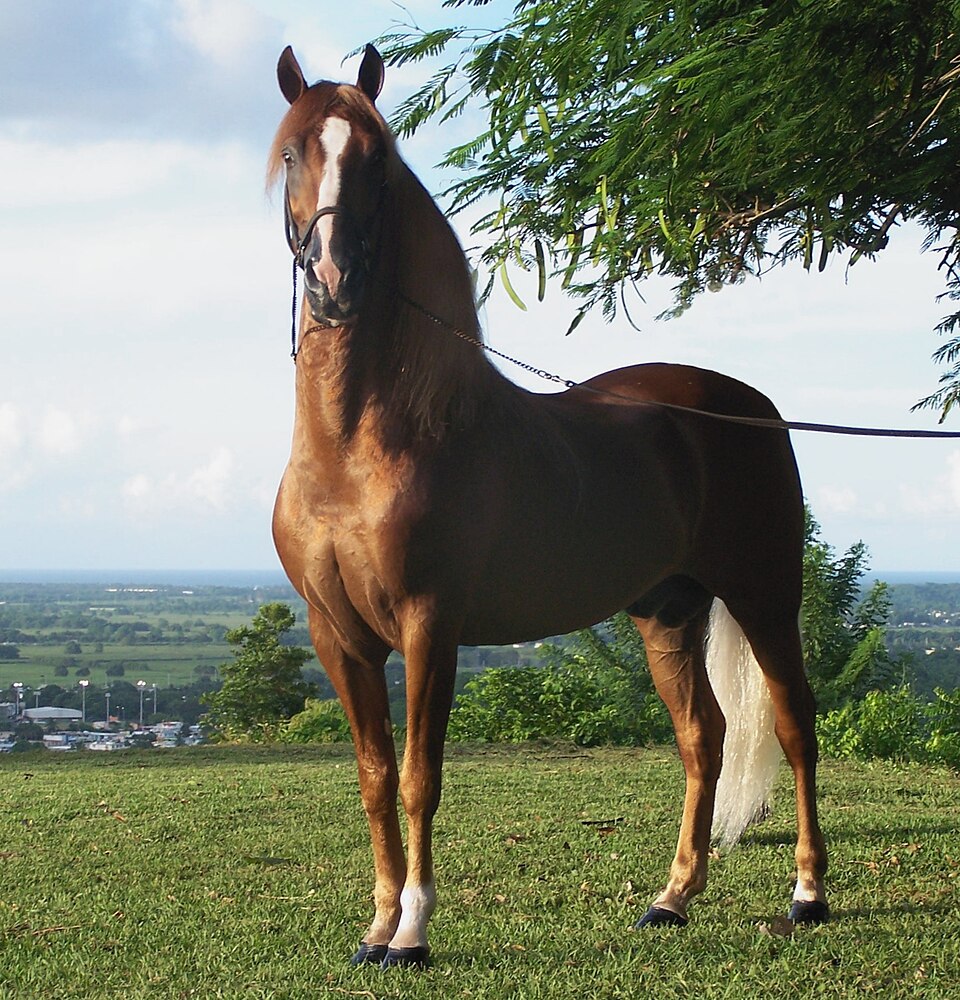
Reference photograph
Reference photograph of a Paso Fino horse. Compare the photographed individual's color and form with the identification information in the text.
Source: Arsdelicata · Original material · CC BY-SA 3.0
1. Classification, origins and habitat
The Paso Fino developed in Latin America from descendants of Spanish horses. Histories of Puerto Rican and Colombian lines are sometimes distinguished.
Its lines developed from Spanish horses in several Caribbean and Latin American regions. Distinguishing the histories and registered populations of Puerto Rico and Colombia avoids reducing them to one uniform origin story. The name relates to the distinctive, finely stepped gait.
2. Appearance and identification
Colors and sizes vary; the distinctive four-beat gait matters more than appearance.
Because the four-beat gait is central to identification, coat color and a stationary body do not readily distinguish it from other riding horses. Colors and sizes vary, and a raised head position is also affected by training and movement. Do not invent a footfall sequence that is invisible in a single photograph.
Gait names describe the sequence and rhythm of feet contacting the ground. An elegant still pose cannot establish that gait, so comparison with a movement sequence or relevant breed information is more accurate.
3. Behavior and way of life
The smooth gait with quick steps is used for riding. A named competition gait and ordinary traveling speed cannot be described with a single number.
Although known for short, quick steps and riding comfort, movement speed and competition gait should not be conflated. Breed tendencies do not replace an individual's training and health, nor guarantee automatic safety and comfort for every rider.
4. Observation, conservation and care
When introducing the gait, compare its footfall sequence with a trot or other gaits. Assess riding suitability through individual training together with rider experience.
Observe comfortable movement ahead of increasing stepping speed or forcing a particular posture. Consider hooves, legs, saddle and recovery time together. When comparing gaited breeds, checking footfall sequence and actual successive movements is more accurate than relying on names.
Evidence and references
- Oklahoma State University — Paso Fino
Classification, origins, appearance, ecology or breed uses
- Defra — Welfare code for horses and ponies
Suitable surroundings, feed, companionship, training and long-term care responsibilities