
Mammals (Horses)
Pinto horse
Pinto Horse
Classification and scientific name: Equus caballus
Sources checked:
Different pattern names describe the positions and edges of white patches
Pinto describes a horse's pattern of large areas of white mixed with another coat color. The existence of registering organizations does not make it a single breed descending from one common ancestor. Different pattern names describe the positions and edges of white patches. Body size and mane shape also vary with the underlying breed.
Origins and distribution
Several breeds and regions
- Pinto
- Several breeds and regions
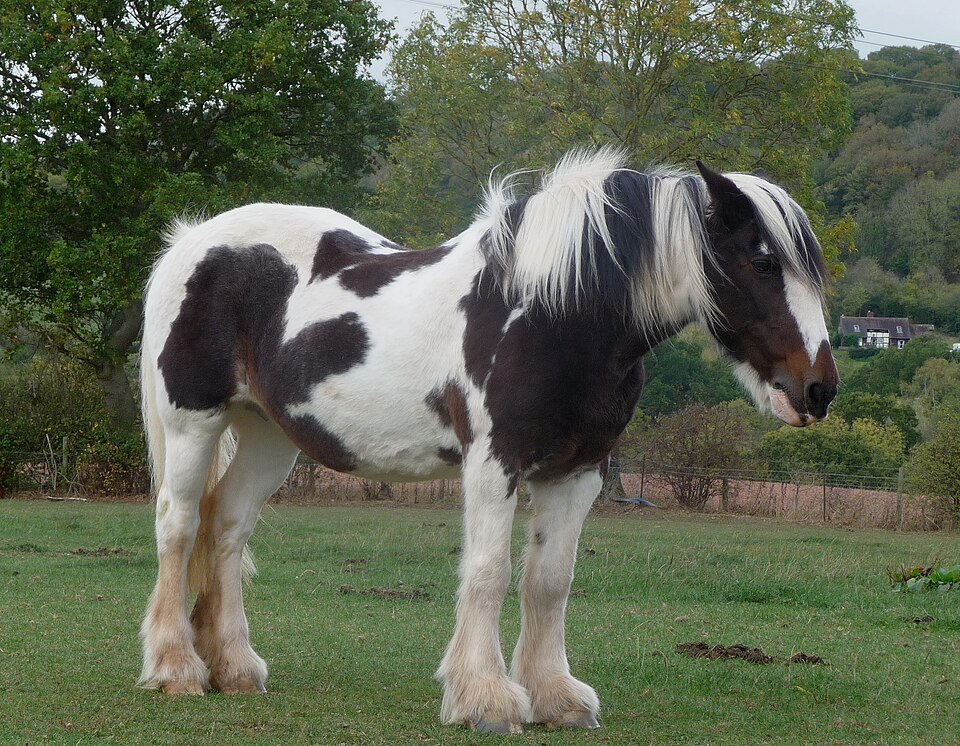
Reference photograph
Reference photograph of a pinto-patterned horse. Compare the photographed individual's color and form with the identification information in the text.
Source: gailhampshire from Cradley, Malvern, U.K · Original material · CC BY 2.0
1. Classification, origins and habitat
Pinto describes a horse's pattern of large areas of white mixed with another coat color. The existence of registering organizations does not make it a single breed descending from one common ancestor.
Pinto groups horses principally by coat pattern, so it should not be described as a single breed sharing an origin and ancestry. Even where a pattern registry exists, its scope may differ from pedigree breed registration. Distinguishing Paint from Pinto is central to understanding this entry.
2. Appearance and identification
Different pattern names describe the positions and edges of white patches. Body size and mane shape also vary with the underlying breed.
Observe the boundaries between broad white areas and other coat colors, and markings continuing onto the face and legs. Depending on the underlying breed, bodies range from small ponies to large horses. Do not present one photograph as the average size or only coat color of all pintos.
3. Behavior and way of life
Uses such as riding, driving and exhibition depend on the horse's underlying breed and training. Do not directly link pattern to temperament or athletic ability.
Riding, driving and exhibition uses depend on foundation bloodlines and training. Numerous patches or extensive white areas cannot predict temperament or athletic ability. Even with the same pattern, a young horse and a trained adult are individuals with very different experiences.
4. Observation, conservation and care
Pinto and American Paint Horse are not interchangeable terms. Checking whether registration concerns coat pattern or pedigree helps avoid confusing the names.
Care depends on actual size, activity, health and training rather than pattern. Breeding decisions should consider associated inherited traits and health records, rather than color reproduction alone. Where the exact pedigree in a photograph is unknown, describing a domestic horse with a pinto pattern is the appropriate observational scope.
Evidence and references
- Oklahoma State University — Pinto
Classification, origins, appearance, ecology or breed uses
- Defra — Welfare code for horses and ponies
Suitable surroundings, feed, companionship, training and long-term care responsibilities