
Mammals (Horses)
Trakehner
Trakehner
Classification and scientific name: Equus caballus
Sources checked:
A relatively refined head and balanced riding conformation are characteristic
The Trakehner is a warmblood associated with the Trakehnen stud in former East Prussia. Its bloodlines survived war and migration and were preserved in several regions. A relatively refined head and balanced riding conformation are characteristic. Coat colors vary.
Origins and distribution
Former East Prussia
- Trakehner
- Former East Prussia
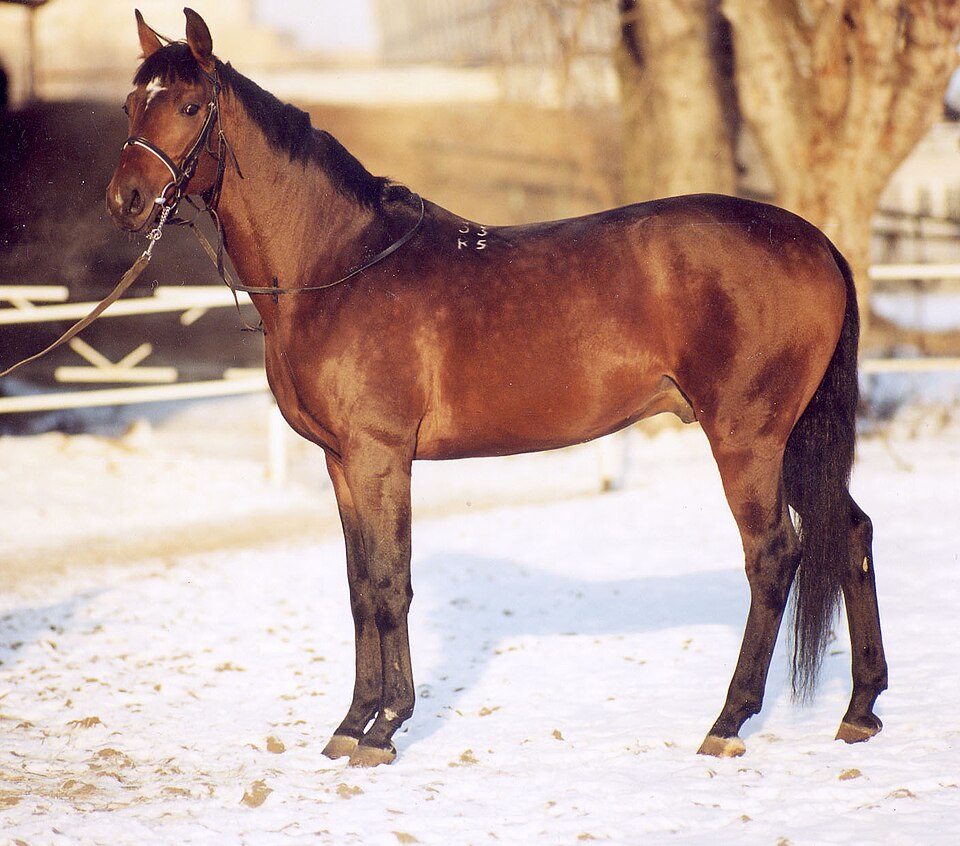
Reference photograph
Reference photograph of a Trakehner horse. Compare the photographed individual's color and form with the identification information in the text.
Source: Лена · Original material · Public domain
1. Classification, origins and habitat
The Trakehner is a warmblood associated with the Trakehnen stud in former East Prussia. Its bloodlines survived war and migration and were preserved in several regions.
Its history includes both the stud and regional horse breeding, as well as pedigree conservation through war and migration. Do not equate the historical place name East Prussia with present national borders. Historical military roles and modern registration and sporting selection belong to different periods.
2. Appearance and identification
A relatively refined head and balanced riding conformation are characteristic. Coat colors vary.
A refined head, long neck and balanced body are described, but color and detailed conformation vary. Appearance alone makes it difficult to distinguish the breed from another brown warmblood. Posture and equipment can conceal the body's outline, so do not infer unseen features.
Distinguishing a historical place name from present breeding countries helps explain the movement involved in pedigree conservation. A photograph taken in a particular region does not establish registration or birthplace; consult the individual's information as well.
3. Behavior and way of life
Trakehners are used in equestrian sport, with pedigree, appearance and movement assessed during registration. Distinguish historical military roles from modern sporting use.
Sporting use continues through registration, performance assessment and individual training. Historical descriptions such as courage or sensitivity are not biologically fixed temperaments. Actual responses are affected by experience and current surroundings, and suitability for a rider requires separate assessment.
4. Observation, conservation and care
Consider conservation of registered bloodlines together with each individual's health and training. Do not present words such as sensitive or courageous as fixed traits of every individual.
Consider the value of pedigree conservation alongside the individual's welfare needs. Famous ancestry does not automatically create a balance between exercise and rest. Observe gait, hooves and feed intake, and introduce new training in stages that allow comfortable adaptation.
Evidence and references
- Oklahoma State University — Trakehner
Classification, origins, appearance, ecology or breed uses
- Defra — Welfare code for horses and ponies
Suitable surroundings, feed, companionship, training and long-term care responsibilities