
Other Mammals
Long-tailed chinchilla
Chinchilla
Classification and scientific name: Chinchilla lanigera
Sources checked:
A long-tailed chinchilla with dense fur and a life among rock crevices
This page concerns the long-tailed chinchilla.
Origins and distribution
Areas around the Chilean Andes
- Rodent
- Rock crevices
- Dust bathing
- Long-tailed chinchilla
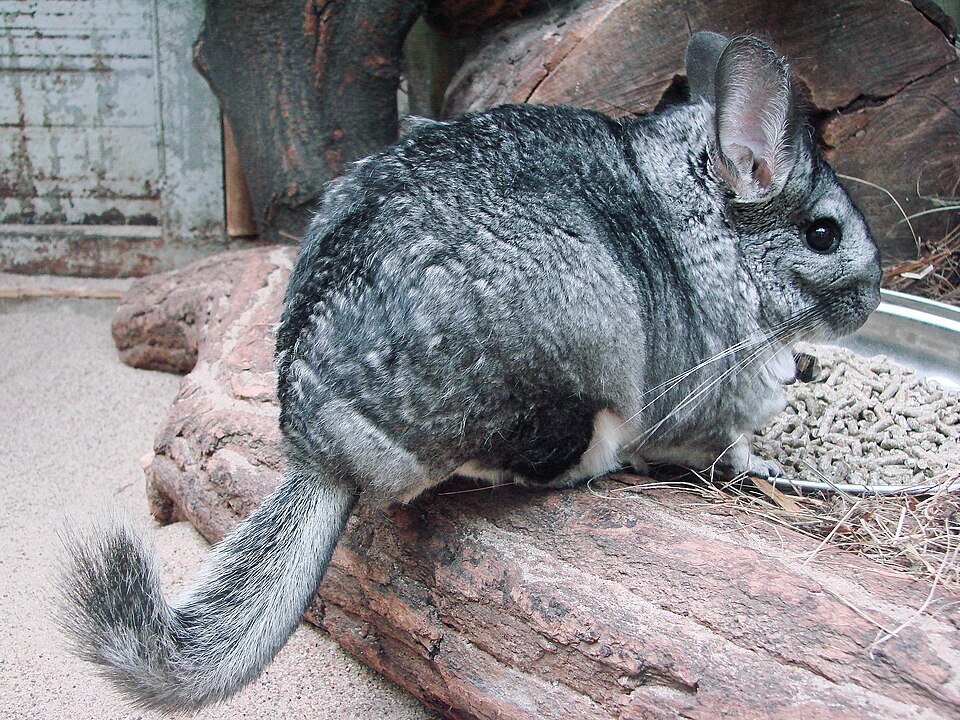
Reference photograph
Reference photograph of a long-tailed chinchilla. Compare the photographed individual's color and form with the identification information in the text.
Source: Guérin Nicolas ( messages ) · Original material · CC BY-SA 3.0
1. Classification, origins and habitat
This page concerns the long-tailed chinchilla. Distinguish the scope of sources about short-tailed chinchillas and captive crossbred or selectively bred lines. Wild long-tailed chinchillas relate to dry, rocky Chilean environments with hiding crevices and plant food. A history of farming for fur and pets does not mean wild populations are common because many animals live on farms. Read wild distribution and population information separately from captive statistics. Familiar gray pet photographs can restrict impressions to small cages, while natural movement includes jumping onto rocks and hiding in crevices.
2. Appearance and identification
Dense fur, large ears, long whiskers, developed hindlegs and a long furred tail stand out. Dense fur relates to life in dry, cool environments; it is not heat-resistant armor. Captive lines show white, black and other colors alongside gray. Do not present these as different natural species. Observing food held in forepaws together with hindleg-powered jumping reveals movement ability behind a soft appearance. To distinguish this animal from the short-tailed species in photographs, check ears, body proportions and the source's species identification alongside the tail.
3. Behavior and way of life
Mainly active in dim light, chinchillas use grasses and varied plant foods. Rock crevices provide rest and escape, and individuals interact through sounds and postures. Rolling in dry dust or sand is a known coat-care behavior, unlike claims that swimming or frequent washing is needed for cleanliness. Social relationships do not mean unfamiliar adults can automatically share a space. Daytime sleeping alone does not establish low exercise needs; observe jumping, gnawing and exploration during active hours too.
4. Observation, conservation and care
For pets, consider heat, high humidity and structures that can injure feet or teeth, and provide hiding places, usable height and floor space. Dust bathing requires suitable materials and conditions; arbitrary dust is not appropriate. Understand plant foods and gnawing, while confirming specific diets and health issues through specialist veterinary care. Wild conservation maintains rocky habitat together with food plants and cannot be replaced simply by captive breeding. Captions should retain the long-tailed chinchilla scope, without reducing ecology to the industrial value of fur.
Evidence and references
- Animal Diversity Web — Chinchilla lanigera
Classification, distribution, appearance, diet and reproductive behavior
- San Diego Zoo — Chinchilla
Chinchilla fur, habitats, bathing behavior and conservation