
Other Mammals
Siberian chipmunk
Squirrel
Classification and scientific name: Eutamias sibiricus
Sources checked:
A chipmunk distinguished by back stripes and cheek pouches
This entry concerns the Siberian chipmunk found on the Korean Peninsula.
Origins and distribution
Northern Asia, including the Korean Peninsula
- Stripes
- Cheek pouches
- Food caching
- Forest floor
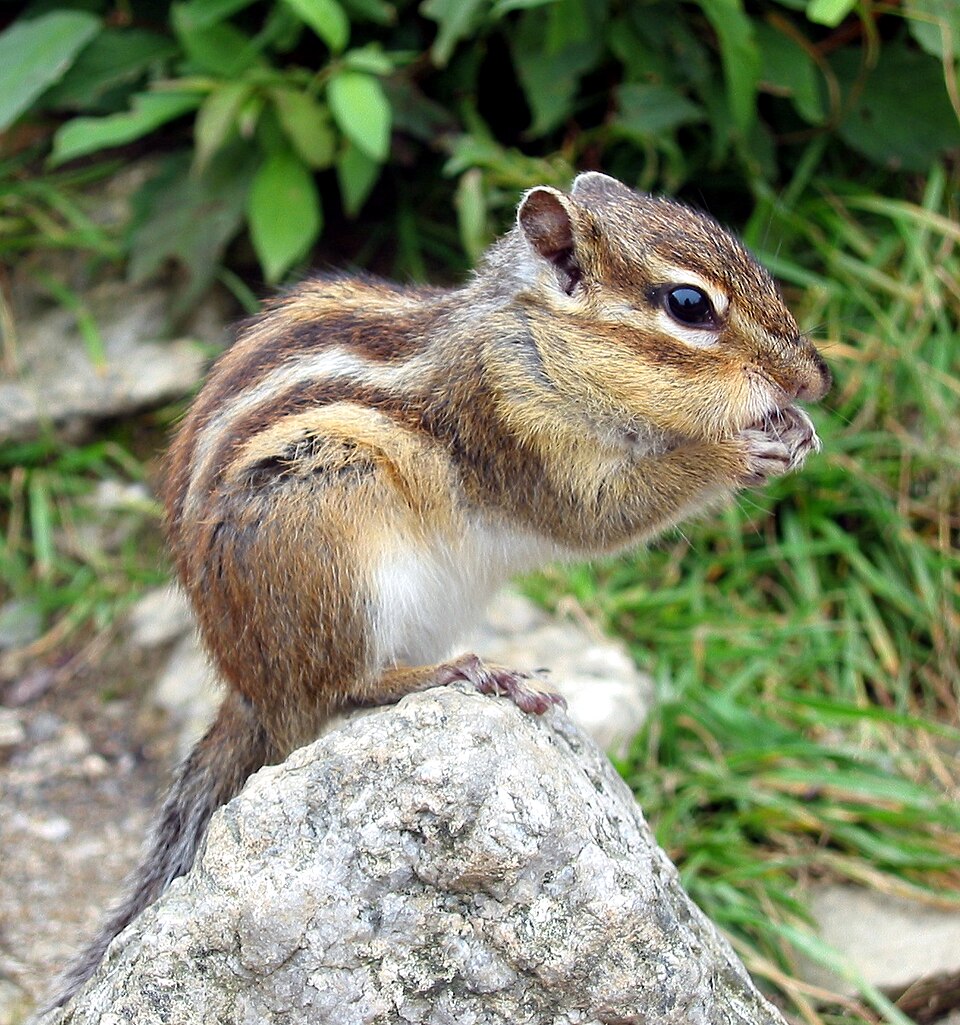
Reference photograph
Reference photograph of a Siberian chipmunk. Compare the photographed individual's color and form with the identification information in the text.
Source: AndiW 10:51:45, 2005-09-04 (UTC) · Original material · Public domain
1. Classification, origins and habitat
This entry concerns the Siberian chipmunk found on the Korean Peninsula. Sources use Eutamias sibiricus or its earlier genus name, Tamias sibiricus. The English word squirrel also includes tree squirrels, so not every image from an English squirrel search depicts this species. It lives in northern Asian forests and forest edges, moving over ground, among rocks and between trees. Forest-floor leaf litter and undergrowth provide places to find food and hide. Some European populations were introduced by people and should be distinguished from records within the native range.
2. Appearance and identification
Light and dark longitudinal stripes run side by side along the brownish back, with a relatively light belly. The stripes are important when comparing animals whose backs look uniformly colored, such as tree squirrels. Cheek pouches temporarily carry food, and swollen cheeks are not a permanent head shape. The long tail aids balance during movement but does not grasp objects by wrapping around them like a monkey's tail. Photographs of food held in the forepaws allow observation of digits and claws. Coat color and apparent plumpness can vary with light, season and feeding condition.
3. Behavior and way of life
Although well known for collecting seeds and fruits, the animal also uses small animal foods. Rather than consuming everything where it finds it, it carries food in cheek pouches or stores it. This relates to using food resources that change seasonally. Activity is mainly observed by day, with running on the forest floor followed by climbing onto trees and rocks. Winter burrow life and use of stored food should not be simplified into uninterrupted sleep. Even where several animals occur together, consider food concentration and distances between individuals when interpreting social relationships.
4. Observation, conservation and care
When encountering a chipmunk in a forest, observe its own food searching instead of luring it close with human snacks or nuts. A small body does not justify capture or handling. Recording back stripes, tail and food-holding forepaws together reduces confusion with other squirrels. Forest-floor litter, fallen wood and areas around burrow entrances provide movement routes and cover; do not clear or block them. In introduced regions, assess ecological effects separately from a cute appearance. Escapes from captivity and movement by wild animals should not be treated as identical natural spread.
Evidence and references
- Animal Diversity Web — Tamias sibiricus
Classification, distribution, appearance, diet and reproductive behavior
- Mammal Diversity Database — Eutamias sibiricus
Current scientific name, classification, synonyms and distribution of the Siberian chipmunk