
Other Mammals
Golden hamster
Hamster
Classification and scientific name: Mesocricetus auratus
Sources checked:
A golden hamster with a short tail and cheek pouches
The name hamster includes the golden hamster and several dwarf hamster species.
Origins and distribution
Native to the Syria–Türkiye region; pet populations occur worldwide
- Golden hamster
- Solitary living
- Burrowing
- Nocturnal activity
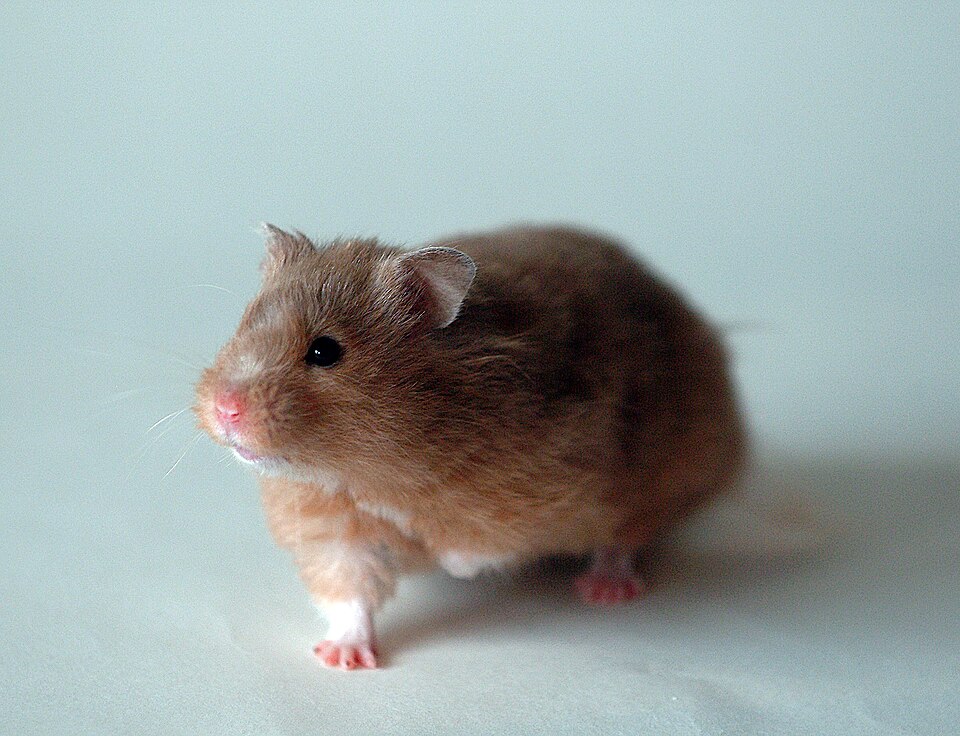
Reference photograph
Reference photograph of a golden hamster. Compare the photographed individual's color and form with the identification information in the text.
Source: Adamjennison111 at English Wikipedia · Original material · CC BY 2.5
1. Classification, origins and habitat
The name hamster includes the golden hamster and several dwarf hamster species. This page uses the golden hamster, Mesocricetus auratus, as its representative, without mixing in the social relationships or size of small dwarf species. Wild lines relate to a limited part of western Asia, while people spread pet and research populations worldwide. In the wild it burrows in open ground, using separate areas for food and rest. Long hair, white, black and other appearances in pet animals may be variants from captive lines. Do not present photographs of striking captive colors as typical wild appearance.
2. Appearance and identification
Rounded ears, a short tail and a solid body are characteristic, as is holding food in the forepaws. Cheek pouches on both sides of the mouth carry food, so a swollen face does not always mean excess fat. Incisors grow continuously, but chewing wood alone cannot be assumed to prevent every dental problem. Golden hamsters are generally larger than several dwarf hamster species, so relative size in one photograph does not establish species. Long-haired forms may have hair hiding the outlines of the legs and body. Compare tail, ears and coat patterns together.
3. Behavior and way of life
The hamster searches for food and carries it in cheek pouches to a shelter for storage. It does not use only seeds; wild diets include plants and small invertebrates. Resting mainly under cover by day and being active during dark hours also occur in pet settings. Adult golden hamsters generally live alone, so combining adults because one seems lonely to a person can cause conflict. Digging deep bedding and moving through passages are expressions of its way of life rather than merely small-toy activities. Interpret climbing onto a hand through learning and individual differences too.
4. Observation, conservation and care
In a pet environment, consider burrowable bedding, dark shelters and exercise space suited to the body. Small size at sale does not indicate the space an adult needs. Provide choices to explore and hide rather than repeatedly waking a sleeping hamster or making it move inside a cramped ball. Food-caching habits also require checks of stored food condition and hygiene. Information about surviving winter in the wild does not justify deliberately keeping a pet cold, and unusual inactivity should not be dismissed as ordinary sleep. Have actual health changes assessed through professional veterinary care.
Evidence and references
- Animal Diversity Web — Mesocricetus auratus
Classification, distribution, appearance, diet and reproductive behavior
- RSPCA — Hamsters
Pet hamster behavior, shelters, diet and environment