
Other Mammals
Guinea pig
Guinea Pig
Classification and scientific name: Cavia porcellus
Sources checked:
A domestic grazing rodent that communicates through sounds
Despite its name, the guinea pig is a rodent domesticated in South America, not a pig from Guinea in Africa.
Origins and distribution
Domesticated lines from the South American Andes
- Guinea pig
- Social behavior
- Herbivory
- Domestication
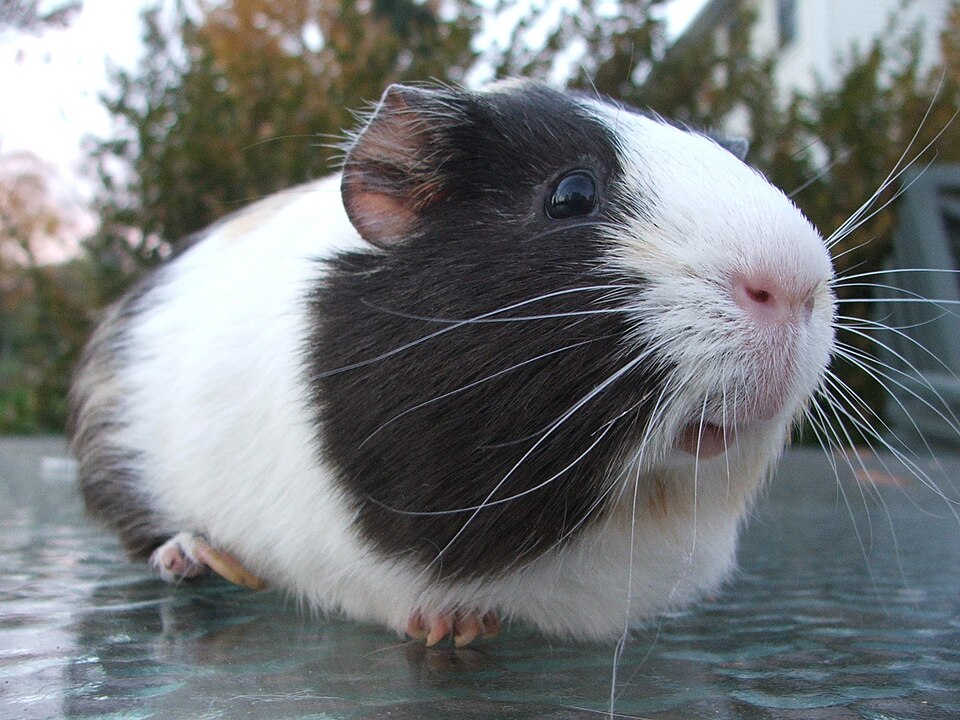
Reference photograph
Reference photograph of a guinea pig. Compare the photographed individual's color and form with the identification information in the text.
Source: Plath81의 부친 (원문 표기) · Original material · CC BY-SA 3.0
1. Classification, origins and habitat
Despite its name, the guinea pig is a rodent domesticated in South America, not a pig from Guinea in Africa. Cavia porcellus here concerns pet and livestock lines, distinguished from closely related wild cavies. Its long relationship with Andean peoples was followed by movement elsewhere and husbandry for various purposes. Today's short-haired, long-haired and curly-coated breeds form part of this captive history. Putting a pet guinea pig outdoors in grassland is not returning it to its original natural habitat. Start by separating photographed captive breeds from distribution records for wild relatives.
2. Appearance and identification
The body is plump with short legs and no conspicuous external tail. Small rounded ears, side-facing eyes and incisors used to cut food are visible. Comparison also reveals the absence of a rabbit's long ears or a hamster's developed cheek pouches. Coat color and length vary greatly by breed; a three-colored individual is not the standard for every guinea pig. Long hair conceals body outlines, making excess weight or actual size difficult to assess photographically. Different toe counts on the forefeet and hindfeet are features to observe during natural walking rather than forcibly turning the animal over.
3. Behavior and way of life
Guinea pigs spend long periods chewing plant food and interact through varied sounds and body movements. They may respond to familiar food-preparation sounds, but one call cannot always be translated into the same emotion. Social life with suitable companions matters; this does not mean incompatible individuals should be placed together unconditionally. They alternate exploration and rest where hiding places are available. Freezing or hiding after sudden sounds can reflect a small herbivore's vigilance. Young are born relatively well developed, unlike some small rodents born without hair.
4. Observation, conservation and care
A species-appropriate diet with sufficient fiber and suitable vitamin C provision matters. Guinea pigs cannot synthesize enough vitamin C themselves; this does not justify arbitrary high-dose supplements. Check a specific diet against the individual's condition. Provide ample floor space, shelters and dry resting places, and reduce risks of falls. When holding an animal, support the body and hindquarters securely rather than leaving it dangling. Explain that photographs show captive animals, and understand the practical care burden of long hair to reduce choices based only on appearance.
Evidence and references
- Animal Diversity Web — Cavia porcellus
Classification, distribution, appearance, diet and reproductive behavior
- RSPCA — Guinea pigs
Guinea pig social relationships, diet, housing and welfare