
Other Mammals
Rabbit
Rabbit
Classification and scientific name: Oryctolagus cuniculus
Sources checked:
Domestic rabbit ecology rooted in burrows and social life
Pet rabbits and farm rabbits descend from domesticated European rabbits.
Origins and distribution
Native around the Iberian Peninsula; domestic populations worldwide
- Lagomorphs
- Herbivory
- Burrow life
- Domestication
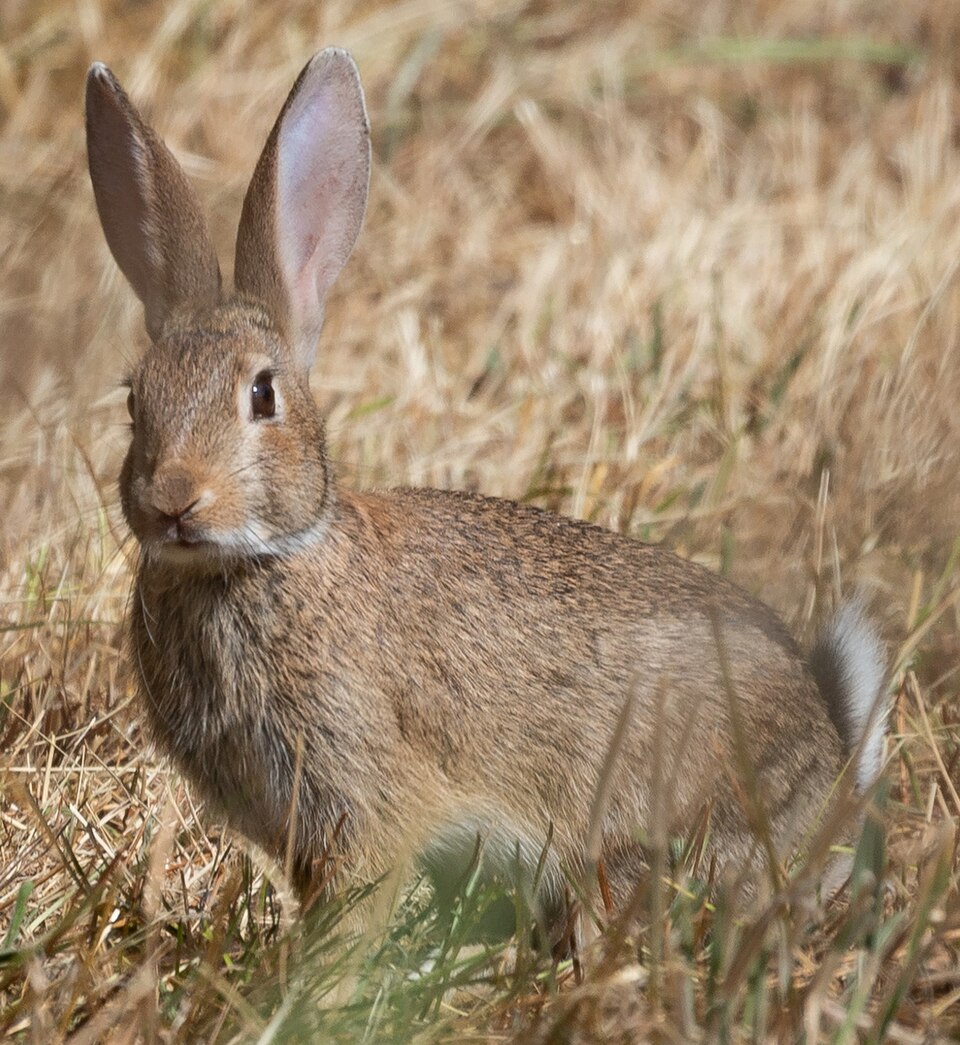
Reference photograph
Reference photograph of a rabbit. Examine this individual's color and form alongside the identification descriptions in the text.
Source: euqirneto · Original material · CC BY 4.0
1. Classification, origins and habitat
Pet rabbits and farm rabbits descend from domesticated European rabbits. Not every rabbit or hare seen outdoors, such as Korean hares, belongs to this species. Native distribution must also be distinguished from regions on other continents where people introduced them. Wild European rabbits use environments where open grazing ground, concealing scrub and soil for burrows lie close together. Domestication produced breeds differing in ear length, coat and body size, but the basic habits of watching the surroundings and seeking hiding places remain. A white pet's photograph does not show the universal coat color of wild populations.
2. Appearance and identification
Long ears and strong hind legs stand out, and the teeth include continuously growing molars as well as incisors. Although resembling rodents, rabbits belong to Lagomorpha and have an additional small pair of teeth behind the upper incisors. Side-positioned eyes help survey a wide area, and ears contribute to hearing and temperature regulation. Upright or hanging ears, coat length and color differ by breed, so one photograph cannot describe them all. Fur-covered soles differ from a pet dog's thick paw pads. A crouching photograph alone should not determine actual build or health.
3. Behavior and way of life
Rabbits mainly eat grasses and leaves, finding food close to the ground. Eating fecal material to reuse nutrients fermented in the cecum relates to their digestive system. In the wild, social relationships around burrows accompany vigilance. Even when a pet stretches out or leaps, consider ears, posture and surroundings together. Being picked up can resemble an experience with a predator, making it difficult to assume all rabbits feel comfortable being held by people. A scene of being alone is not evidence that the species always lives solitarily.
4. Observation, conservation and care
To understand domestic rabbits, first consider movement space, hiding places and relationships with rabbit companions rather than a small cage. A diet centered on fiber-rich grasses and hay matters for teeth and digestion, unlike cartoon images of eating only carrots. Discuss actual portions and health issues with a veterinarian familiar with the individual. Observe wild European rabbits at a distance without blocking burrows or luring them with food. Abandoning a pet rabbit is not returning it to nature, and in a new region it can affect ecosystems. Captions are also more accurate when they identify a wild animal or domestic breed.
Evidence and references
- Animal Diversity Web — Oryctolagus cuniculus
Classification, distribution, appearance, diet and reproductive behavior
- RSPCA — Rabbits
Domestic rabbits' social life, diet, environment and welfare