
Other Mammals
Domestic ferret
Ferret
Classification and scientific name: Mustela furo
Sources checked:
A domestic mustelid exploring narrow passages
The ferret is a human-domesticated mustelid closely related to the wild European polecat.
Origins and distribution
Domesticated population related to the European polecat
- Mustelid family
- Domestication
- Exploration
- Carnivory
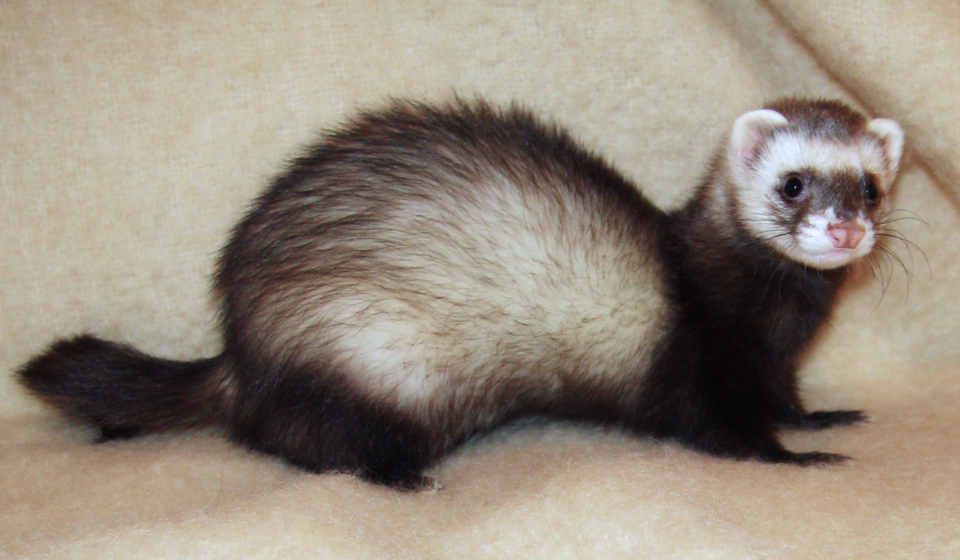
Reference photograph
Reference photograph of a domestic ferret. Compare the photographed individual's color and form with the identification information in the text.
Source: Alfredo Gutiérrez · Original material · CC BY-SA 4.0
1. Classification, origins and habitat
The ferret is a human-domesticated mustelid closely related to the wild European polecat. Sources use Mustela furo or Mustela putorius furo. North America's black-footed ferret is a different animal, so do not mix conservation records or photographs. The ability to explore burrows and narrow spaces was historically used in human hunting. Today's pet ferrets have varied coat colors, which are not new natural species. Domesticated life with people does not justify outdoor release; feral populations in some regions need distinguishing from native animals.
2. Appearance and identification
A long body, short legs, flexible back and long tail suit movement through narrow passages. A dark facial mask and light coat are familiar, but captive colors such as white also occur. Pointed canine teeth, small ears and whiskers are present. Size varies with sex, lineage and growth stage, so one photograph's size cannot represent all ferrets. Resemblance to weasels or otters does not imply identical diets or swimming lives. Sleeping curled up conceals actual body length; walking and exploratory scenes help explain structure.
3. Behavior and way of life
When awake, ferrets sniff, go beneath objects and investigate varied gaps. Short activity bouts can alternate with long rest, so lengthy sleep does not eliminate exercise or interaction needs. Adaptation to carnivory differs from the herbivorous diets of rabbits and guinea pigs. Ferrets may play with familiar ferrets and bounce when excited, but this does not guarantee safe coexistence with other small animals. Scenes of carrying objects in the mouth and hiding them, as well as the intensity of play, need to be interpreted in context rather than as a human's playful personality.
4. Observation, conservation and care
For pets, inspect specific escape gaps and swallowing hazards such as rubber or sponge objects. Provide movement space, safe passages and dark sleeping places, and manage relationships with other animals carefully. Carnivory does not make a continuous diet of one arbitrarily chosen meat balanced. Consult a veterinarian experienced in ferrets about health, neutering and preventive care. Identify photographs as domestic ferrets, without attaching accounts of the wild black-footed ferret. Releasing pets into nature can harm both welfare and regional ecosystems.
Evidence and references
- Animal Diversity Web — Mustela putorius furo
Classification, distribution, appearance, diet and reproductive behavior
- RSPCA — Ferrets
Ferret diet, social needs, housing and safe management