
Other Mammals
Koala
Koala
Classification and scientific name: Phascolarctos cinereus
Sources checked:
A marsupial that feeds on leaves in eucalyptus forests
The koala is a marsupial that raises its young in a pouch, not a bear.
Origins and distribution
Eastern and southeastern Australia
- Marsupial
- Eucalyptus
- Arboreal life
- Leaf feeding
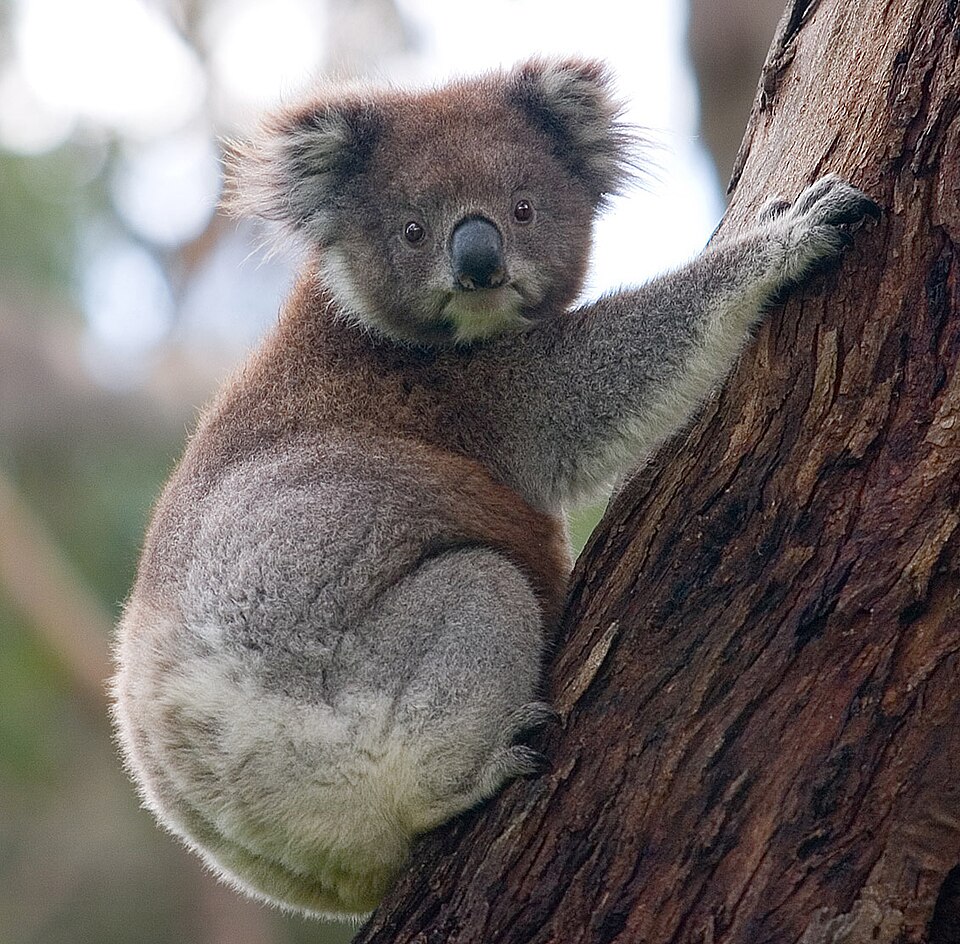
Reference photograph
Reference photograph of Koala. Compare the color and form of the individual shown with the identification notes in the text.
Source: Diliff · Original material · CC BY-SA 3.0
1. Classification, origins and habitat
The koala is a marsupial that raises its young in a pouch, not a bear. It uses eucalyptus leaves in wooded environments in eastern and southeastern Australia. Not every eucalyptus tree is food of equal value at all times; regional and individual selection matters. Distinguish its original range from records of populations moved by people. Although famous for sitting in one tree, its life includes moving between trees. Even where forest remains, roads and buildings can isolate trees and make movement difficult, so habitat conditions cannot be evaluated from the presence of one tree alone.
2. Appearance and identification
Large furry ears, a broad black nose and gray-toned fur are typical. Body size, fur length and shade vary regionally, so identification should not rely on one uniform gray. The front paws have digit arrangements and sharp claws suited to gripping branches. The rump and body posture relate to resting astride a branch. Soft-looking fur in a photograph does not mean that the animal enjoys being held or touched. The abdominal pouch and chest markings may not be visible depending on sex and posture, so the face alone cannot establish the sex of every individual.
3. Behavior and way of life
Leaves are fibrous food with limited available energy, so koalas spend much of their time resting. Describing this as being intoxicated by leaves or having a lazy personality is inaccurate. They select and chew leaves, move between trees and interact vocally with other individuals during breeding periods. Young raised in the mother’s pouch may later cling to her back. They obtain moisture from leaves, but that does not mean they never drink water. Behavior varies with heat, dryness and individual condition, so one drinking scene should not automatically be called abnormal.
4. Observation, conservation and care
Koala protection connects conservation of feeding and resting trees with safe movement routes. Bushfires, heatwaves, vehicles and dogs are among factors that can overlap differently by region. If you encounter one outdoors, watch from a distance rather than making it come down or holding it yourself. Follow local rescue organizations’ guidance for injured animals or dangerous locations. Photo descriptions should connect gripping feet and resting postures with actual ecology, without presenting zoo encounters as typical wild contact behavior. Current conservation status must be checked for both region and assessment date.
Evidence and references
- Animal Diversity Web — Phascolarctos cinereus
Classification, distribution, appearance, diet and reproductive behavior
- San Diego Zoo — Koala
Koala classification, food selection, life in trees and threats