
Other Mammals
Meerkat
Meerkat
Classification and scientific name: Suricata suricatta
Sources checked:
A meerkat using dry landscapes through burrows and cooperative living
The meerkat is a southern African mammal in the mongoose family, not a cat.
Origins and distribution
Arid and semiarid southern Africa
- Mongoose family
- Cooperation
- Burrows
- Vigilance
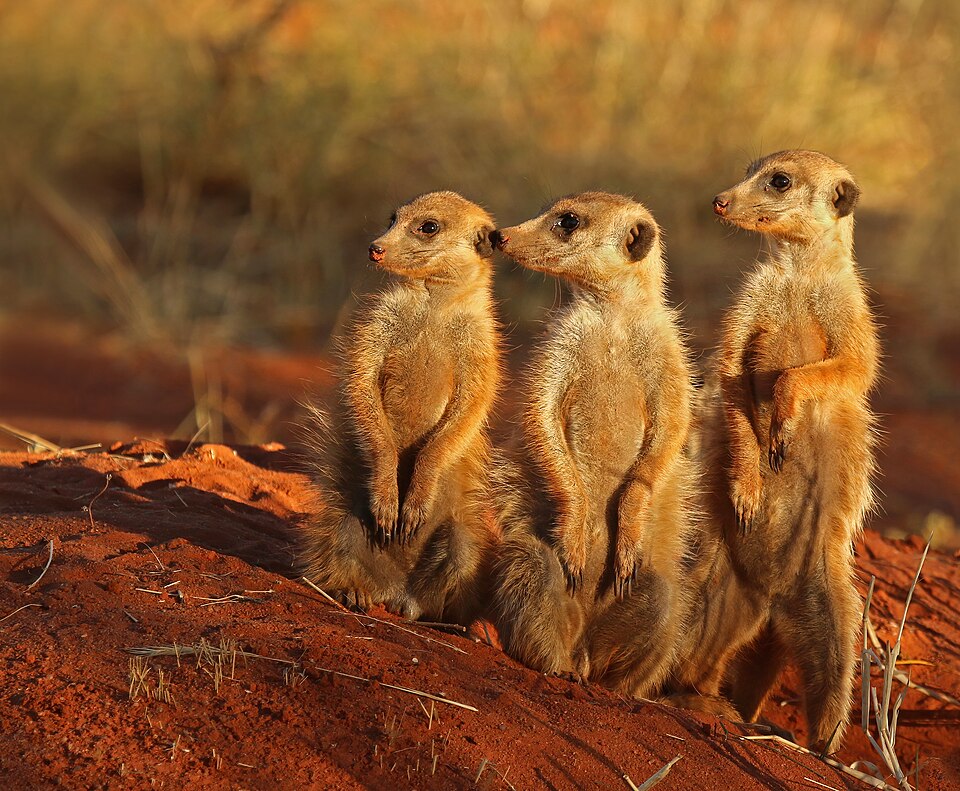
Reference photograph
Reference photograph of meerkats. Compare the photographed individuals' color and form with the identification information in the text.
Source: Charles J. Sharp · Original material · CC BY-SA 4.0
1. Classification, origins and habitat
The meerkat is a southern African mammal in the mongoose family, not a cat. It lives in dry grasslands and scrub of the Kalahari and surrounding areas, rather than only in sandy deserts. Understanding its habitat involves both ground for finding food and burrows for avoiding heat and cold. It digs burrows and also uses ones made by other animals. Burrows serve for sleeping, escaping predators and caring for young. A single zoo photograph of a standing animal poorly reveals underground space and social relationships, so explaining the surroundings is useful.
2. Appearance and identification
A slender body, long tail and digging claws on the forefeet occur, with dark areas around the eyes. Dark transverse stripes appear on the back, although coat color varies with region and light. The tail supports posture when standing on two legs. Resemblance to a standing person does not justify reading human expressions or intentions directly. The pointed snout can be considered alongside searching soil and crevices for small foods. Observing digging as well as upright posture reveals how its body is used in everyday life.
3. Behavior and way of life
Meerkats form groups, and while some forage, a vigilant individual may use a raised position. This is behavior within a group and situation, rather than one animal's lifelong occupation. They find varied foods, including insects and other small animals, in the ground and give alarm calls in response to nearby threats. Cooperative care, including protecting and feeding young, is important in group life. Cooperation does not exclude competition or conflict. Recording the direction of its gaze toward a predator, other individuals' movements and changes in sound helps interpret why an animal is standing.
4. Observation, conservation and care
Observe burrow entrances, foraging, rest and distances between individuals instead of waiting only for a sentinel posture. A captive individual approaching people does not establish a general wild desire for contact. Social relationships, diggable ground and places to avoid temperature extremes are needed, so small size and cuteness do not make it a straightforward household pet. In the wild, do not block burrow entrances or lure with food. A photograph showing only one animal can imply a solitary species; explain cooperative living and the presence of a surrounding group.
Evidence and references
- Animal Diversity Web — Suricata suricatta
Classification, distribution, appearance, diet and reproductive behavior
- San Diego Zoo — Meerkat
Meerkat burrows, cooperative care of young, foraging and vigilance