
Other Mammals
Eurasian Otter
Otter
Classification and scientific name: Lutra lutra
Sources checked:
An otter that needs both aquatic food and shelters on land
Here otter means Lutra lutra, a species also found in Korea.
Origins and distribution
Watersides in Eurasia and parts of North Africa
- Mustelid
- Semiaquatic
- Rivers
- Whisker sensing
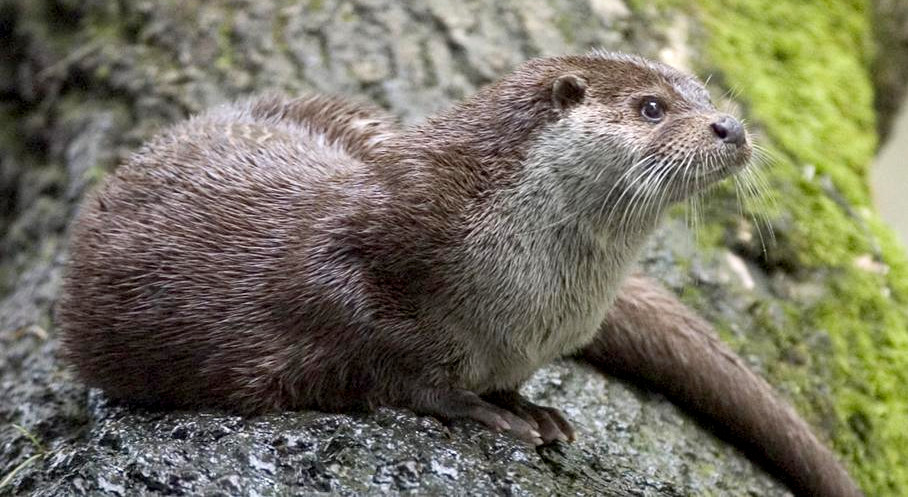
Reference photograph
Reference photograph of Eurasian Otter. Compare the color and form of the individual shown with the identification notes in the text.
Source: Bernard Landgraf · Original material · CC BY-SA 3.0
1. Classification, origins and habitat
Here otter means Lutra lutra, a species also found in Korea. It differs from the Asian small-clawed otter and marine sea otter; do not combine their diets and social relationships. It uses rivers, lakes and some coastal settings but does not spend its entire life underwater. Water for feeding, dry resting spaces and concealing banks all matter. A broad distribution does not imply abundance or security in every region. Even along the same river, water quality, fish, bank vegetation and human traffic can change the conditions of use.
2. Appearance and identification
A long flexible body, thick tail, short legs and webbing between the toes suit movement in water. Developed facial whiskers help detect surrounding movements. The outer and inner layers of fur play important roles in aquatic life, and wet and dry coats can look different. Small ears and a relatively flat head mean that only part of the face may appear above water. Floating belly-up and using tools like a sea otter should not be described as behavior shared by every otter. Looking at the tail and feet together in photographs helps comparison with other semiaquatic mammals.
3. Behavior and way of life
Fish are often major prey, but crustaceans, amphibians and other food are used according to the environment. Otters explore underwater, return to land to rest and exchange information through scent marks. Consider the generally solitary lives of wild adults alongside mothers caring for young. Photographs of groups of small-clawed otters in zoos must not be used to generalize that this species always lives in large families. Spraints and footprints provide signs of an often elusive animal’s life. One point where signs are found cannot establish the whole population size or territory boundaries.
4. Observation, conservation and care
A suitable environment includes improved water quality, prey organisms, concealing riverbanks and connectivity for safe movement together. Water flowing through a concrete channel does not by itself create sufficient habitat. Roads and fishing gear can also pose local risks. When observing, stay away from dens and resting places and do not throw food to lure animals into view. Photographs should identify the exact species and setting so that close proximity to people is not mistaken for wild behavior. Rather than assuming absence when an otter is hard to see by the water, consider the limits of records and survey methods.
Evidence and references
- Animal Diversity Web — Lutra lutra
Classification, distribution, appearance, diet and reproductive behavior
- IUCN Otter Specialist Group — The Otter Book
Distribution, habitat, threats and conservation in the Eurasian otter chapter