
Other Mammals
Red panda
Red Panda
Classification and scientific name: Ailurus fulgens
Sources checked:
Mountain forest life with red fur and a ringed tail
The red panda is a mammal in a separate family, not a baby giant panda or a small breed of giant panda.
Origins and distribution
Mountain forests around the Himalayas and adjacent Asian regions
- Red panda family
- Tree life
- Bamboo
- Mountain forests
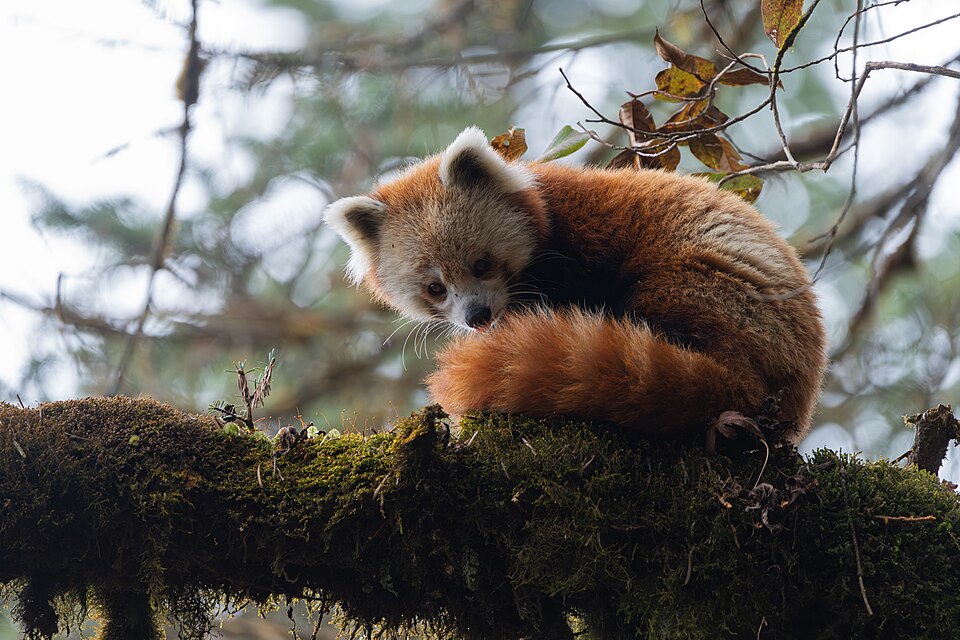
Reference photograph
Reference photograph of a red panda. Compare the photographed individual's color and form with the identification information in the text.
Source: Sunuwargr · Original material · CC BY-SA 4.0
1. Classification, origins and habitat
The red panda is a mammal in a separate family, not a baby giant panda or a small breed of giant panda. It lives in mountain forests around the Himalayas and adjacent regions, using bamboo in the understory and trees for shelter and rest. Taxonomic studies propose separating Himalayan and Chinese lineages, so distinguish older sources using Ailurus fulgens broadly from ones using it narrowly. This page centers on red panda material with identified scientific names and does not combine population counts or detailed ranges across different taxonomic scopes. A zoo photograph's country is not a wild distribution record.
2. Appearance and identification
A reddish-brown back, light facial markings, dark legs and a long ringed tail stand out. Facial patterns and shades differ individually and regionally; the extent of facial white alone cannot establish a population. The feet and claws are used to climb trees and grip branches, while the long tail helps with balance and with postures that protect against the cold. A thumb-like structure in the forepaw can be considered alongside handling bamboo. A raccoon-like tail can suggest a shared family, but visual similarity does not establish close classification. Dark underside hair may be hidden in photographs of an animal lying on a branch.
3. Behavior and way of life
Bamboo forms a large part of the diet, alongside other plant foods and occasional animal foods. Red pandas mainly live separately, resting in trees or foraging on the ground, with activity varying by weather and environment. Scent marking, sounds and posture contribute to relationships with others. Standing on two legs does not directly express human feelings such as greeting or dancing. Mothers use nest spaces to hide and care for young. Even a photograph of slow movement needs considering alongside climbing ability and ground exploration to understand its way of life.
4. Observation, conservation and care
Understand conservation through maintaining large forest trees, shelter and connectivity alongside bamboo, rather than simply increasing bamboo. Logging, human use, roads and dogs can have overlapping regional effects. Captive settings require raised structures, hiding places, temperature management and food choices, so small size and cuteness do not justify presenting the species as a pet. Loud visitors or attempts to provoke responses close to glass can disturb rest. Captions should connect color, tail and branch-gripping feet with observations and avoid unconfirmed subspecies names or personality claims. Recheck source scope when classification changes.
Evidence and references
- Animal Diversity Web — Ailurus fulgens
Classification, distribution, appearance, diet and reproductive behavior
- San Diego Zoo — Red panda
Appearance, tree life, bamboo diet and habitat threats