
Other Mammals
Sugar glider
Sugar Glider
Classification and scientific name: Petaurus breviceps / Petaurus notatus
Sources checked:
A small marsupial gliding with a skin membrane rather than wings
The sugar glider resembles a rodent flying squirrel but belongs to the marsupials.
Origins and distribution
Eastern Australia and other areas, with distributions differing by species
- Marsupial
- Gliding membrane
- Nocturnal activity
- Tree life
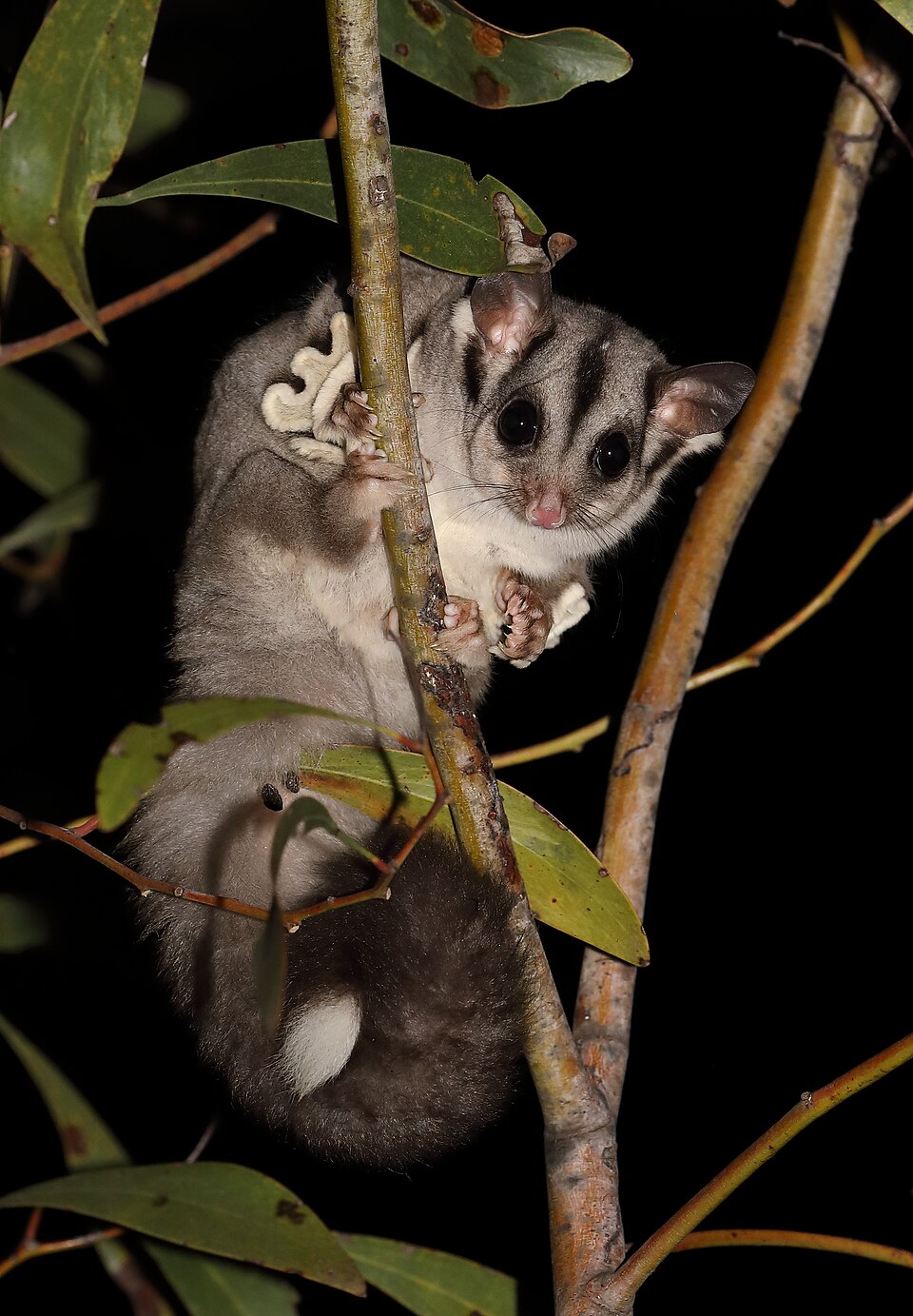
Reference photograph
A sugar glider photographed in Victoria, Australia. The original photograph uses the former broad name Petaurus breviceps. The text explains the current taxonomic distinction involving P. notatus.
Source: patrickkavanagh · Original material · CC BY 2.0
1. Classification, origins and habitat
The sugar glider resembles a rodent flying squirrel but belongs to the marsupials. Similar adaptations for gliding do not imply close classification. Populations formerly grouped broadly as Petaurus breviceps have been separated into narrowly defined P. breviceps, P. notatus and others. This entry explains the former complex without combining species-specific distributions and numbers. That is why a photograph from Victoria in Australia is not automatically assigned to narrowly defined P. breviceps. Connected forest trees and trees with hollows matter for foraging and rest. Familiar small bodies and pet photographs should not obscure movement between trees, nighttime exploration and relationships with other individuals.
2. Appearance and identification
A skin membrane extends between forelegs and hindlegs and spreads widely during gliding. Unlike a bat's repeatedly flapping flight, gliding covers distance while descending from a height. The long, furred tail aids balance, while large eyes and whiskers relate to exploration in dim surroundings. A gray body with a dark dorsal stripe is a familiar wild form; distinguish captive color variants separately. A photograph with the membrane folded may conceal the gliding structure. A female's pouch is not visible in every posture, so do not force a sex identification from a photograph alone.
3. Behavior and way of life
Mainly active at night, gliders seasonally use varied resources including tree gums, sap and insects. Inferring a diet of sweet fruit or sugar from the name misses this range. Individuals share shelters and information through sounds and scents. Understanding social life does not mean unfamiliar animals can immediately be combined. Gliding moves between food sites and reduces time on the ground. Captive scenes of jumping toward a person need interpreting through movement choices and familiarity, rather than generalized as friendly behavior in all wild individuals.
4. Observation, conservation and care
Conservation involves maintaining connected trees and large hollow-bearing trees. Forest fragmentation can change movement and shelter conditions. Pet accounts need to consider nocturnal activity, social relationships and three-dimensional movement space together. A gliding-animal label does not guarantee unrestricted safe flight in a small room. Check species-appropriate nutrition and health care rather than a fruit-only diet. Review photographic scientific names and sources to avoid substituting flying squirrels or similar marsupials, and do not present captive colors as the only wild appearance.
Evidence and references
- Animal Diversity Web — Petaurus breviceps
Classification, distribution, appearance, diet and reproductive behavior
- San Diego Zoo — Sugar glider
Gliding structures, group life and varied food resources
- Mammal Diversity Database — Petaurus breviceps
The scope of Petaurus breviceps in current classification
- Mammal Diversity Database — Petaurus notatus
Petaurus notatus, separated from the former broad concept of breviceps, and its distribution