
Reptiles
Ball python
Ball Python
Classification and scientific name: Python regius
Sources checked:
A python coils defensively with its head protected inside
The African species Python regius takes its ball name from curling up to protect the head when threatened.
Origins and distribution
West and Central African grasslands and open woodland
- Python regius
- West and Central African grasslands and open woodland
- Observing species-specific ecology
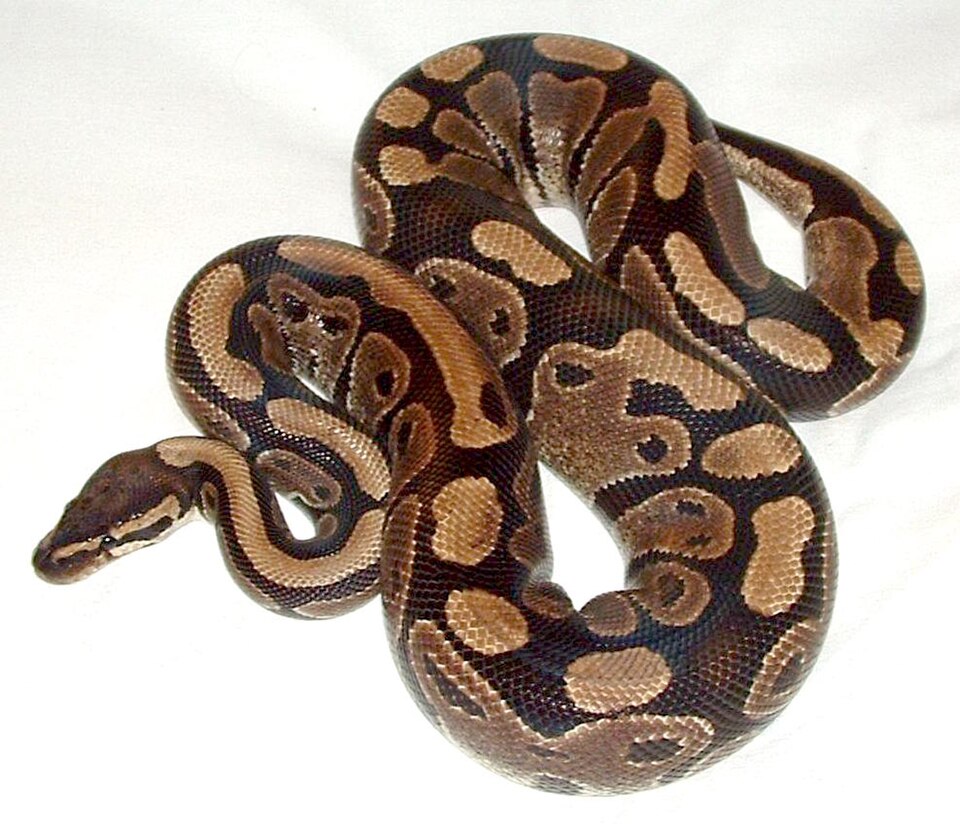
Reference photograph
Reference photograph of a ball python. Compare its colours and form with the identification details in the text.
Source: HCA ( talk ) · Original material: Ball_python_lucy.JPG · CC BY-SA 3.0
1. Classification, origins and habitat
The ball python is an African python species identified by the scientific name Python regius. Ball refers to its defensive habit of coiling around the head when threatened. Captive colours and patterns reflect human-selected lines, while natural distribution and wild ecology need separate explanation. Being relatively small compared with other large pythons does not mean almost no space or management is needed.
2. Appearance and identification
A thick body, relatively short tail and brown, black and pale wild-form pattern stand out. Sensory structures near the lips relate to detecting warm prey and environmental conditions. Tongue flicking reads chemical information around the animal. Captive colour lines are highly varied, making identification by one pattern unreliable; external beauty alone does not establish health. Consider proportions in young and adult animals too.
3. Behavior and way of life
Ball pythons use animals such as small mammals and birds, constricting prey with the body before swallowing. This differs from venom-injecting cobras. They use burrows and shelters, with activity times varying according to conditions. Tight coiling can be a defensive response rather than relaxation out of affection for people. A still captive animal does not prove comfort with contact in every situation.
4. Observation, conservation and care
Ground burrows, hiding places and connected grassland and woodland edges containing prey relate to life. One temperature value or regular meal interval cannot replace opportunities to choose spaces and microenvironments. This text explains natural history rather than recommending freeze-dried food or one management method for all snakes. Distinguish wild collection and captive release from ecological observation, and do not place animals into nature outside their original range.
Evidence and references
- University of Michigan, Animal Diversity Web — Python regius
The species' distribution, appearance, food, breeding and life history
- The Reptile Database — Python regius
Scientific names, synonyms, distribution and related taxonomic research