
Japanese camellia
Japanese camellia keeps its thick, glossy leaves throughout the year and flowers between the colder season and spring. Distinguishing wild-type flowers from the many garden cultivars helps explain differences in color and the number of petal layers.
- Scientific name
- Camellia japonica L.
- Family
- Tea family · Theaceae
- Other names
- Camellia japonica
- Reviewed
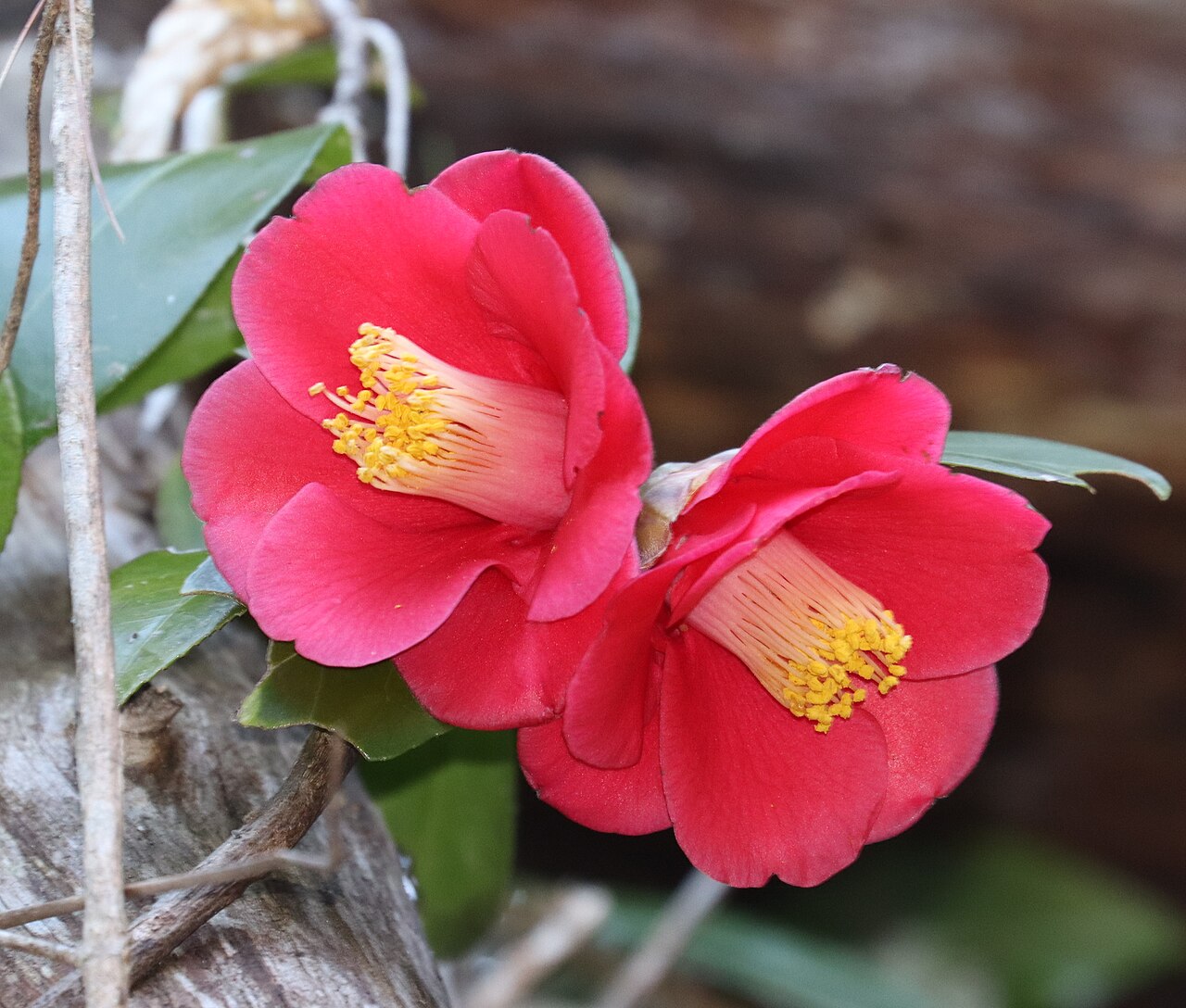
Red flowers, yellow stamens and green leaves of Japanese camellia photographed in Japan's Yoro Mountains. This image does not represent the full range of double-flowered garden cultivars.
Camellia japonica (flower s4).jpg
Photo credit: Alpsdake
License: CC BY-SA 4.0
A reduced-size JPEG supplied by Wikimedia is used, with no additional cropping or color changes.
Names and classification
Camellia japonica belongs to Theaceae and grows as a shrub or small tree. It is a separate species from the tea plant, Camellia sinensis, and sasanqua camellia; cultivar names should also be distinguished from species names.
Observable features
The thick, glossy leaves have finely toothed edges, and numerous yellow stamens stand out in red flowers. Cultivars also have white, pink or double flowers, so not every plant has the same flower color or petal count.
Distribution and habitat
It is native to East Asia, including China, Korea and Japan; Korean records include the southern coast and several islands. Garden plantings elsewhere should be separated from native occurrences, and flowering time varies with region and cultivar.
Ecology and life cycle
Maintaining evergreen leaves and developing flower buds into blooms are affected by conditions in different seasons. Dryness before flowering and cold during bloom can influence flowering, so one day's flowers do not describe a whole year's growth.
Cultivation and care
Consider slightly acidic, organic, well-drained soil, partial shade and protection from drying winter winds. Avoid both excessive watering and dryness, and check flowering and shoot-growth timing before pruning so established flower buds are not removed.
Observation and use precautions
Do not assume yellow leaves or fallen buds always indicate the same disease: examine moisture, soil, pests and diseases together. Do not transfer the tea plant's leaf uses or food and medicinal claims about other Camellia species directly to this species.