
Japanese royal fern
Japanese royal fern is a perennial fern that reproduces by spores rather than flowers. Distinguish its emerging woolly fronds from the sterile and fertile fronds of a mature plant.
- Scientific name
- Osmunda japonica Thunb.
- Family
- Royal fern family · Osmundaceae
- Other names
- Osmunda japonica Thunb. · Osmundastrum japonicum
- Reviewed
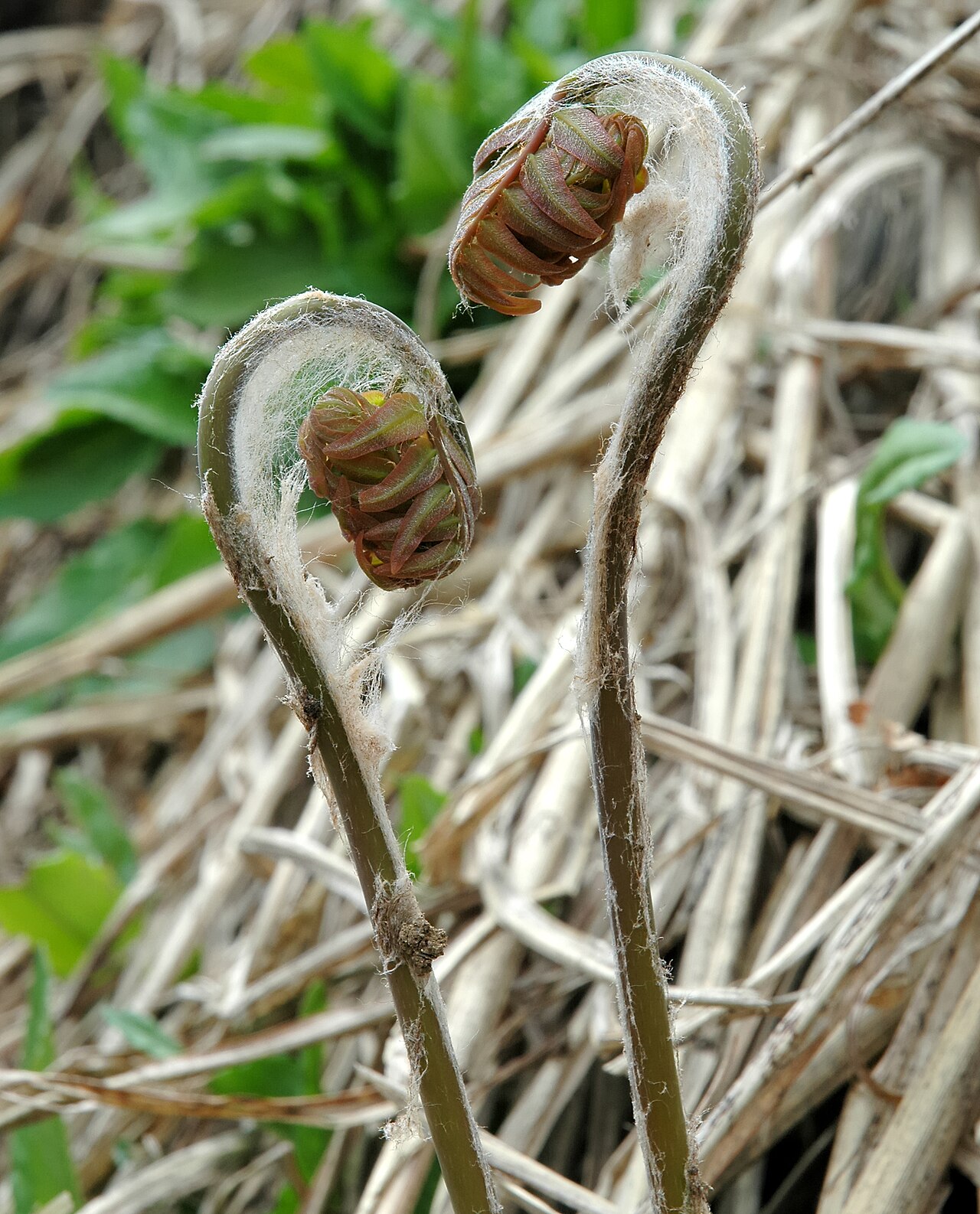
Emerging coiled fronds of Japanese royal fern. Mature sterile fronds and sporangia are not shown, so the whole leaf structure cannot be inferred from this scene alone.
Photo credit: Kropsoq
License: CC BY-SA 3.0
A reduced-size JPEG supplied by Wikimedia is used, with no additional cropping or color changes.
Names and classification
Japanese royal fern is Osmunda japonica Thunb. in Osmundaceae, and the author abbreviation is important for distinguishing the name. The identically spelled Osmunda japonica Houtt. is treated under a different species, Osmunda lancea, so records of the two should not be combined.
Observable features
Young fronds emerge tightly coiled and covered in woolly hairs, then unfold as they grow. Sterile fronds with broad green blades differ from fertile fronds with narrowed blades bearing sporangia, and both forms may not appear in a single photograph.
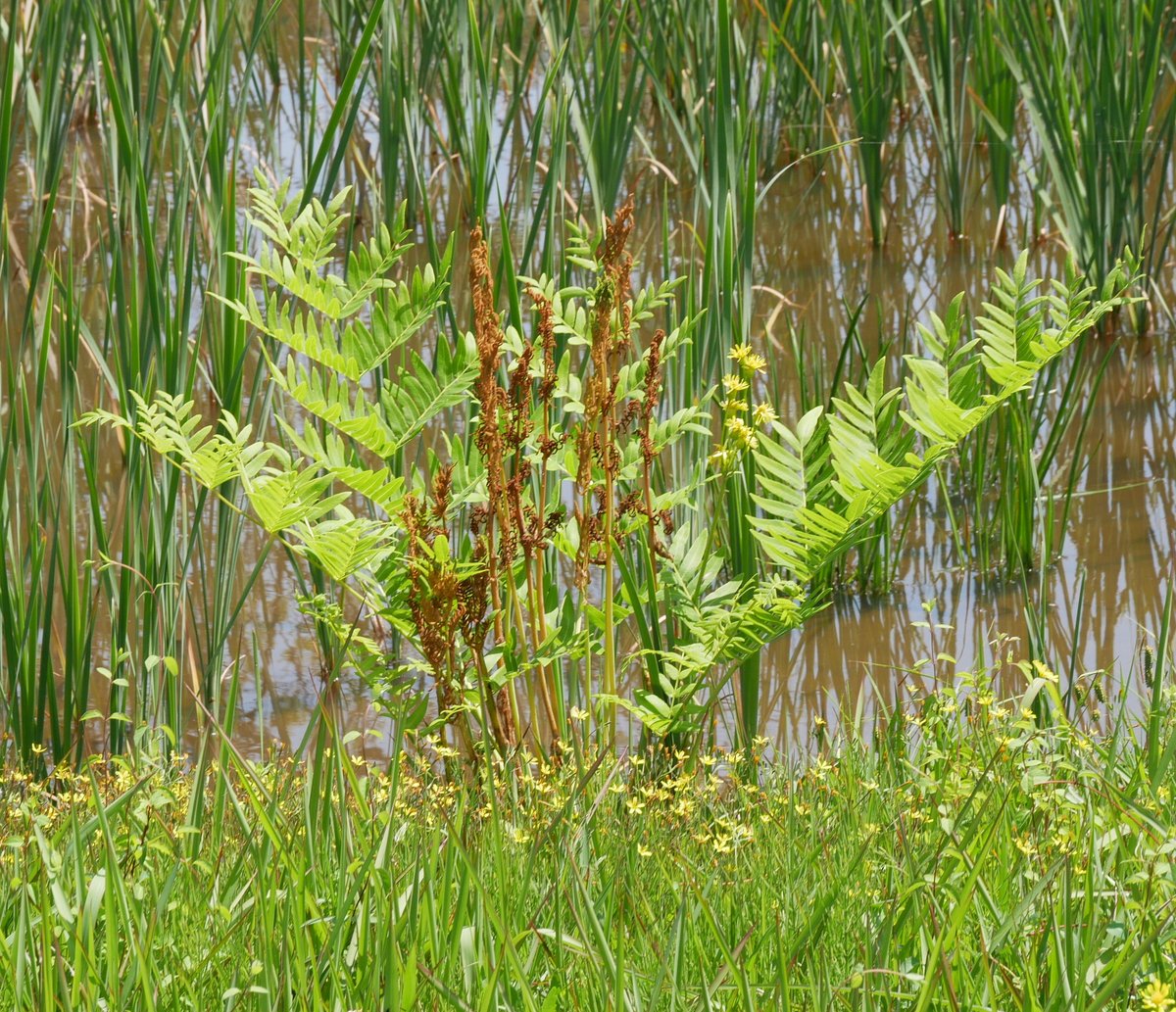
The brown fertile fronds in the middle produce spores. The green fronds on either side capture light for photosynthesis.
Osmunda japonica zenmai01.jpg· Photo credit: Keisotyo· CC BY-SA 4.0· The original photograph has been reduced in size.

Distribution and habitat
Its Asian range includes Korea and Japan but extends beyond East Asia towards the Himalayas and Indochina. Understand its mainly moist-woodland habit while distinguishing it from aquatic plants growing submerged in water.
Ecology and life cycle
This fern disperses spores rather than producing flowers, fruits and seeds. Observing only the hairs and coils of young fronds gives different identification information from examining mature sterile and fertile fronds.
Cultivation and care
Consider woodland moisture and surrounding shade when choosing growing conditions, and prevent the root area from drying out. In mixed plantings, allow room for the unfolded fronds and avoid repeatedly breaking off young fronds to inspect them.
Observation and use precautions
Similar-looking coiled shoots do not establish that another fern is this species or an edible wild vegetable. Observe without collecting wild plants, and compare mature leaves, fertile fronds, habitat and verified sources together.