
Cats
Himalayan
Himalayan
Classification and scientific name: Felis catus
Sources checked:
A long-haired cat with points and blue eyes, rather than a wild mountain species
The Himalayan developed through breeding that combined the Persian’s build and long hair with point coloration from Siamese lines. Its name does not designate a wild cat species discovered in the Himalayas.
Origins and distribution
Developed by combining a Persian-type body with points from Siamese lines
- Himalayan
- Domestic cat
- Assess each individual’s temperament
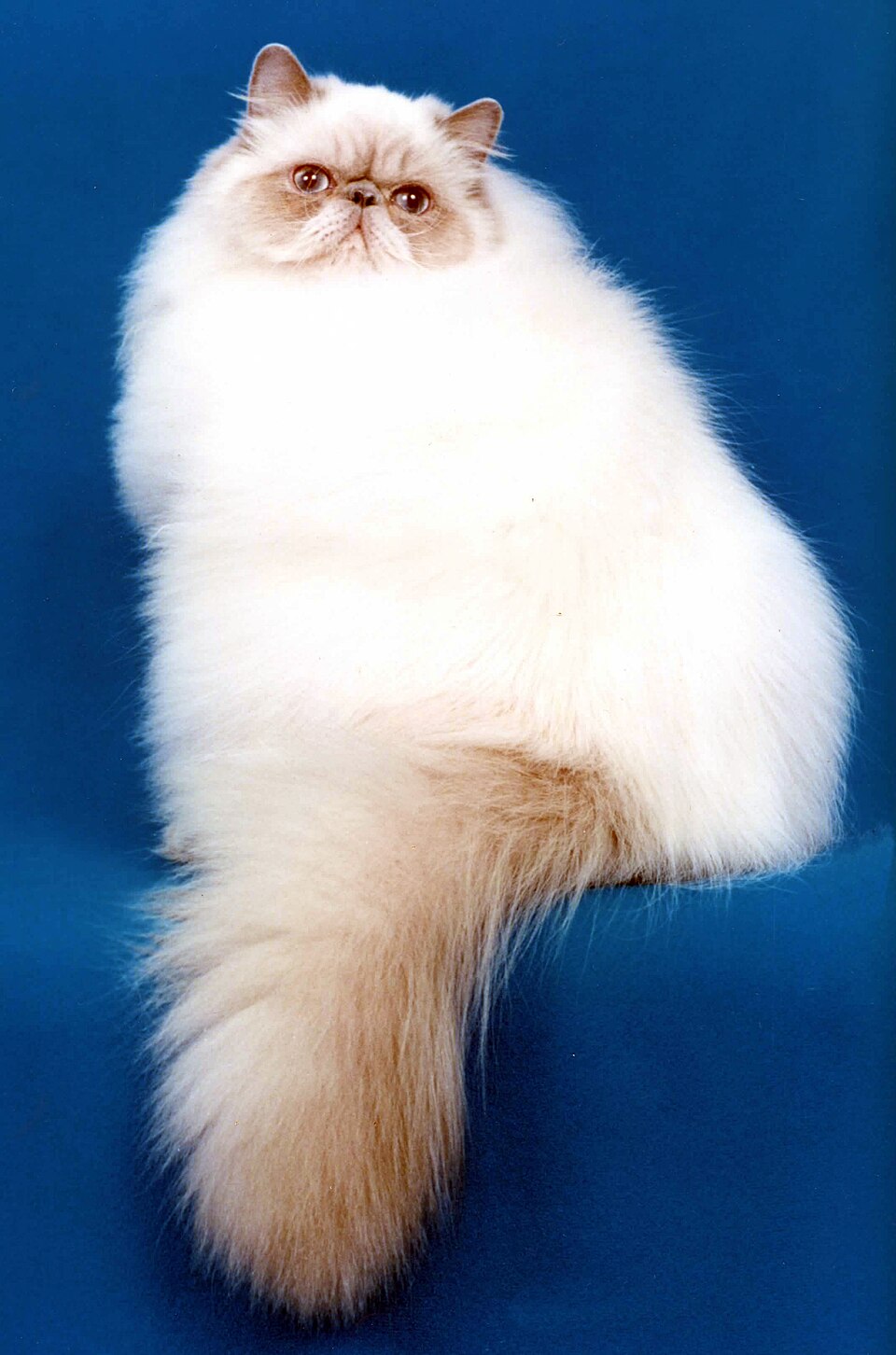
Reference photograph
Reference photograph of a Himalayan. Examine this individual’s color and form alongside the identification descriptions in the text.
Source: Cindy See · Original material · CC BY-SA 2.0
1. Classification, origins and habitat
The Himalayan developed through breeding that combined the Persian’s build and long hair with point coloration from Siamese lines. Its name does not designate a wild cat species discovered in the Himalayas. Some breed organizations treat it as a Persian color division and others as a separate breed, so check the scope of their standards. Its appearance and registration history also differ from the Ragdoll, despite shared blue eyes and points. Do not use a mountain name as evidence of climatic adaptation or temperament.
2. Appearance and identification
Blue eyes, points on the face, ears, paws and tail that are darker than the body, long hair and a rounded Persian-type body are characteristic. Point colors and the development of color with growth vary. A photograph’s impression can change with muzzle length and coat volume. Distinguish a full coat from actual body condition. Do not describe an extremely flat face solely as an advantage; consider health and welfare issues involving the eyes and breathing as well.
3. Behavior and way of life
Tendencies toward calm interaction and rest are described, but do not dismiss avoidance of movement caused by discomfort as simply a quiet breed. Observe both times when the cat wants play or exploration and responses indicating a wish to rest. Adaptation to brushes and touch also varies with individual experience. A doll-like impression is not permission for a child to carry the cat around at will. Leave the cat choices to withdraw and hide.
4. Observation, conservation and care
Prevent tangles in the long coat and regularly inspect the belly, armpits and skin. Also check dirt around the eyes and changes in activity and breathing. Do not describe care for a long-haired breed solely through a fixed bathing frequency and a list of supplements. Assistance suited to individual health and coat condition matters. Photographs should show the rounded Persian type together with points; do not mix in the long-bodied Balinese or white-gloved Birman as examples of the same breed.
Evidence and references
- Cat Fanciers’ Association — Himalayan
Breed background, appearance standards and temperament descriptions
- The International Cat Association — Himalayan
Breed characteristics, coat, activity and daily care
- Cats Protection — Brachycephalic Cats
Extremely short faces and welfare concerns involving eyes, breathing, teeth and skin