
Cats
Norwegian Forest Cat
Norwegian Forest Cat
Classification and scientific name: Felis catus
Sources checked:
A triangular head and abundant double coat; legends are not pedigree evidence
The Norwegian Forest Cat connects Norway's cat traditions and local populations with modern conservation and registration history. Similar cats in Norse mythology and Viking stories do not mean that the direct ancestry of every present-day individual is fully documented.
Origins and distribution
Developed from domestic cat populations in Norway
- Norwegian Forest Cat
- Domestic cat
- Observe individual temperament
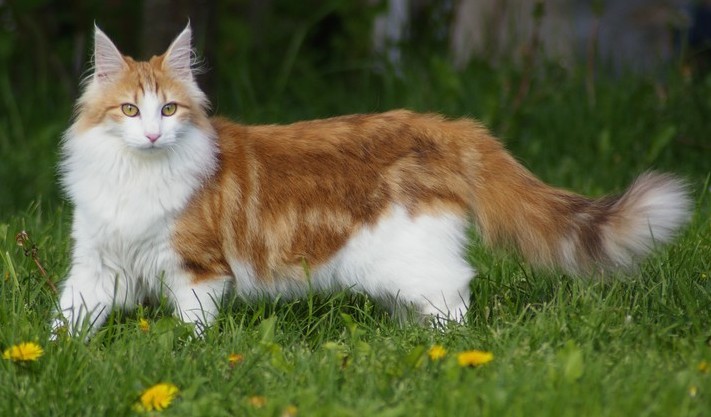
Reference photograph
Reference photograph of a Norwegian Forest Cat. Examine this individual's color and form alongside the identification descriptions in the text.
Source: Gangburgondes · Original material · CC BY-SA 3.0
1. Classification, origins and habitat
The Norwegian Forest Cat connects Norway's cat traditions and local populations with modern conservation and registration history. Similar cats in Norse mythology and Viking stories do not mean that the direct ancestry of every present-day individual is fully documented. Forest in the name does not denote a separate wild cat species or a need to live outdoors at all times. Separating modern standards from interesting traditions makes the origin story clearer.
2. Appearance and identification
A triangular head, relatively straight profile, full ruff and tail, and dense undercoat and outer coat are characteristic. The amount of coat may look different with season and age. Although resembling large long-haired cats such as the Maine Coon, muzzle and head proportions differ. Do not present white or a single tabby pattern as the breed's universal color. Distinguish coat volume from actual build, and do not assume the individual in one photograph represents the whole breed's average size.
3. Behavior and way of life
Descriptions mention enjoyment of climbing, exploration and a personally chosen degree of proximity. Being described as independent does not mean it can go for long periods without attention or play. Both voluntarily sitting on a lap and resting beside someone count as interaction. The image of a northern European forest does not establish that every individual enjoys cold and snow. Include the joint effects of experience and the current environment when observing behavior.
4. Observation, conservation and care
Maintain the double coat while checking shedding and tangles, and do not let abundant fur hide skin problems. Provide stable high places, climbing steps and comfortable hiding spots. Do not suddenly expose an indoor individual to cold because the breed comes from a cold region. When comparing photographs with other long-haired breeds, check facial lines, coat structure and provenance together. Explain breed appearance in connection with an environment where the individual can move and rest comfortably.
Evidence and references
- Cat Fanciers’ Association — Norwegian Forest Cat
Breed background, appearance standards and temperament overview
- The International Cat Association — Norwegian Forest Cat
Breed characteristics, coat, activity and everyday care