
Cats
Ragdoll
Ragdoll
Classification and scientific name: Felis catus
Sources checked:
Blue eyes and pointed markings: the name does not explain pain perception.
The Ragdoll developed in a California breeding program, and its name refers to a cloth doll. It became widely known through the impression of relaxing when held, but this does not indicate a biological inability to feel pain or a response shared by every individual.
Origins and distribution
A domestic cat breed developed in California, United States
- Ragdoll
- Domestic cat
- Assess each individual’s temperament
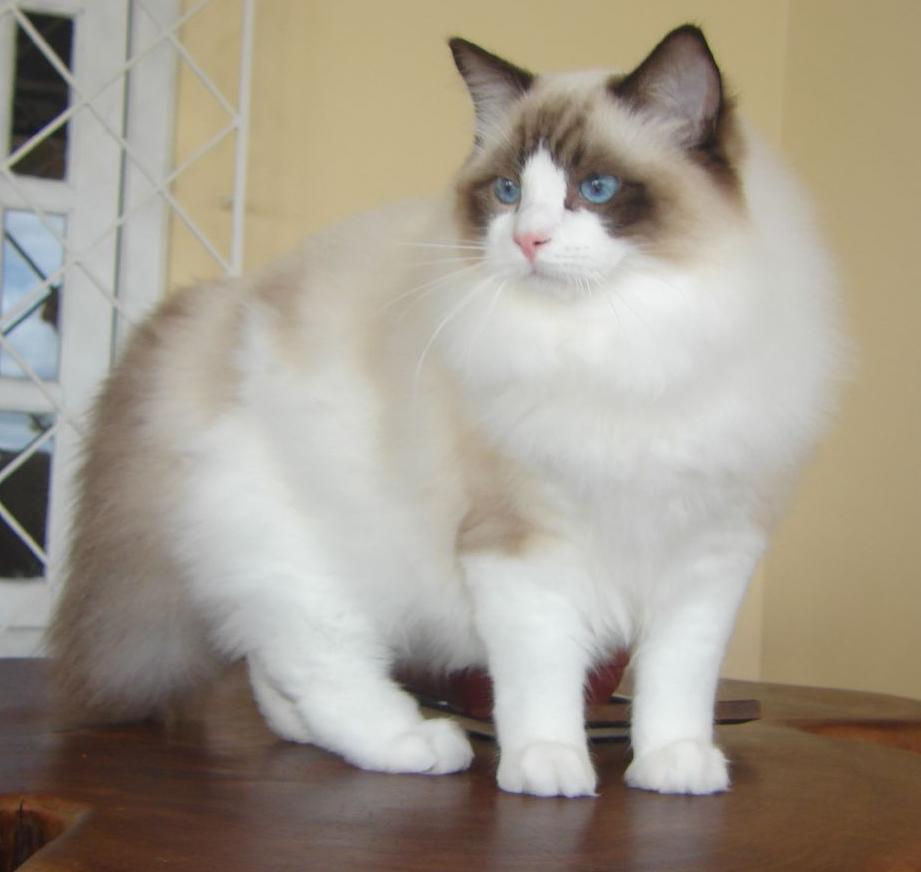
Reference photograph
Reference photograph of Ragdoll. Compare the color and form of the individual shown with the identification notes in the text.
Source: Simone Johnsson · Original material · CC BY-SA 2.0
1. Classification, origins and habitat
The Ragdoll developed in a California breeding program, and its name refers to a cloth doll. It became widely known through the impression of relaxing when held, but this does not indicate a biological inability to feel pain or a response shared by every individual. Read records of the founding lines alongside later breed standards. Distinguish modern registration standards and appearance ranges from the similarly named Ragamuffin.
2. Appearance and identification
Blue eyes, pointed coloring, several patterns incorporating white, soft semi-long hair and a large body are characteristic. Color and build can change as kittens grow. White paws or facial markings do not determine health or temperament. An abundant coat does not mean that the body beneath is always the same size; consider sex and age differences too. Long hair combined with blue eyes alone cannot prove a pedigree Ragdoll.
3. Behavior and way of life
The breed is often described as staying near people and engaging with them, but some individuals may dislike being held. The name’s association with relaxation does not justify lifting a cat high or saying that rough handling by children is acceptable. Respect both approaches and withdrawal signals. Despite a quiet impression, play and exploration are needed, and relationships with unfamiliar animals should be assessed gradually. A breed is not a certificate of individual temperament.
4. Observation, conservation and care
Brush the semi-long coat while checking for tangles, skin changes and the body underneath. A large adult needs room to rest and turn comfortably, as well as stable elevated places. Growth may take a long time, so do not use the kitten’s current size to plan adult space. Verify health tests and pedigree documents for the particular individual; breed identity does not establish freedom from disease. When explaining patterns in a photograph, do not casually merge a Birman’s white gloves or a Himalayan’s flat face into the same features.
Evidence and references
- Cat Fanciers’ Association — Ragdoll
Breed background, appearance standards and an introduction to behavioral tendencies
- The International Cat Association — Ragdoll
Breed characteristics, coat, activity and everyday care