
Cats
RagaMuffin
Ragamuffin
Classification and scientific name: Felis catus
Sources checked:
A large body and varied coat colors; check registration standards that differ from the Ragdoll’s
The RagaMuffin developed under separate standards after splitting from Ragdoll-related breeding populations in the United States. Despite similar names and a historical relationship, the two do not share the same registered name today.
Origins and distribution
Developed separately from Ragdoll-related lines in the United States
- RagaMuffin
- Domestic cat
- Assess each individual’s temperament
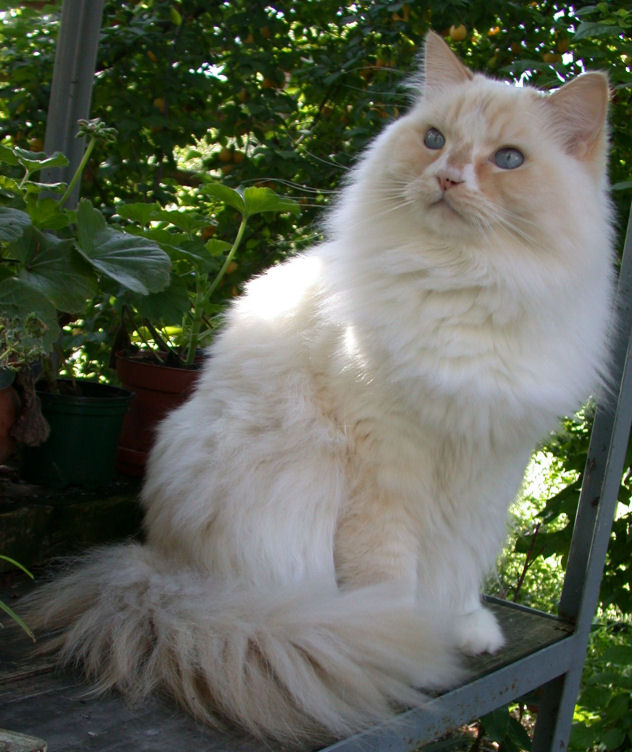
Reference photograph
Reference photograph of a RagaMuffin. Examine this individual’s color and form alongside the identification descriptions in the text.
Source: "Iris Preyler-Hamertinger" · Original material · CC BY-SA 3.0
1. Classification, origins and habitat
The RagaMuffin developed under separate standards after splitting from Ragdoll-related breeding populations in the United States. Despite similar names and a historical relationship, the two do not share the same registered name today. Check each breed organization’s registration and show standards and accepted patterns. The historical use of long-haired domestic cats in its development does not make every ordinary long-haired cat a RagaMuffin. A modern individual’s pedigree must be checked separately through records.
2. Appearance and identification
Observe the large, muscular body, soft semi-long coat, and broad, rounded outlines of the head and eyes. Varied colors and patterns are characteristic, and eye color should not be limited to a single color such as the Ragdoll’s blue eyes. A full coat does not allow body size and weight to be measured accurately from a photograph alone. Read matters such as show classification of pointed cats in the context of the particular organization’s standards. Symmetry in appearance standards and an individual’s health are separate matters.
3. Behavior and way of life
Close interaction and a calm disposition are described, but the name’s image of being held like a doll does not imply every individual’s consent. Stop contact if the cat tenses its body or withdraws, allowing it to choose. A large body still needs play and places to climb. Do not turn a general tendency to get along with other animals into a guarantee for every relationship; arrange gradual introductions while managing scent and distance.
4. Observation, conservation and care
Check for tangles in the semi-long coat and assess skin and body condition, setting a brushing schedule suited to the individual. Provide sturdy resting places that support its large body, a spacious litter box and safe climbing supports. Breed introductions and registration rules have different scopes, so a sales description bearing a name alone is not conclusive pedigree evidence. Link photographs to examples with accurately checked sources, and do not transfer every typical feature of a pointed Ragdoll into a shared appearance for all RagaMuffins.
Evidence and references
- Cat Fanciers’ Association — RagaMuffin
Breed background, appearance standards and temperament descriptions
- GCCF — RagaMuffin
History of separation from the Ragdoll, registration standards, appearance and coat care