
Cats
Siberian
Siberian Cat
Classification and scientific name: Felis catus
Sources checked:
A dense, layered coat and a solid body do not guarantee freedom from allergies
The Siberian is a domestic cat breed connecting the history of regional Russian cats with modern breed registration. Old stories and actual showing and breeding records are different kinds of evidence.
Origins and distribution
Russian forest cat populations and modern breed development
- Siberian
- Domestic cat
- Assess each individual’s temperament
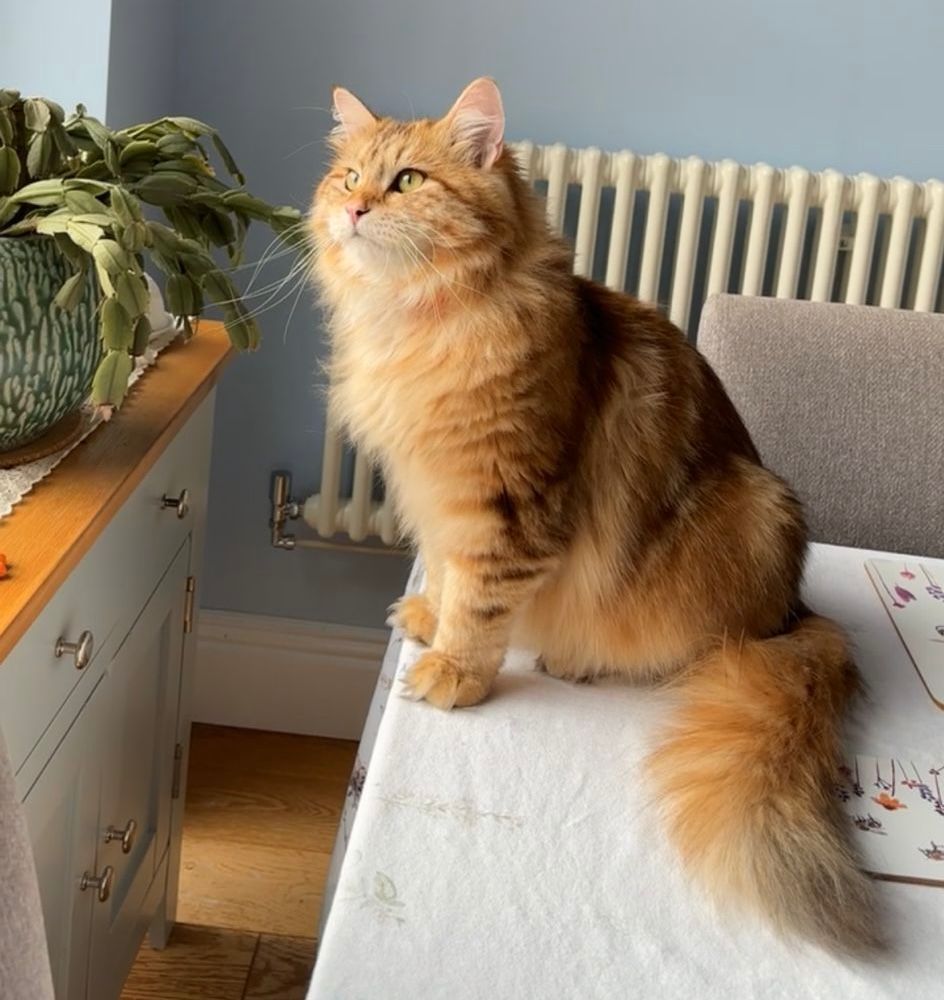
Reference photograph
Reference photograph of a Siberian. Examine this individual’s color and form alongside the identification descriptions in the text.
Source: Floofymarshmallow · Original material · CC BY-SA 4.0
1. Classification, origins and habitat
The Siberian is a domestic cat breed connecting the history of regional Russian cats with modern breed registration. Old stories and actual showing and breeding records are different kinds of evidence. Its Siberian image does not mean every cat can safely be exposed to extreme cold. Some organizations classify the pointed pattern under a separate name, so check the scope of registration. Do not treat it as the same breed as the Maine Coon or Norwegian Forest Cat simply because all are large and long-haired.
2. Appearance and identification
A strong body, gently rounded head contours and a dense, layered coat are characteristic. Fur around the neck, tail and legs can look different with season and growth. Colors vary, and coat volume can exaggerate actual body size. Comparison with the Norwegian Forest Cat’s triangular head and the Maine Coon’s square muzzle reveals differences in overall form. Do not use the build of one photographed individual as the average for every adult.
3. Behavior and way of life
The breed is described as tending to enjoy exploration, play and interaction with people. An impression of a large cat from a cold region is separate from individual personality. Offer choices to climb and rest in high places, and observe reactions when introducing unfamiliar animals. A full coat does not mean that the cat is always relaxed or inactive. Treat both moments when the cat chooses contact and time spent alone as parts of daily life.
4. Observation, conservation and care
Care for the dense coat by monitoring shedding and tangles, particularly the undercoat. Provide sturdy supports and resting places and litter boxes suited to a large body. Being a Siberian does not guarantee that the cat will cause no allergies in anyone, and allergens cannot be explained by coat length alone. Do not advertise medical advantages based on the breed name. Align the photograph and text with actual color and body form, while avoiding claims that every individual shares the same coat texture or temperament.
Evidence and references
- Cat Fanciers’ Association — Siberian
Breed background, appearance standards and temperament descriptions
- The International Cat Association — Siberian
Breed characteristics, coat, activity and daily care