
Cats
Somali
Somali
Classification and scientific name: Felis catus
Sources checked:
A ticked, semi-long coat and a full tail; the name does not mean a wild fox
The Somali is a domestic cat breed developed in connection with long-haired traits in Abyssinian lines. Having a country’s name does not make it a separate wild cat discovered in Somalia.
Origins and distribution
Developed in connection with the Abyssinian’s long-haired traits
- Somali
- Domestic cat
- Assess each individual’s temperament
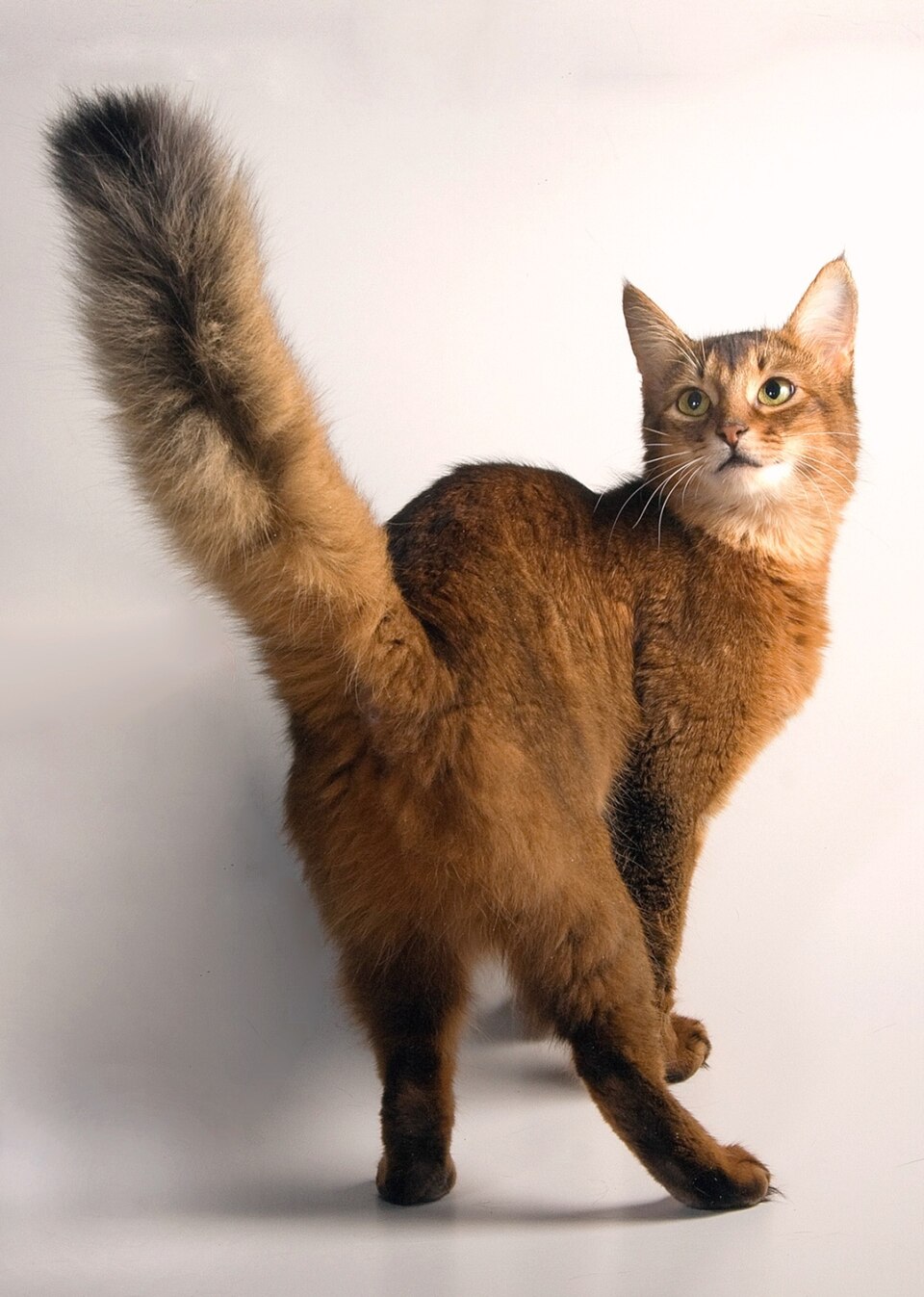
Reference photograph
Reference photograph of a Somali. Examine this individual’s color and form alongside the identification descriptions in the text.
Source: Матвеева Ирина Владимировна · Original material · Public domain
1. Classification, origins and habitat
The Somali is a domestic cat breed developed in connection with long-haired traits in Abyssinian lines. Having a country’s name does not make it a separate wild cat discovered in Somalia. Modern breeding and registration standards shaped its long-haired appearance. Comparing its full tail to a fox’s describes appearance and is not an origin story about crossing with foxes. Despite its close relationship with the short-haired Abyssinian, photographs and names should be kept distinct.
2. Appearance and identification
Ticking, with bands of color on individual hairs, soft semi-long fur, a neck ruff and a full tail are characteristic. Warm brown is commonly seen, but several colors occur. Coat length and the ruff can change with growth and season. Observing the large ears and slender body too helps comparisons with other long-haired breeds. A bushy tail alone does not establish that a Nebelung or an ordinary long-haired domestic cat is a Somali.
3. Behavior and way of life
The breed is described as tending to enjoy active play, exploration and participation in surrounding activities. Active does not mean always wanting to be in a person’s hands or being fearless about every sound. Observe the process of focusing on a toy and then choosing to rest. Environmental stability matters because the cat may use high places and investigate objects. Breed temperament descriptions are background information for understanding the individual cat’s current experiences and relationships.
4. Observation, conservation and care
Check for tangles in the semi-long coat around the armpits, belly and tail, and build comfortable experiences of brushing. Provide play equipment, safe climbing supports, quiet resting places and hiding spots. Do not mistake a voluminous coat for body weight or overfeed because the body is slender. Link the image to a sourced example showing both ticking and long hair. Assess changes in health and activity through individual records rather than coat color or the breed’s image.
Evidence and references
- Cat Fanciers’ Association — Somali
Breed background, appearance standards and temperament descriptions
- The International Cat Association — Somali
Breed characteristics, coat, activity and daily care