
Cats
American Shorthair
American Shorthair
Classification and scientific name: Felis catus
Sources checked:
A short-haired breed defined by more than just silver tabby markings
The American Shorthair developed with registration standards in connection with the history of domestic cats in North America. Stories of cats catching rodents on ships and farms explain its background, but do not mean every short-haired cat in America belongs to this pedigree breed.
Origins and distribution
A domestic cat breed developed in North America
- American Shorthair
- Domestic cat
- Consider the individual’s temperament
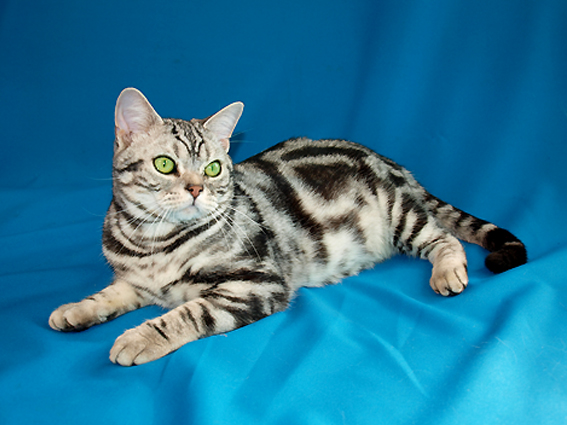
Reference photograph
Reference photograph of an American Shorthair cat. Compare the individual’s color and shape with the identification notes in the text.
Source: odin_aka_zero-one · Original material · CC BY-SA 3.0
1. Classification, origins and habitat
The American Shorthair developed with registration standards in connection with the history of domestic cats in North America. Stories of cats catching rodents on ships and farms explain its background, but do not mean every short-haired cat in America belongs to this pedigree breed. Distinguish the non-pedigree category “domestic shorthair” from the registered American Shorthair. Modern breed standards consider several features together, including body balance, coat and head. One particular voyage does not establish the ancestry of every individual.
2. Appearance and identification
A balanced, muscular body, a broad head and a short, dense coat are characteristic. The black classic tabby pattern on a silver background is widely known, but many colors and patterns exist. Do not use one photograph of rounded tabby markings as the breed’s only possible appearance. Sex, age and photographic pose change the impression of the face and body. A sturdy appearance and obesity are different assessments, so examine the actual body condition beneath the coat.
3. Behavior and way of life
Breed organizations describe a tendency to adapt to play and life with people, but do not guarantee the same response to every person. Do not turn its hunting history into a requirement to let the cat catch real birds or mice. The sequence of predatory behavior can also be seen when it watches a toy, waits and pounces. A reputation for an easygoing temperament does not mean it can immediately be placed with unfamiliar animals. Introductions need space to avoid one another and time to observe.
4. Observation, conservation and care
While brushing the short coat, check the skin and body condition and consider the balance of play, meals and rest. Photo descriptions should also reflect that the breed has several colors. Do not overfeed in an attempt to create a solid body or set a target weight from the breed name alone. Provide raised resting places, scratching posts and safe indoor exploration. Link images to examples identified by their sources as American Shorthairs, rather than declaring another domestic cat a pedigree example merely because it is silver tabby.
Evidence and references
- Cat Fanciers’ Association — American Shorthair
Breed background, appearance standards and temperament overview
- The International Cat Association — American Shorthair
Breed characteristics, coat, activity and everyday care