
Cats
Korean Shorthair
Korean Shorthair
Classification and scientific name: Felis catus
Sources checked:
Korean Shorthair is not the name of a single fixed pedigree breed
It is an everyday name for short-haired domestic cats in Korea. It is not one pedigree breed with particular founding animals and registration standards, nor a separate species of wild cat.
Origins and distribution
Non-pedigree short-haired domestic cats living alongside people in Korea
- Domestic short-haired cat
- Domestic cat
- Consider the individual’s temperament
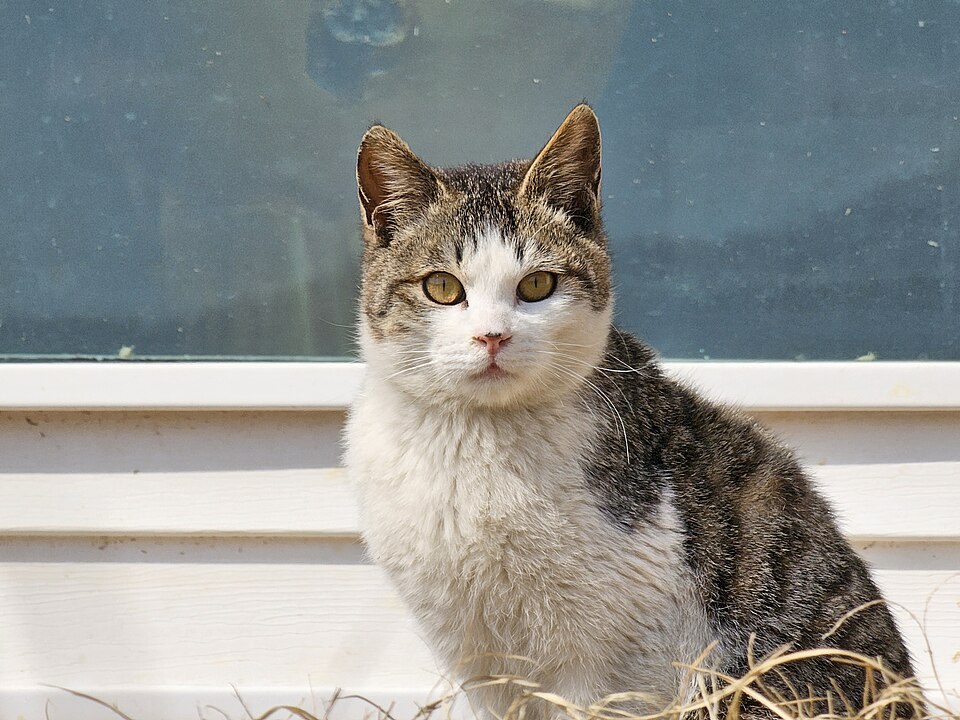
Reference photograph
Reference photograph of a Korean Shorthair domestic cat. Compare the individual’s color and shape with the identification notes in the text.
Source: Sadopaul · Original material · CC BY 4.0
1. Classification, origins and habitat
Korean Shorthair is an everyday name for short-haired domestic cats in Korea. It is not one pedigree breed with particular founding animals and registration standards, nor a separate species of wild cat. The domestic cat’s scientific name is Felis catus, and individuals in different parts of Korea have varied ancestry and appearances. Do not treat them as the same registered breed as the American Shorthair with only the country name changed. Describing a population that has lived alongside people is different from proving an individual pedigree.
2. Appearance and identification
Even though these cats share a short coat, their size, face shape, eye color and coat patterns vary. Everyday expressions such as striped, orange, black, calico and white-marked describe colors and patterns; they are not names of separate cat species. Sharing a pattern does not mean two cats have the same parents or the same personality. View a photograph with the understanding that one individual’s appearance is not the only standard for the whole group. Short hair can still require attention to shedding and skin care.
3. Behavior and way of life
Responses that welcome people and responses that keep a distance are influenced jointly by genetics, early experience and the current environment. Do not describe a cat encountered outdoors as inherently wild or badly tempered simply because it does not approach. Play, sleep, searching for food and hiding are different behaviors that help explain domestic cats’ lives. Observe the tail, ears and degree of body tension together, and let the cat choose whether to approach or retreat. Do not use expressions promising affection or intelligence on the basis of coat color.
4. Observation, conservation and care
Provide safe indoor hiding places, places to use the claws, raised resting places and opportunities to play. In a home with several cats, arranging resources so they do not have to compete for food, water and litter boxes in just one location can help. An unknown background is neither a guarantee of health nor a reason to assume weakness. The photograph on this page is one example of a non-pedigree short-haired domestic cat; it is not presented as proof of a registered native Korean breed. For rescued or adopted cats, consider their living history and current condition together.
Evidence and references
- Cornell Feline Health Center — Choosing and Caring for Your New Cat
Distinguishing non-pedigree short-haired and long-haired domestic cats, individual temperament and environment
- AAFP and ISFM — Feline Environmental Needs Guidelines
Safe hiding places, distributed resources, play and cats’ opportunities to choose