
Cats
Siamese
Siamese
Classification and scientific name: Felis catus
Sources checked:
Point markings and blue eyes: changes in color are separate from personality
The Siamese is a domestic cat breed associated with Thailand’s cat traditions, with modern standards developed through Western cat shows and registration. It helps to understand the historical name Siam alongside the present-day name Thailand.
Origins and distribution
Thailand’s cat traditions and modern breed development in Europe and the United States
- Siamese
- Domestic cat
- Consider the individual’s temperament
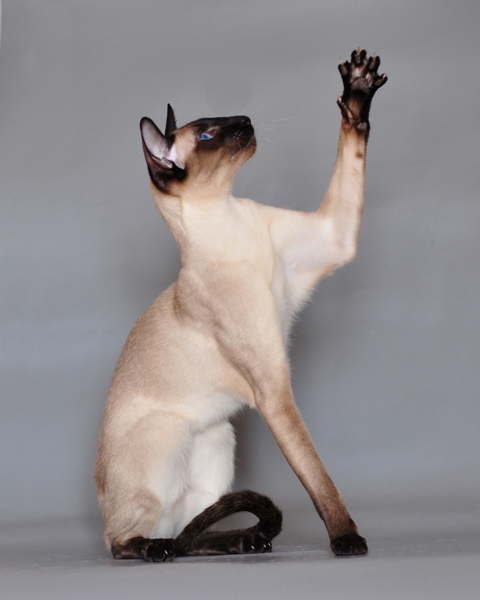
Reference photograph
Reference photograph of a Siamese cat. Compare the individual’s color and shape with the identification notes in the text.
Source: Meekahoo · Original material · CC BY-SA 3.0
1. Classification, origins and habitat
The Siamese is a domestic cat breed associated with Thailand’s cat traditions, with modern standards developed through Western cat shows and registration. It helps to understand the historical name Siam alongside the present-day name Thailand. The presence of similar cats in historical illustrations and records does not establish the pedigree of every modern individual. Names and standards used to distinguish a traditional body type can also differ between organizations. Do not identify a non-pedigree cat with the same point markings as a registered Siamese based on appearance alone.
2. Appearance and identification
A pale body contrasting with darker points on the face, ears, feet and tail, together with blue eyes, is characteristic. The modern show type has a notably long, slender body, a wedge-shaped head and large ears. There are several point colors, and a kitten’s color can become more distinct as it grows. Temperature and genetics are involved in the expression of body pigmentation, but the darkness in a photograph alone does not establish age or health. Consider coat-color standards alongside a body structure that allows the individual cat to move comfortably.
3. Behavior and way of life
Breed organizations describe tendencies to interact with people and communicate vocally. This does not mean every Siamese always meows loudly or cannot tolerate any time alone. Observe whether vocalization occurs in the context of food, play or discomfort. Respect both contact the cat initiates and its withdrawal when contact is unwanted. Do not turn a talkative nickname into an intelligence ranking claiming that the cat understands human speech.
4. Observation, conservation and care
A short, close-lying coat still needs attention to skin condition and shedding. Do not restrict food without considering the cat’s actual body condition and age simply to maintain a slender appearance. Providing interactive play and a quiet resting place allows a choice between active exploration and rest. Check the safety of windows and raised places too. Match the photograph and text to the characteristics of a short-haired, point-patterned Siamese, rather than substituting a similarly colored Himalayan or Balinese without explanation.
Evidence and references
- Cat Fanciers’ Association — Siamese
Breed background, appearance standards and temperament overview
- The International Cat Association — Siamese
Breed characteristics, coat, activity and everyday care