
Cats
Bengal
Bengal
Classification and scientific name: Felis catus
Sources checked:
Rosette and marbled markings and activity: a wild-looking appearance does not guarantee a temperament
The Bengal has a history of crosses between domestic cats and leopard cats, followed by the development of breeding and registration standards for it as a domestic cat. Distinguish the modern registered breed from early-generation hybrids.
Origins and distribution
A breed of leopard-cat hybrid ancestry developed in the United States and elsewhere
- Bengal
- Domestic cat
- Consider the individual’s temperament
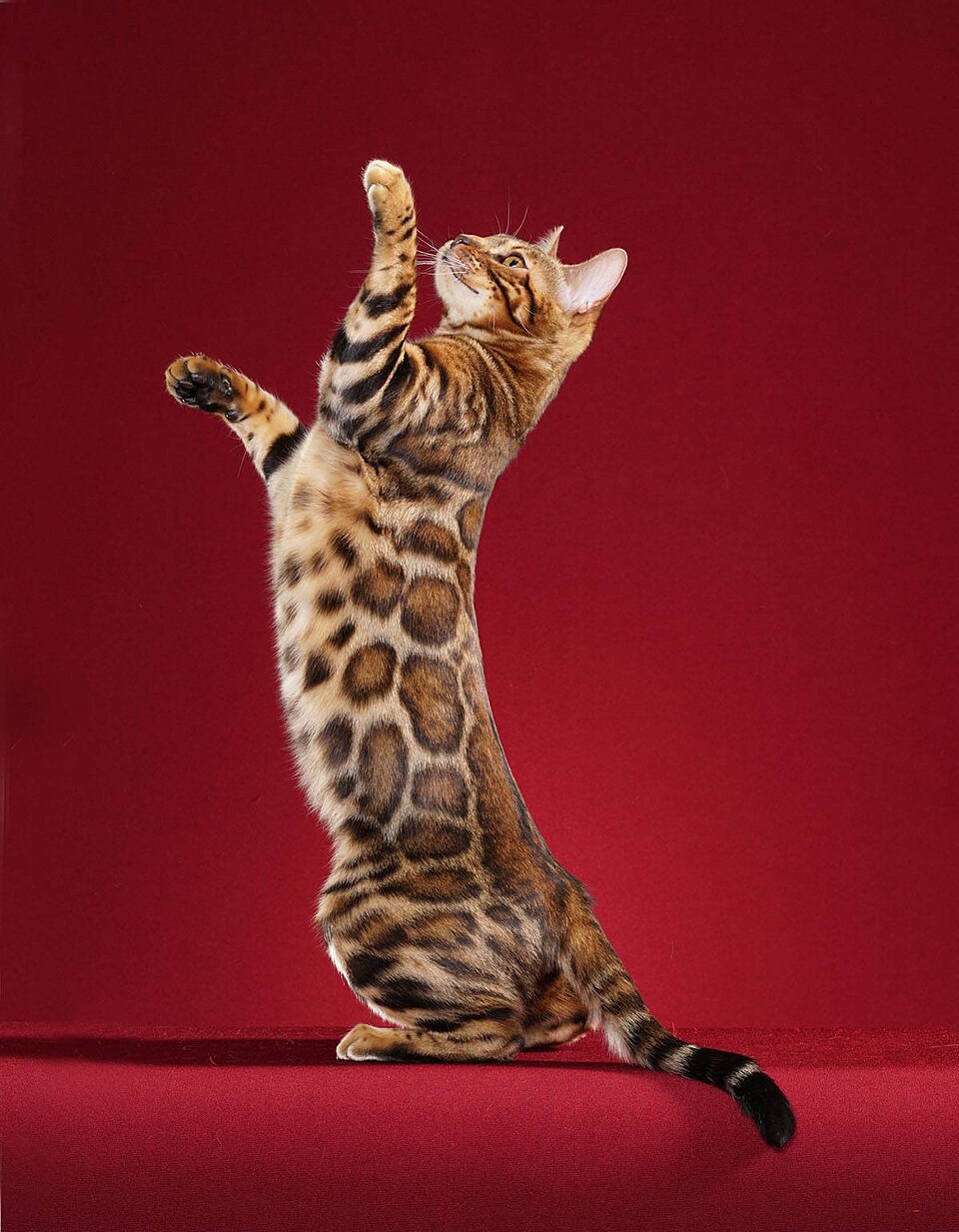
Reference photograph
Reference photograph of a Bengal cat. Compare the individual’s color and shape with the identification notes in the text.
Source: User:Lightburst · Original material · CC BY-SA 4.0
1. Classification, origins and habitat
The Bengal has a history of crosses between domestic cats and leopard cats, followed by the development of breeding and registration standards for it as a domestic cat. Distinguish the modern registered breed from early-generation hybrids. It is not a breed descended from Bengal tigers or ocelots. Its origins and standards also differ from those of the similarly spotted Ocicat. Coat markings in a photograph do not reveal the hybrid generation or registration status, so the source’s records matter.
2. Appearance and identification
A muscular body, short hair and outlined markings called rosettes or a marbled pattern are well known. Not every Bengal has the same color or arrangement of spots. Coat sheen also appears different depending on lighting and the individual. A resemblance to a wild cat does not mean it is a separate wild species. Consider the body markings together with the proportions of the head, ears and torso, and do not substitute a photograph of the ancestral leopard cat.
3. Behavior and way of life
The breed is described as tending to be active and eager to explore and play, but not every individual likes swimming or moves without resting. A tendency to explore high places and new objects makes a safe environment important. Provide opportunities for behavior through toys and food-search activities instead of letting it catch real small animals. Avoid both the claim that it is too wild to train and the opposite guarantee that it follows everyone like a dog.
4. Observation, conservation and care
Provide sturdy places to climb, scratch and hide, and opportunities for interactive play. Letting the cat outdoors without preparation in an attempt to meet its activity needs is different from designing a suitable living environment. While brushing the short coat, check the skin and body condition too. Do not conclude from the breed name alone that a raw-meat diet is necessary. Introduce other animals gradually while observing individual responses, and prioritize space that provides choices in everyday life over the striking appearance of a photograph.
Evidence and references
- Cat Fanciers’ Association — Bengal
Breed background, appearance standards and temperament overview
- The International Cat Association — Bengal
Breed characteristics, coat, activity and everyday care