
Cats
Bombay
Bombay
Classification and scientific name: Felis catus
Sources checked:
Black fur and copper-colored eyes; this is not a cat crossed with a black panther
Black fur and copper-colored eyes are characteristic; this is not a cat crossed with a black panther. The Bombay was developed in the United States using Burmese and American Shorthair ancestry, among other lines. Although named after an Indian city, it was not produced by breeding with wild black panthers captured in India.
Origins and distribution
A black, short-haired domestic cat breed developed in the United States
- Bombay
- Domestic cat
- Check the individual’s behavioral tendencies
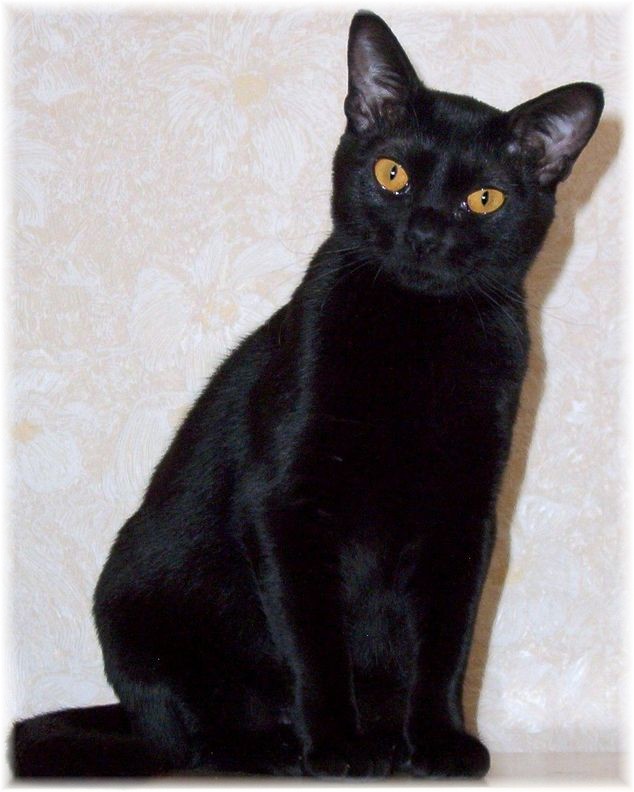
Reference photograph
Reference photograph of a Bombay. Examine the individual’s color and shape alongside the identification notes in the text.
Source: Pititebilette · Original material · CC BY-SA 3.0
1. Classification, origins and habitat
The Bombay was developed in the United States using Burmese and American Shorthair ancestry, among other lines. Although named after an Indian city, it was not produced by breeding with wild black panthers captured in India. The appearance of a small black panther is a metaphor for the breeding aim. The scope of the name “Bombay” may differ between organizations or regions, so read the relevant standards as well. A photograph of a black domestic cat alone does not establish a registered Bombay pedigree.
2. Appearance and identification
Known features include a uniformly black, short, glossy coat, gold-to-copper-colored eyes and a rounded head. The body is muscular and the close-lying coat reveals its outline. Strong lighting can make black hair appear brown, so do not interpret a photograph’s color tone directly as a breed fault or a different species. Its proportions differ from those of big cats, and a glossy black coat does not signify special wildness. Consider age and photographic conditions when looking at eye color as well.
3. Behavior and way of life
The breed is described as tending to interact and play close to people, but not every individual immediately responds in the same way to children or other animals. Do not turn the nickname “small black panther” into an assessment of hunting behavior or danger. Observe whether the cat chooses its preferred distance from people and makes use of hiding places. A photograph of a short coat and rounded body does not prove temperament, so check responses to contact and activity in daily life.
4. Observation, conservation and care
Check the skin and shedding beneath the black coat and brush gently. Do not recommend arbitrary oils or supplements to every individual to enhance gloss. Provide safe living space with choices for playing, scratching, hiding and using high places. When using photographs, distinguish general examples of black domestic cats from breed examples whose sources are confirmed. Prioritize natural full-body views and posture over shining bright lights or holding the face to emphasize copper-colored eyes.
Evidence and references
- Cat Fanciers’ Association — Bombay
Breed background, appearance standards and an introduction to behavioral tendencies
- The International Cat Association — Bombay
Breed characteristics, coat, activity and everyday care