
Cats
Egyptian Mau
Egyptian Mau
Classification and scientific name: Felis catus
Sources checked:
Spots and forehead markings; distinguish ancient wall paintings from modern pedigrees
Spots and forehead markings are characteristic; distinguish ancient wall paintings from modern pedigrees. The Egyptian Mau is a spotted breed connected with cats from Egypt, whose standards developed through modern registration and breeding. “Mau” in its name is introduced as a word related to cats.
Origins and distribution
A spotted domestic cat connected with Egypt; established as a breed in the United States and elsewhere
- Egyptian Mau
- Domestic cat
- Check the individual’s behavioral tendencies
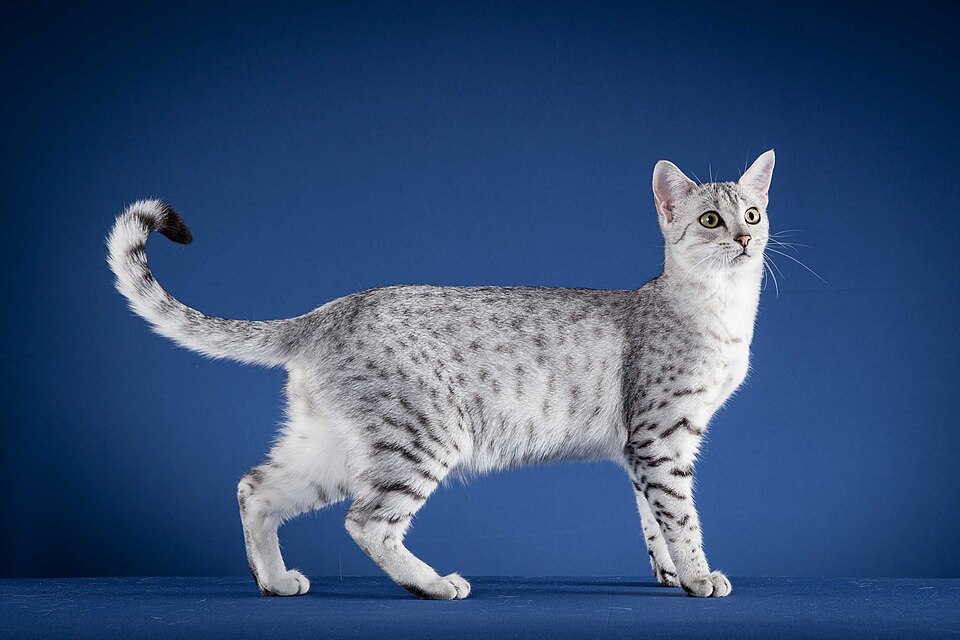
Reference photograph
Reference photograph of an Egyptian Mau. Examine the individual’s color and shape alongside the identification notes in the text.
Source: Achet Aton · Original material · CC BY-SA 4.0
1. Classification, origins and habitat
The Egyptian Mau is a spotted breed connected with cats from Egypt, whose standards developed through modern registration and breeding. “Mau” in its name is introduced as a word related to cats. The presence of spotted cats in ancient paintings does not directly establish the pedigree of a particular present-day individual back to that period. Do not confuse it with an Ocicat or Bengal because of the spotted appearance. Explaining each breed’s origins and registration separately makes the relationship between images and text clear.
2. Appearance and identification
Look at the spots on the torso, bands on the legs and tail, and markings on the forehead and face together. Greenish adult eyes and a balanced body are also representative features. Several colors occur, and the arrangement of spots is not identical in every individual. Large spots in a photograph do not mean the cat belongs to the same species as a wild leopard cat. Consider changes in color caused by lighting and changes with age, and do not describe a single photograph as though it measured running ability.
3. Behavior and way of life
The breed is described as tending to be interested in activity, play and interaction with familiar people. Do not generalize a cautious response by one individual to an unfamiliar person into a claim that the whole breed is aggressive. Chasing a toy and quietly observing are both parts of normal behavior. Do not exaggerate the nickname of a fast cat into an actual ranking of top speeds. Offering both space to approach voluntarily and a place to retreat helps with observing individual responses.
4. Observation, conservation and care
Provide stable high places, room to run and change direction, and short periods of interactive play. Even a short coat needs care that takes skin condition and shedding into account. Do not write unsupported statements that every individual needs special food or supplements to maintain its spots. Do not substitute photographs of wild ancestral cats or other spotted breeds, and make clear that its scientific name is that of the domestic cat, Felis catus. Check health and temperament through individual records as well.
Evidence and references
- Cat Fanciers’ Association — Egyptian Mau
Breed background, appearance standards and an introduction to behavioral tendencies
- The International Cat Association — Egyptian Mau
Breed characteristics, coat, activity and everyday care