
Cats
Exotic Shorthair
Exotic Shorthair
Classification and scientific name: Felis catus
Sources checked:
A convenient short coat does not remove facial and eye welfare concerns
The Exotic Shorthair developed through breeding Persians with other shorthaired breeds. Exotic does not mean a cross with a wild species.
Origins and distribution
Developed in the United States by combining Persian-type appearance and short hair
- Exotic Shorthair
- Domestic cat
- Observe individual temperament
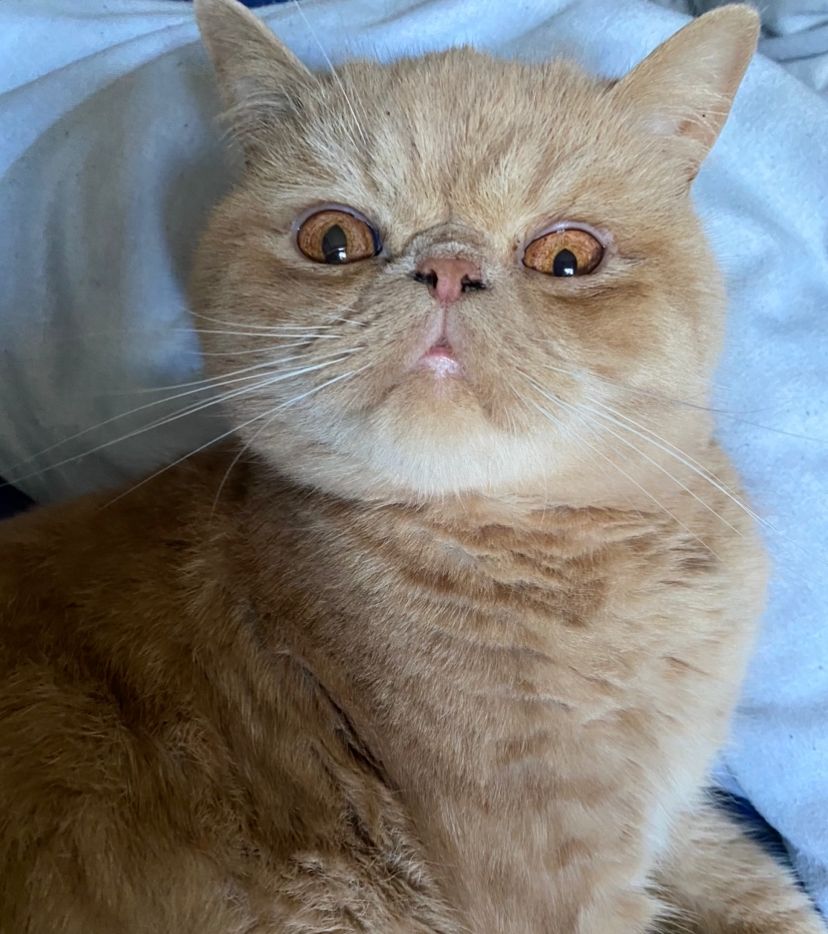
Reference photograph
Exotic Shorthair reference photograph. Compare the individual’s color and form with the identification descriptions in the text.
Source: Tcm1707 · Original material · CC BY-SA 4.0
1. Classification, origins and habitat
The breed developed through breeding Persians with other shorthaired breeds. Exotic does not imply a wild-species cross. Some organizations call it Exotic; check the registration classification of longhaired individuals too. Looking like a shorthaired Persian does not explain the whole history or care needs. A similar-faced nonpedigree cat cannot be assigned to the registered breed from a photograph alone.
2. Appearance and identification
Round head, large eyes, short face, compact sturdy body and short dense coat are typical. Colors and patterns vary; silver or red tabby photographs are not a universal standard. Observe body proportions under the coat while distinguishing roundness from overweight. Facial flatness varies individually and must be considered with eye, breathing, dental and other health concerns. A seemingly smiling mouth does not establish actual emotion.
3. Behavior and way of life
Often described as calm and staying close, but not every cat enjoys being held or unfamiliar visitors. Apparent lack of play needs the context of age, time and health. Do not dismiss possible discomfort related to nose and face structure as simply a quiet breed. Let the cat approach or hide and observe short interactions. Do not manipulate face or ears to manufacture an expression people prefer.
4. Observation, conservation and care
Short dense hair still needs brushing and shedding care. Also watch changes in dirt or discharge around eyes, breathing and chewing. Shorter hair than a Persian does not mean almost no care. Provide comfortable resting places and play/scratching space; assess health changes through individual veterinary care. Use an accurately sourced shorthaired Exotic photograph rather than silently inserting a longhaired Persian as the same breed.
Evidence and references
- Cat Fanciers’ Association — Exotic Shorthair
Breed background, appearance standards and behavioral tendencies
- The International Cat Association — Exotic Shorthair
Breed characteristics, coat, activity and everyday care
- Cats Protection — Brachycephalic Cats
Welfare concerns involving extremely short faces and the eyes, breathing, teeth and skin