
Cats
Japanese Bobtail
Japanese Bobtail
Classification and scientific name: Felis catus
Sources checked:
A rabbit-like short tail differs from the Manx’s taillessness
This breed is linked to Japan’s short-tailed domestic cats. Cats in art and culture provide historical context, but not every short-tailed cat belongs to the modern registered breed.
Origins and distribution
Japanese short-tailed cat traditions and modern breed development
- Japanese Bobtail
- Domestic cat
- Observe individual temperament
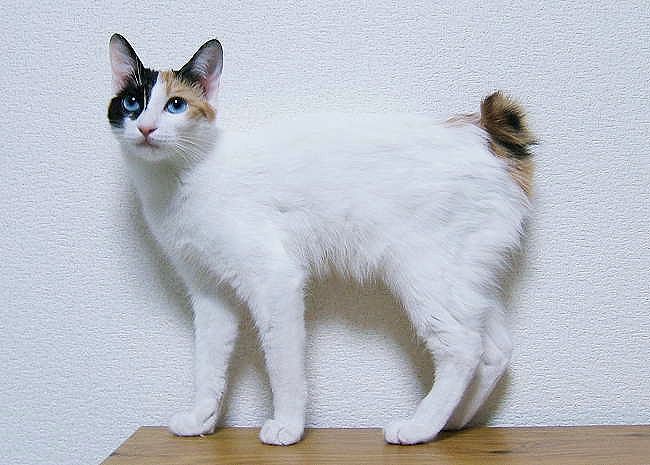
Reference photograph
Japanese Bobtail reference photograph. Compare the individual’s color and form with the identification descriptions in the text.
Source: ようてい · Original material · CC BY-SA 3.0
1. Classification, origins and habitat
This breed is linked to Japan’s short-tailed domestic cats. Cats in art and culture provide historical context, but not every short-tailed cat belongs to the modern registered breed. Bobtail is a general description of a short tail and appears in breeds from other countries too. Distinguish the Japanese Bobtail’s tail traits and standards from the Manx’s. Verify modern lineage through individual records rather than pictures.
2. Appearance and identification
Fur gathering around the short bent tail may look rabbit-like; tail shapes differ individually. Both shorthaired and longhaired varieties exist, and many colors occur despite tricolor fame. Observe head, ears and light balanced body too. Distinguish actual short tail bones and shapes rather than calling every example tailless. Do not identify an amputated tail or a deformity with another cause as the same breed trait from a photograph alone.
3. Behavior and way of life
Activity, play and interaction with people are described as tendencies. Not every short-tailed cat has the same athletic ability or temperament. Observe chasing toys, checking high places and resting together. A cultural image of a lucky cat does not guarantee constant enjoyment of touch. Assess relationships with other animals gradually according to individual experience and environment.
4. Observation, conservation and care
Do not grasp or straighten the tail to measure it; care gently according to coat length. Provide stable jumping and climbing space, hiding places, scratching areas and play. Tricolor coloring alone cannot establish registered breed or health. Verify that photograph and text show a naturally short tail, without substituting another bobtail breed because its name is similar. Allow tail-shape diversity while observing comfortable movement of the whole body.
Evidence and references
- Cat Fanciers’ Association — Japanese Bobtail
Breed background, appearance standards and behavioral tendencies
- The International Cat Association — Japanese Bobtail
Breed characteristics, coat, activity and everyday care