
Cats
Manx
Manx
Classification and scientific name: Felis catus
Sources checked:
Consider tail diversity together with spinal health and daily wellbeing
The Manx is a domestic breed linked to the Isle of Man, known for short or absent tails. The tale of a tail caught in Noah’s Ark door is an interesting legend, not a biological origin.
Origins and distribution
Short-tailed or tailless breed linked to the Isle of Man
- Manx
- Domestic cat
- Observe individual temperament
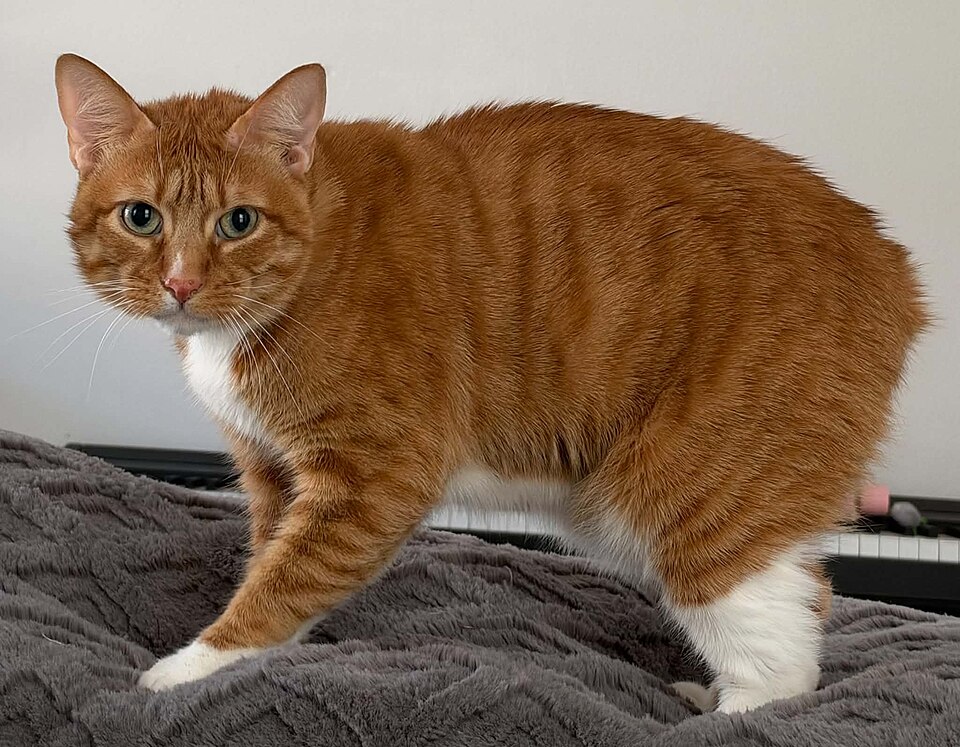
Reference photograph
Manx reference photograph. Compare the individual’s color and form with the identification descriptions in the text.
Source: Hekl01999 · Original material · CC0
1. Classification, origins and habitat
The Manx is a domestic breed linked to the Isle of Man, known for short or absent tails. The tale of a tail caught in Noah’s Ark door is a legend, not a biological origin. Tail lengths vary, so not every cat in the same line is completely tailless. Organizations may also differ in names and classification for longhaired cats. Do not merge its tail traits with those of other bobtail breeds.
2. Appearance and identification
A round head, compact sturdy body, apparently high hindquarters and varied tail forms are representative. A short or absent tail is a visible distinction, but a photograph cannot reveal the entire spine’s condition. Many coat colors and patterns occur; neither black nor white alone is the standard. Examine hind legs and gait together, without fixing a rabbit-like hopping impression as normal movement for every individual. Do not press the tail by hand to check it.
3. Behavior and way of life
Interaction and play with people are described as tendencies, but discomfort in movement or elimination must not be dismissed as a quiet temperament. Spinal and neurological developmental problems associated with the tail trait require individual health assessment. Do not assume all Manx have the same degree of difficulty either. Observe everyday walking, jumping, litter-box use and touch responses, recording sudden changes. A distinctive appearance must not obscure welfare.
4. Observation, conservation and care
Provide convenient steps for climbing up and down, a litter box and stable resting space. Do not hold or stimulate the back and pelvis to test whether a tail is present. Assess changes in actual movement and elimination through individual veterinary care. Do not call every short-tailed cat a Manx or guarantee spinal health from looks. Check full body and posture in images, without presenting the Japanese Bobtail’s rabbit-like furry tail as the same structure.
Evidence and references
- Cat Fanciers’ Association — Manx
Breed background, appearance standards and behavioral tendencies
- The International Cat Association — Manx
Breed characteristics, coat, activity and everyday care
- Cats Protection — Getting a Pedigree Cat
Health and welfare issues involving taillessness and spinal and neurological development