
Cats
Ocicat
Ocicat
Classification and scientific name: Felis catus
Sources checked:
Ocelot-like spots and the actual origin are separate matters
The Ocicat developed in the United States through crosses involving domestic cat lines such as the Abyssinian and Siamese. Although the name and spots evoke an ocelot, it was not created by crossing with wild ocelots.
Origins and distribution
Developed by combining domestic cat breeds in the United States
- Ocicat
- Domestic cat
- Assess each individual’s temperament
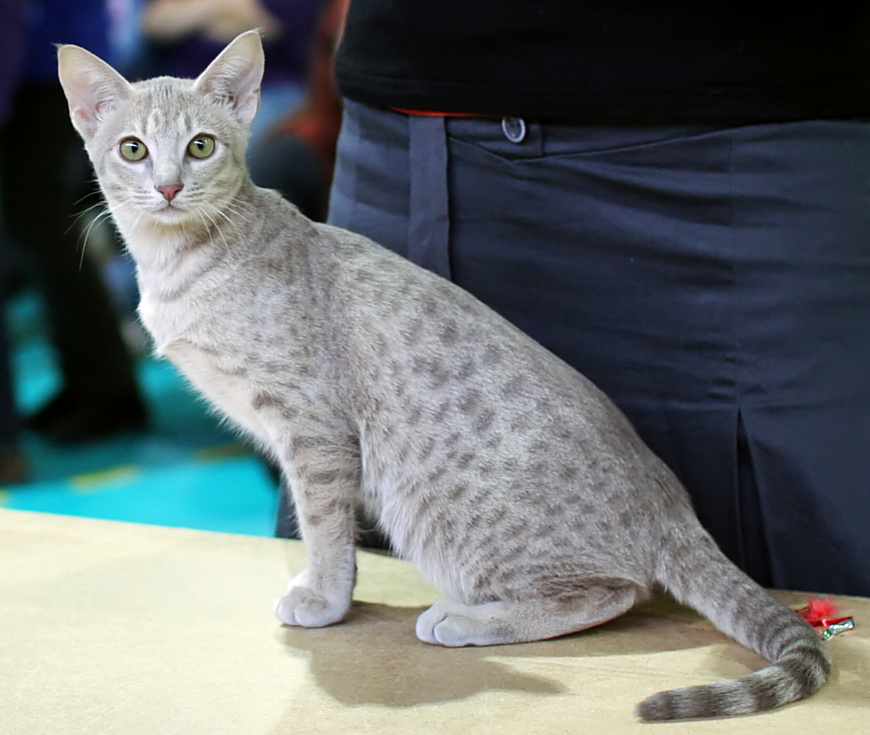
Reference photograph
Reference photograph of Ocicat. Examine this individual’s color and form alongside the identification descriptions in the text.
Source: Heikki Siltala - catza.net · Original material · CC BY 3.0
1. Classification, origins and habitat
The Ocicat developed in the United States through crosses involving domestic cat lines such as the Abyssinian and Siamese. Although the name and spots evoke an ocelot, it was not created by crossing with wild ocelots. Later breeding and registration standards shaped body balance and pattern. Distinguish its crossing history and appearance standards from those of the similarly spotted Bengal. One photograph of spots is not evidence of wild ancestry or a particular generation.
2. Appearance and identification
A short coat with contrasting spots and a firm, muscular body are typical. Observe markings on the head and legs, tail bands and overall balance together. Several colors occur; brown spots alone do not represent the whole breed standard. Spot arrangements vary individually, and growth and lighting also affect impressions. When comparing it with other breeds displaying prominent rosettes or marbling, consider the combination of face and body together with the source rather than one large marking.
3. Behavior and way of life
Active involvement in activity and interaction with people is described as a tendency, but does not guarantee immediately getting along with unfamiliar people or animals. Neither a wild-looking appearance establishes ferocity nor domestic-cat crosses make every contact safe. Consider times when the cat wants play and exploration alongside its choice to rest. Provide places and heights to withdraw to, and explore new relationships gradually while managing scent and distance.
4. Observation, conservation and care
Maintain the short coat and monitor changes in skin, body condition and activity. Provide high places, stable routes, toys and opportunities to search for food. Do not suggest that a spotted appearance requires a separate wild-animal diet. Offer safe play instead of making it hunt actual small animals. Use sourced Ocicat photographs and avoid casually mixing in wild ocelots or Bengal patterns as representative images of the same breed.
Evidence and references
- Cat Fanciers’ Association — Ocicat
Breed background, appearance standards and temperament descriptions
- The International Cat Association — Ocicat
Breed characteristics, coat, activity and daily care