
Cats
Oriental Shorthair
Oriental Shorthair
Classification and scientific name: Felis catus
Sources checked:
Slender body, large ears and many colors in a shorthaired Oriental
This domestic breed developed varied colors and patterns on a body type connected with Siamese cats. Oriental does not mean all shorthaired cats across Asia.
Origins and distribution
Developed alongside Siamese lines in Europe and the United States
- Oriental Shorthair
- Domestic cat
- Observe individual temperament
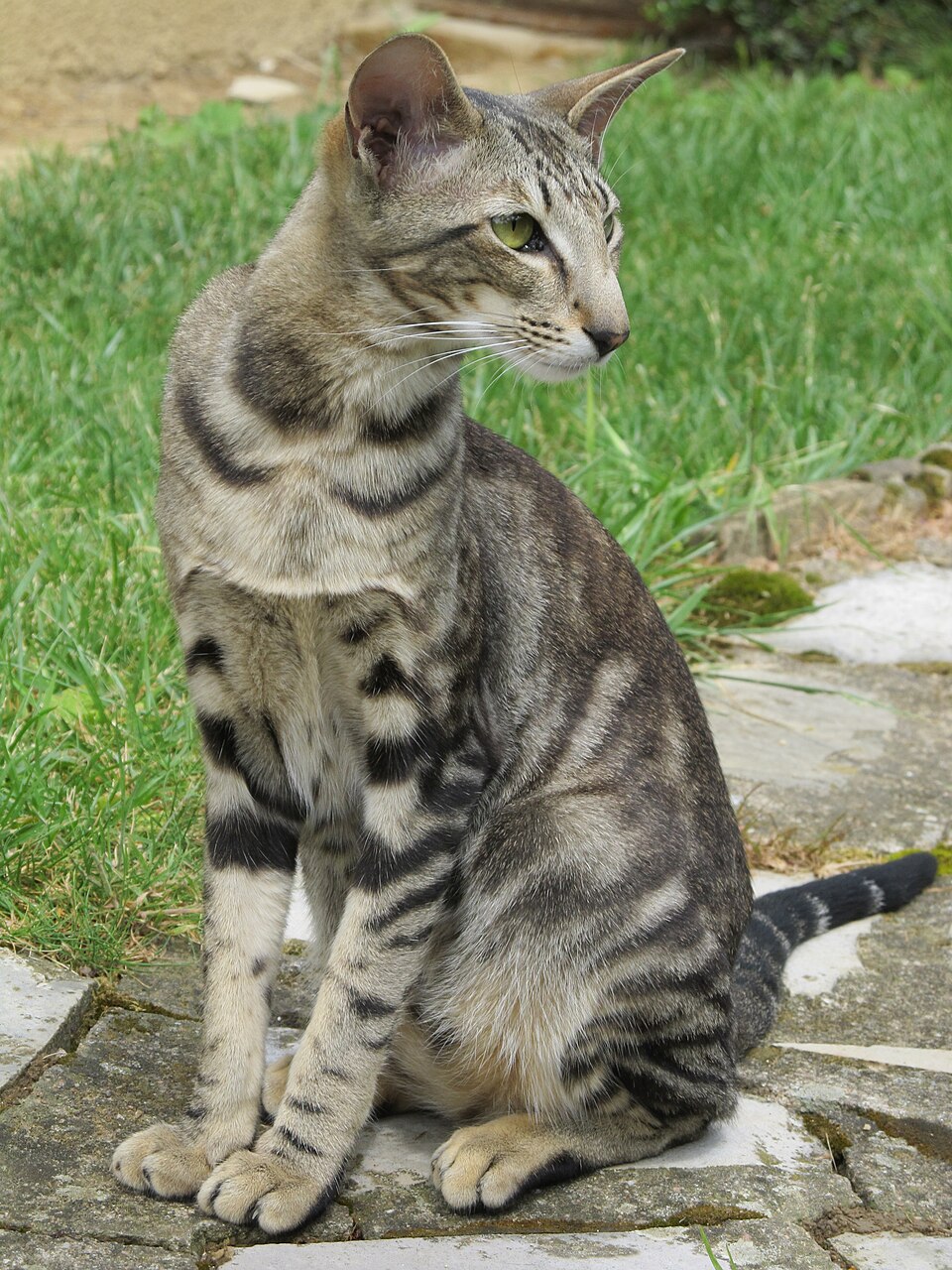
Reference photograph
Oriental Shorthair reference photograph. Compare the individual’s color and form with the identification descriptions in the text.
Source: Daly69 · Original material · CC BY-SA 3.0
1. Classification, origins and habitat
This domestic breed developed varied colors and patterns on a body type connected with Siamese cats. Oriental does not mean every shorthaired cat in Asia. Standards formed through European and American breeding and registration; check each organization’s classification relative to Oriental Longhair. Similar large ears in a photograph do not justify grouping a separate wild species or every Siamese pattern variant under this name.
2. Appearance and identification
Long slender body and legs, wedge-shaped head, large ears and close-lying short hair are characteristic. Unlike pointed Siamese, it is described in varied body colors and patterns. Read registration standards for eye colors and the range of accepted colors. Camera angle can enlarge face or ears, so examine actual proportions. Slender does not recommend underweight; assess each cat’s body condition separately.
3. Behavior and way of life
Vocalization, play and participation in human activities are described tendencies, not identical calling frequency or contact preferences in all cats. Watch which heights and objects the long active body explores indoors. Following a busy person is not necessarily affection alone. Consider food, play and discomfort together, leaving choices to rest or withdraw.
4. Observation, conservation and care
Provide high resting places, stable routes, toys and opportunities to search for food. Fine short hair does not remove all need for brushing or skin checks. A slender body is not automatically resistant to cold or heat. In multi-animal homes, distribute hiding places and resources so cats can choose. Do not silently substitute Oriental Longhair or pointed Siamese images as typical shorthaired Orientals.
Evidence and references
- Cat Fanciers’ Association — Oriental Shorthair
Breed background, appearance standards and behavioral tendencies
- The International Cat Association — Oriental Shorthair
Breed characteristics, coat, activity and everyday care