
Cats
Pixie-bob
Pixie-bob
Classification and scientific name: Felis catus
Sources checked:
Distinguish its short tail and wild-looking form from bobcat-hybrid legends
The Pixie-bob developed from domestic cats in the northwestern United States. Stories of bobcat crosses do not establish a confirmed wild-bobcat ancestry.
Origins and distribution
Domestic breed developed in the northwestern United States
- Pixie-bob
- Domestic cat
- Observe individual temperament
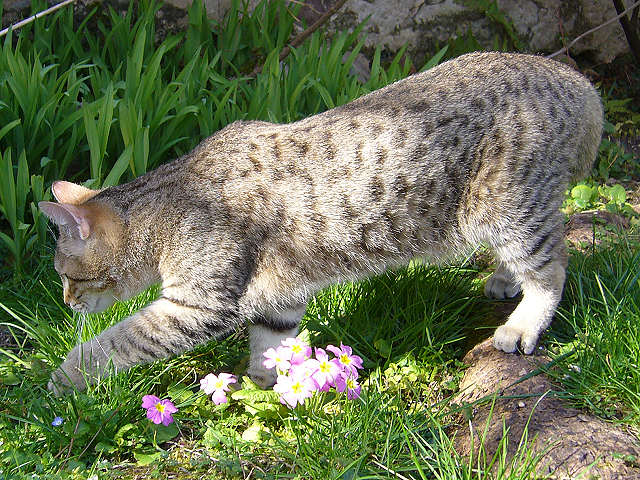
Reference photograph
Pixie-bob reference photograph. Compare the individual’s color and form with the identification descriptions in the text.
Source: Nathalie Bent · Original material · CC BY 2.5
1. Classification, origins and habitat
The Pixie-bob developed from domestic cats in the northwestern United States. Stories of bobcat crosses do not establish a confirmed wild-bobcat ancestry. A modern domestic breed selected for wild-looking features differs from an actual wild felid species. Reading TICA’s registration and appearance standards helps separate origin stories from verifiable classification. Spots in a photograph cannot prove hybrid status.
2. Appearance and identification
A short tail, brown-toned tabby coat, firm body and facial contours are representative; coat length may change apparent form. Standards may accept polydactyl individuals, but not every Pixie-bob has the same toe count. Check tail length and shape too. A resemblance to wild bobcats cannot replace body proportions and an actual source. Photographs should preferably show the domestic cat’s full body in a natural pose.
3. Behavior and way of life
Interaction and play with people are described as tendencies, but the nickname dog-like cat guarantees no individual behavior. Wild-looking features do not mean unusually fierce or, conversely, always gentle. Observe self-directed exploration and rest alongside approaching and withdrawing from people. Do not prescribe walks or water play as essential breed experiences; consider the individual’s choices and experience.
4. Observation, conservation and care
Prepare care appropriate to coat length and sturdy play and resting spaces. With extra toes, check claws and the surrounding feet according to the individual’s actual anatomy. Wild looks do not imply a need for a special raw-meat diet or unrestricted outdoor release. Do not grasp or straighten a short tail to create a pose. Use a sourced Pixie-bob image, not a wild bobcat or another bobtailed domestic cat simply because its pattern looks similar.
Evidence and references
- TICA — Pixie-bob Breed Group Standard
Domestic-breed body structure, short tail, coat and polydactyly acceptance standards
- The International Cat Association — Pixie-bob
Breed characteristics, coat, activity and everyday care