
Cats
Singapura
Singapura
Classification and scientific name: Felis catus
Sources checked:
Small build and sepia ticked coat do not exempt a cat from care
The Singapore-associated name belongs to a breed whose registration standards developed in the United States. Sources emphasize early movements and origins differently; not every Singapore street cat belongs to this lineage.
Origins and distribution
Name associated with Singapore; developed as a registered breed in the United States
- Singapura
- Domestic cat
- Observe individual temperament
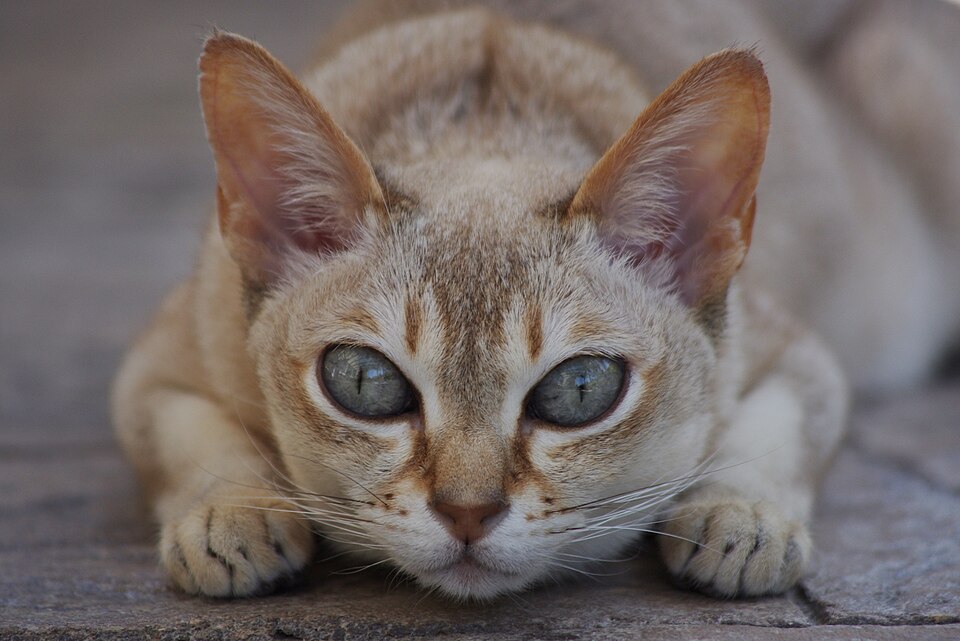
Reference photograph
Singapura reference photograph. Compare the individual’s color and form with the identification descriptions in the text.
Source: Renamed user 51g7z61hz5af2azs6k6 ( talk ) ( Uploads ) · Original material · CC BY-SA 3.0
1. Classification, origins and habitat
Known by a Singapore-associated name, the breed developed registration standards in the United States. Sources emphasize early movements and origins differently, not claiming every Singapore street cat belongs to the lineage. Distinguish the breed name from nonpedigree regional populations. Small size cannot prove birthplace or pedigree from a photograph. Read modern standards separately from historical stories.
2. Appearance and identification
Relatively small body, large ears and eyes and sepia ticking on a light base are typical. Bands on individual hairs make subtle shading, unlike large spots. Big-eyed, big-eared kitten photographs do not establish adult size. Small does not recommend underweight or stunting. Consider sex and growth stage together with actual body condition and movement.
3. Behavior and way of life
Exploration and joining human activities and play are described tendencies. Small size means neither always fearful nor enjoying all contact. Climbing and investigating objects may occur. Read approaches and withdrawal signals for rest together. Do not suggest that children may easily pick up a small cat; allow contact to be chosen.
4. Observation, conservation and care
Provide appropriately sized steps, safe gaps and space for play, hiding and scratching. Small looks do not justify minimizing indoor resources or environment. Gently care for short hair and check body condition and skin. Judge food amounts by age, activity and condition, not breed imagery. Show adult ticking with head proportions; do not replace the image with an Abyssinian kitten merely because the size is similar.
Evidence and references
- Cat Fanciers’ Association — Singapura
Breed background, appearance standards and behavioral tendencies
- The International Cat Association — Singapura
Breed characteristics, coat, activity and everyday care