
Cats
American Curl
American Curl
Classification and scientific name: Felis catus
Sources checked:
Distinguish backward-curled ear tips from folded ears
The American Curl developed from domestic cat lines with backward-curving ears found in California in the United States. Curl in the name relates to the ear tips’ curve, a different feature from the curly coats of Rex breeds.
Origins and distribution
Developed from backward-curving ear traits in California, United States
- American Curl
- Domestic cat
- Assess each individual’s temperament
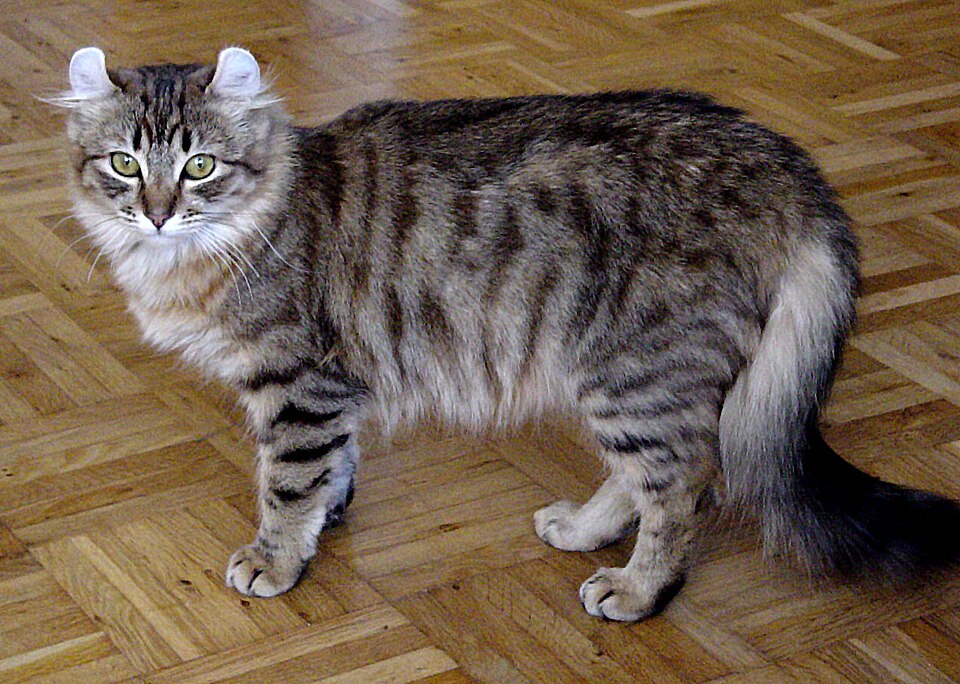
Reference photograph
Reference photograph of American Curl. Examine this individual’s color and form alongside the identification descriptions in the text.
Source: Cljk · Original material · CC BY-SA 3.0
1. Classification, origins and habitat
The American Curl developed from domestic cat lines with backward-curving ears found in California in the United States. Curl in the name relates to the ear tips’ curve, a different feature from the curly coats of Rex breeds. Do not describe it as the same trait as the Scottish Fold’s forward-folding ears because of a resemblance in shape. Modern standards cover body, coat and other elements as well as ears. A photograph of an ordinary cat with one bent ear cannot establish a registered Curl.
2. Appearance and identification
Ear tips can be observed curving gently backward, and both short-haired and long-haired varieties occur. Kittens’ ear shape can change with growth, so a photograph from one moment does not fix the adult appearance. Colors and patterns vary; consider the long, balanced body as well. The ear’s angle of curl is part of show standards, not a claim that more curling benefits daily life. Do not hold and unfold ears or shape them for a photograph.
3. Behavior and way of life
Joining play and people’s activities is described as a tendency, but preferences for contact and responses to unfamiliar situations vary individually. Unusual ears do not guarantee a constantly curious, fearless personality. Read voluntary approaches and turning away alongside the ears, tail and level of tension. A different ear structure does not make it possible to interpret every signal accurately from one photograph. Time to become familiar and places to withdraw are needed.
4. Observation, conservation and care
Gently inspect the outer condition without forcibly straightening or turning the curved part of the ear. Base routine care on individual condition and professional guidance; the ear shape does not automatically require deep cleaning. Provide brushing suited to coat length and space for play and rest. Use a sourced photograph showing backward-curving ears and the whole body together. Do not mix the Scottish Fold’s forward fold and welfare information into an account of the same mechanism.
Evidence and references
- Cat Fanciers’ Association — American Curl
Breed background, appearance standards and temperament descriptions
- The International Cat Association — American Curl
Breed characteristics, coat, activity and daily care