
Cats
Munchkin
Munchkin
Classification and scientific name: Felis catus
Sources checked:
Consider the short-legged appearance alongside needs for movement and daily life
The Munchkin developed in the United States from short-legged traits in domestic cats. Its name relates to small characters in a story; it does not mean the cat is a separate, particularly small species.
Origins and distribution
Cats with short-legged traits developed into a breed in the United States
- Munchkin
- Domestic cat
- Assess each individual’s temperament
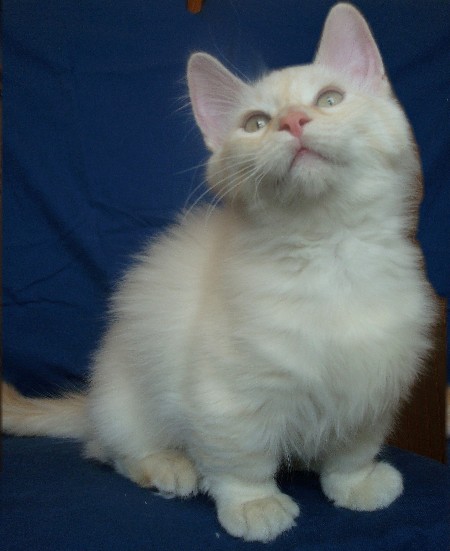
Reference photograph
Reference photograph of a Munchkin. Examine this individual’s color and form alongside the identification descriptions in the text.
Source: Sg0668commons · Original material · CC BY 3.0
1. Classification, origins and habitat
The Munchkin developed in the United States from short-legged traits in domestic cats. Its name relates to small characters in a story; it does not mean the cat is a separate, particularly small species. Breed organizations differ in their positions on recognition and welfare, so registration should not be taken as a guarantee of health. Even cats with the same lineage background may have different leg lengths; the legs in one photograph do not determine the appearance of every family member.
2. Appearance and identification
Legs that are short relative to the body are typical, while coat length and color vary. Short legs are not synonymous with a low adult weight or a body that remains kitten-like for life. In photographs, distinguish a crouched sitting posture from the actual proportions of the limbs. A cute impression of a curled-up sitting position does not establish comfort or health. Do not casually combine other traits such as ear shape or a flat face into the breed description.
3. Behavior and way of life
Domestic cat behaviors such as wanting to play, explore, hide and climb do not disappear because the legs are short. A video of one individual moving well does not establish the mobility or welfare of every cat. Observe the heights the individual uses, its landings and its withdrawal responses. Do not dismiss changes such as avoiding activity or appearing uncomfortable as a naturally quiet personality. Nor does appearance guarantee unconditional obedience to people.
4. Observation, conservation and care
Arrange climbing routes, litter-box entrances and resting places to suit the body’s actual movements. Avoid making the cat jump high or stretching its legs for a photograph. Comfortable movement and health care for the current individual take priority over recommendations to breed for an extreme appearance. Welfare discussions about short legs and breed organizations’ descriptions of appearance cover different ground and should be read together. Check the image source and the individual’s posture; long hair alone does not justify grouping short-legged crosses with other breeds under the same standard.
Evidence and references
- Cats Protection — Getting a Pedigree Cat
Veterinary guidance on short-legged traits, mobility and welfare concerns
- The International Cat Association — Munchkin
Breed characteristics, coat, activity and daily care