
Cats
Sphynx
Sphynx
Classification and scientific name: Felis catus
Sources checked:
Sparse hair still leaves needs for skin care and temperature choice, and questions about allergies
The Sphynx developed in North America and elsewhere from sparse-haired traits in domestic cats. Although the name evokes resemblance to an Egyptian sculpture, it does not establish an unchanged breed lineage from ancient Egypt.
Origins and distribution
Developed from sparse-haired traits in Canada and elsewhere
- Sphynx
- Domestic cat
- Assess each individual’s temperament
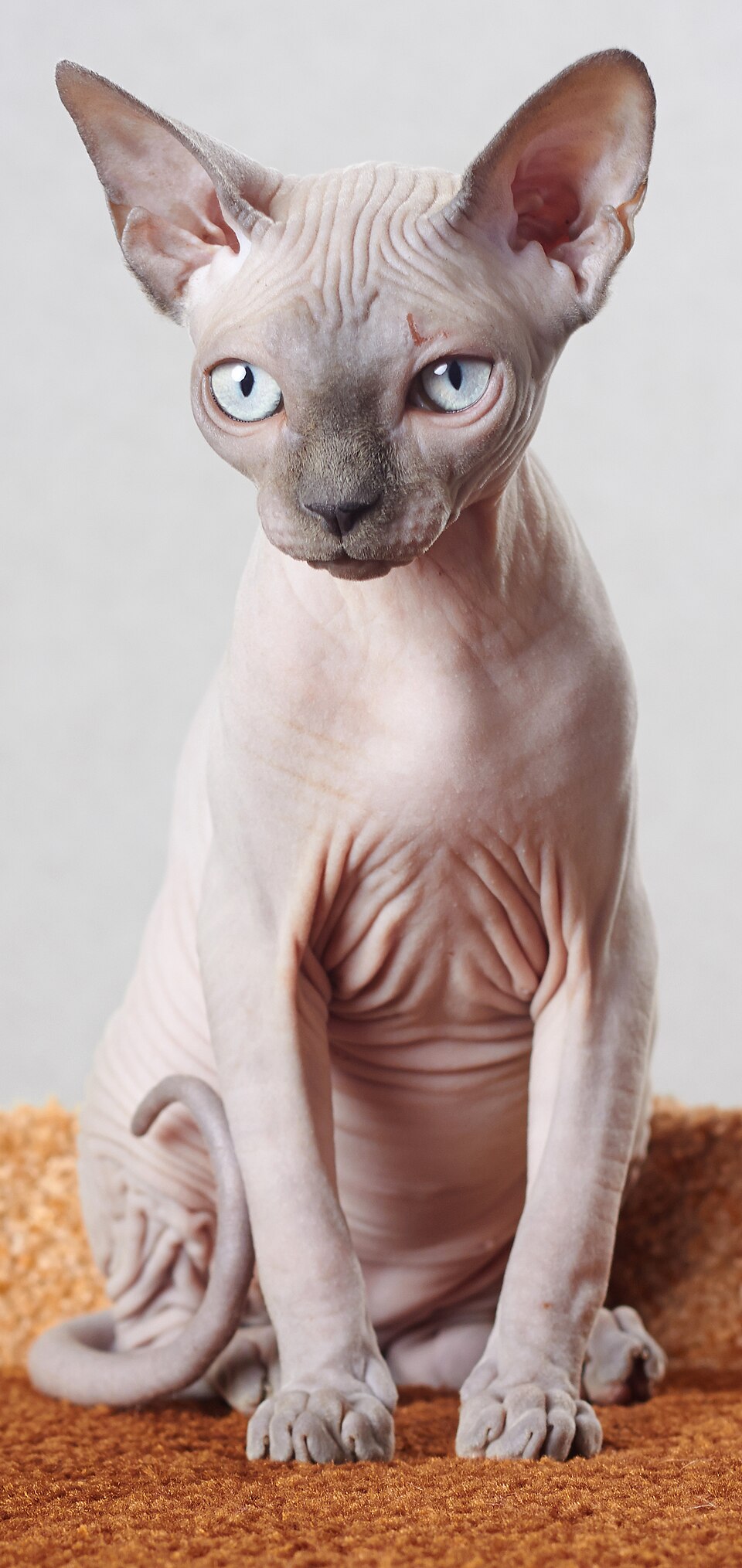
Reference photograph
Reference photograph of a Sphynx. Examine this individual’s color and form alongside the identification descriptions in the text.
Source: Dmitry Makeev · Original material · CC BY-SA 4.0
1. Classification, origins and habitat
The Sphynx developed in North America and elsewhere from sparse-haired traits in domestic cats. Although the name evokes resemblance to an Egyptian sculpture, it does not establish an unchanged breed lineage from ancient Egypt. Other hairless cat breeds differ in their traits and origins and should not be represented by the same photograph. Sparse hair as an appearance must be explained separately from the individual’s health and daily needs. Consider registration standards alongside the biological classification as a domestic cat.
2. Appearance and identification
Large ears, a clearly defined body outline, skin folds and short, fine down may be visible. Do not describe it as an entirely smooth animal without any hair; hair and whiskers can vary between body areas. Skin colors and patterns also vary. Ribs or muscles being more visible in a photograph because of the lack of fur is distinct from assessing an appropriate body condition. Images that dramatize body color and folds should not serve as the standard for every individual.
3. Behavior and way of life
A tendency to seek interaction with people and warm places is described, but not every individual likes being held. Read its presence in a warm spot as a choice related to body temperature and comfort, rather than reducing it to a single personality label. Play, exploration and hiding places are also needed. Visible skin does not mean that all discomfort is easy to detect by sight; also observe changes in activity, eating and reactions to touch.
4. Observation, conservation and care
Care should suit the individual, with checks for skin oils and dirt and the condition around the ears, paws and digits. Base bathing on skin condition and veterinary guidance rather than uniformly frequent washing. Provide places where the cat can choose to avoid hot surfaces, direct sunlight and cold. Sparse hair does not guarantee a cat entirely free of allergens. Explain the actual requirements of skin care and daily life rather than a sales claim of no shedding, and do not assume that clothes shown in a photograph are essential at all times.
Evidence and references
- Cat Fanciers’ Association — Sphynx
Breed background, appearance standards and temperament descriptions
- The International Cat Association — Sphynx
Breed characteristics, coat, activity and daily care