
Cats
Devon Rex
Devon Rex
Classification and scientific name: Felis catus
Sources checked:
Large ears and a short curly coat belong to a lineage distinct from the Cornish Rex
The Devon Rex developed from a curly-coat trait found in domestic cats in Devon in the United Kingdom. Despite resembling the Cornish Rex from a nearby region, it is not one breed with the same coat trait under a different name.
Origins and distribution
Developed from a curly-coat trait found in Devon, United Kingdom
- Devon Rex
- Domestic cat
- Assess each individual’s temperament
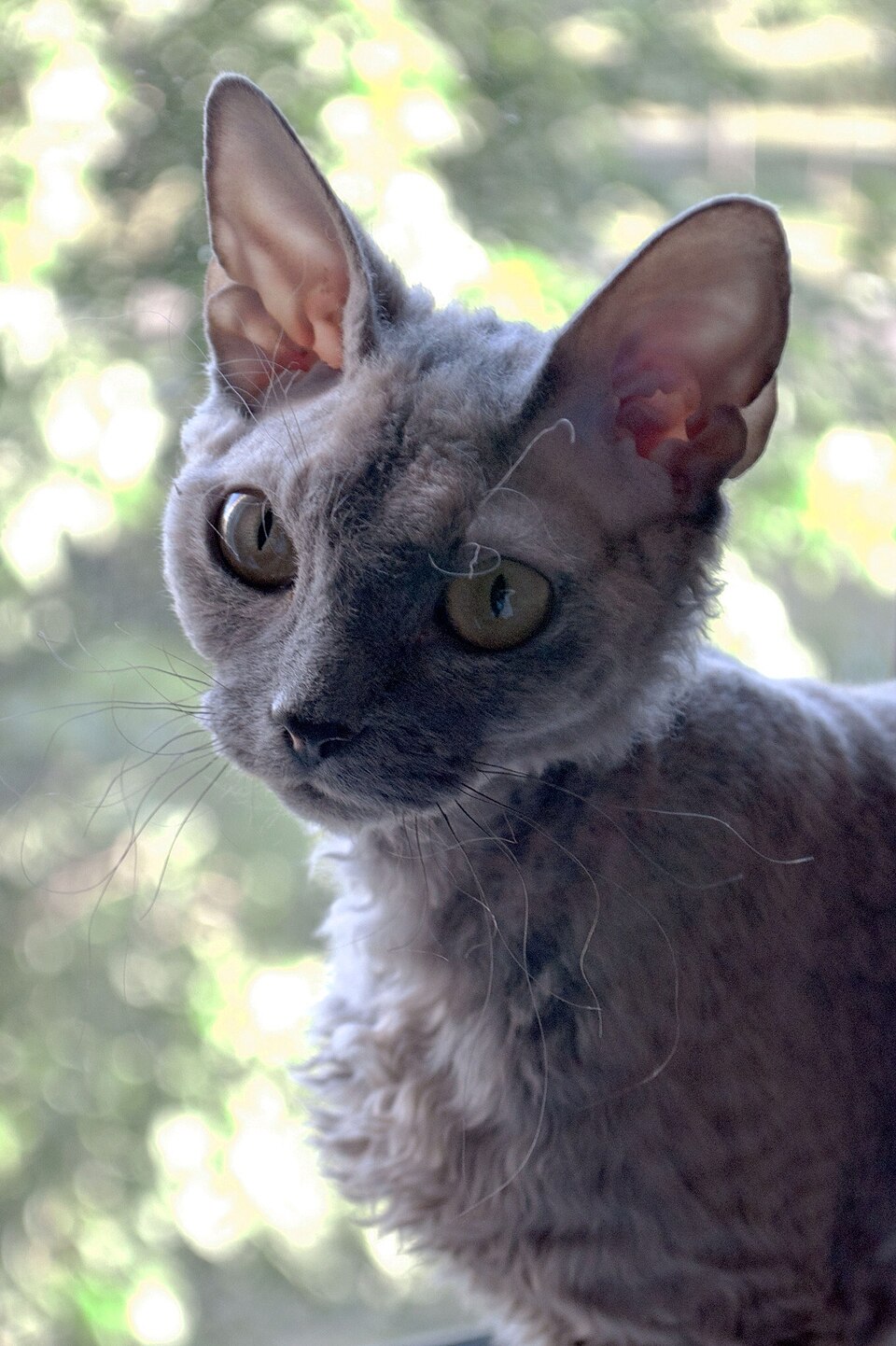
Reference photograph
Reference photograph of Devon Rex. Examine this individual’s color and form alongside the identification descriptions in the text.
Source: Anna Belial · Original material · CC BY 4.0
1. Classification, origins and habitat
The Devon Rex developed from a curly-coat trait found in domestic cats in Devon in the United Kingdom. Despite resembling the Cornish Rex from a nearby region, it is not one breed with the same coat trait under a different name. Rex is a term used for curly coats in several animals, not a separate family of wild cats. Modern registration standards address the combination of head, ears and body as well as coat. A photograph of short curly hair alone cannot establish pedigree.
2. Appearance and identification
Widely set large ears, a short muzzle, prominent cheekbones and a short curly coat are typical. Whiskers may also be short or curved, and coat density varies with the individual and age. Large ears alone do not establish an alien-like personality or guarantee special hearing. Comparison with the Cornish Rex’s long head and arched body reveals differences in overall proportions. The amount of exposed skin and actual health require separate assessment.
3. Behavior and way of life
The breed is described as tending to join play and people’s activities, but not every individual climbs onto shoulders or wants to be touched all the time. Neither does the impression of a light body and large ears prove an always-playful personality. Consider together the contexts in which the cat chases a toy, chooses a warm place and rests. When introducing other animals, manage distance and escape space and prioritize the individual’s reactions.
4. Observation, conservation and care
Avoid rough brushing of the short, delicate coat and check the actual condition of skin and areas around the ears. Sparse hair does not make the breed free of allergies or skin-care needs. Offer warm resting places, choices to avoid overheating, play and hiding spaces together. Do not impose uniformly frequent bathing or ear cleaning simply because of the breed. Check body proportions in the photograph alongside its source, and do not mix the coarser curls of other Rex breeds into the same standard.
Evidence and references
- Cat Fanciers’ Association — Devon Rex
Breed background, appearance standards and temperament descriptions
- The International Cat Association — Devon Rex
Breed characteristics, coat, activity and daily care