
Cats
Lykoi
Lykoi
Classification and scientific name: Felis catus
Sources checked:
Distinguish the werewolf nickname from an actual domestic cat’s skin and coat structure
The Lykoi was studied and developed from an unusual coat trait appearing in non-pedigree domestic cats in the United States. Despite the werewolf-cat nickname, it is not a cross with wolves or another wild species.
Origins and distribution
A rare coat trait studied and developed as a breed in the United States
- Lykoi
- Domestic cat
- Assess each individual’s temperament
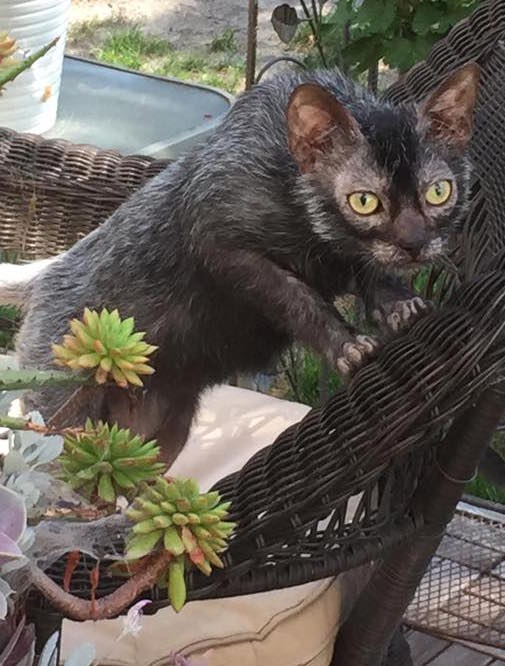
Reference photograph
Reference photograph of Lykoi. Examine this individual’s color and form alongside the identification descriptions in the text.
Source: steptacular · Original material · CC BY-SA 4.0
1. Classification, origins and habitat
The Lykoi was studied and developed from an unusual coat trait appearing in non-pedigree domestic cats in the United States. Despite the werewolf-cat nickname, it is not a cross with wolves or another wild species. Nor should the trait be described as the same as the Sphynx’s hairlessness. Early examinations and breeding records shaped standards, but not every similar-looking cat with hair loss is a registered Lykoi. Individual health and pedigree require separate checking.
2. Appearance and identification
Partially sparse hair on the face and body, and a roan pattern mixing light and dark hairs, are recognized features. Coat quantity can change with growth and shedding. Sparse-looking areas in a photograph should not immediately be identified either as disease or, conversely, as an entirely harmless breed feature. Consider the actual condition of skin and remaining hair together. A wolf-like impression is a metaphor arising from the coat combination, not grounds for interpreting body size or athletic ability as those of a wild animal.
3. Behavior and way of life
Exploration, play and interaction with people are described as tendencies, but avoid claims guaranteeing a strong hunting drive or rankings of intelligence. An unusual appearance does not make every individual constantly wary or aggressive. Observe the contexts in which the cat chases toys, rests and approaches people. Do not label crouching or hiding in an unfamiliar situation as a strange breed personality; provide time to adapt and space to choose.
4. Observation, conservation and care
Monitor skin, shedding and dirt and care gently according to the individual. Sparsely haired areas also make choices for avoiding temperature extremes and sunlight important. Do not dismiss every instance of partial hair loss as a breed trait without medical assessment. Use photographs of verified Lykoi examples, rather than substituting an ordinary cat that lost hair through illness without explanation. Do not guarantee an allergy-free breed or claim a special wolf-style diet is necessary.
Evidence and references
- Cat Fanciers’ Association — Lykoi
Breed background, appearance standards and temperament descriptions
- The International Cat Association — Lykoi
Breed characteristics, coat, activity and daily care