
Mammals (Cattle)
Beefmaster
Beefmaster
Classification and scientific name: Bos taurus × Bos indicus
Sources checked:
Appearance is highly variable, including red and spotted coats
The Beefmaster is a composite beef breed developed using Brahman, Hereford and Shorthorn. Selection emphasized production traits rather than one coat color. Appearance is highly variable, including red and spotted coats. The extent of a hump or hanging skin also differs.
Origins and distribution
United States
- Beefmaster
- United States
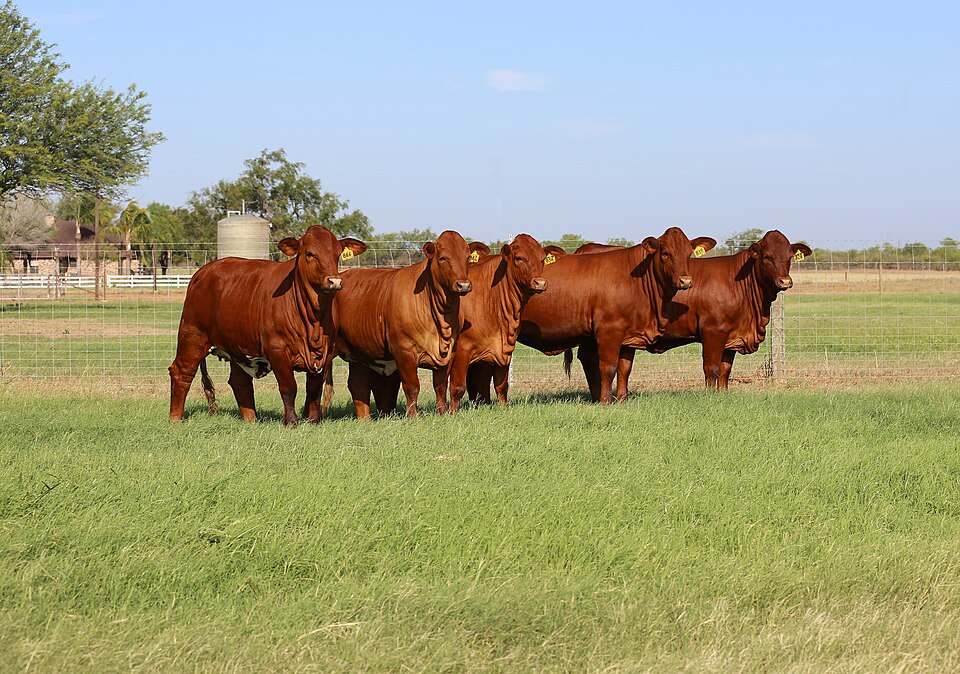
Reference photograph
Reference photograph of Beefmaster. Examine this individual’s color and form alongside the identification descriptions in the text.
Source: Beefmaster Breeders United · Original material · CC BY-SA 4.0
1. Classification, origins and habitat
The Beefmaster is a composite beef breed developed using Brahman, Hereford and Shorthorn. Selection emphasized production traits rather than one coat color.
Distinguish a one-off cross of several breeds from a composite breed selected and registered toward defined goals. Beefmaster breeding considers production traits together and demonstrates that uniform appearance is not the only path to breed formation.
2. Appearance and identification
Appearance is highly variable, including red and spotted coats. The extent of a hump or hanging skin also differs.
Red is widely seen, but combinations of colors and patches vary. Skin below the neck and shoulder form also depend on bloodlines and sex. Similarities to other red beef cattle mean that color alone cannot establish a photographic identification.
Composite breeds are populations with continuing selection and registration even when they use the same foundation breeds. A photograph’s hump or coat color cannot calculate exact proportions of parental breeds. Distinguish the roles of appearance and pedigree records.
3. Behavior and way of life
The breed illustrates selection considering several production traits such as growth and reproduction. A particular color or one photograph cannot establish registration status.
Goals involving growth, reproduction and maternal rearing should be assessed through actual farm records. Having complex selection goals is separate from the excellence of any one animal. Comparisons with other composite breeds also require matching regional and feeding conditions.
4. Observation, conservation and care
Consider pedigrees together with actual reproduction and growth records. The label composite breed does not guarantee individual health or performance of every cross combination.
Suitability for a farm’s climate, pasture and management capacity matters before a breed name. A hump or loose skin does not remove the need for water and shade in hot weather. Responsible care involves continuing observation of gait, build and body condition alongside pedigree records.
Evidence and references
- Oklahoma State University — Beefmaster
Classification, origins, appearance, ecology or uses of the breed
- Defra — Cattle welfare guidance on behavior, feeding and environment
General principles of feed, water, rest and handling. A United Kingdom source, not guidance on Korean legislation.