
Mammals (Cattle)
Hanwoo
Hanwoo
Classification and scientific name: Bos taurus
Sources checked:
Hanwoo with a yellow-brown coat are widely recognized
Hanwoo are domestic cattle conserved and improved from native cattle long used for labor and agriculture on the Korean Peninsula. Hanwoo with a yellow-brown coat are widely recognized.
Origins and distribution
Republic of Korea
- Hanwoo
- Republic of Korea
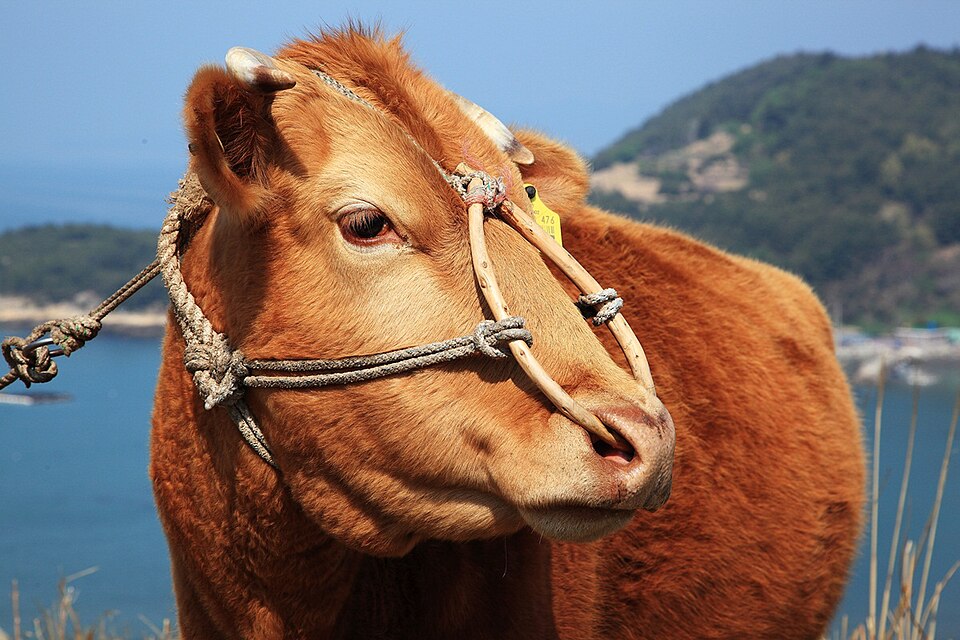
Reference photograph
Reference photograph of Hanwoo. Examine this individual’s color and form alongside the identification descriptions in the text.
Source: Park Jong-jin · Original material · CC BY 2.0 kr
1. Classification, origins and habitat
Hanwoo are domestic cattle conserved and improved from native cattle long used for labor and agriculture on the Korean Peninsula. As agricultural machinery became widespread, their role as working cattle declined; improvement today focuses on beef traits and breeding records. Hanwoo does not mean all cattle raised in Korea and must be distinguished from other breeds such as Holstein.
Conserving native livestock means recording different lineages and traits, rather than merely preserving an old name. Food grades, regional brands and biological breeds are different levels of information.
2. Appearance and identification
Hanwoo with a yellow-brown coat are widely recognized. However, Korea’s cattle genetic resources also include black-coated Heugu and dark-striped Chikso; describing all native cattle with one coat color misses their actual diversity. In photographs, observe color, horn curvature and body-to-leg proportions without establishing pedigree or origin from color alone.
Young animals, adult bulls and adult cows differ in head and body proportions. Comparing photographs with known sex and age, without relying only on horn presence and color, reduces misunderstandings.
3. Behavior and way of life
They are ruminants that eat grass and feed, chew cud and form relationships with other cattle in a herd. Their history as working cattle describes experience of human handling, not a guarantee that every Hanwoo is gentle with everyone. Meat quality is not determined by a breed name alone; consider sex, growth stage, genetic differences and husbandry conditions together.
Even when uses differ between working cattle and modern beef cattle, basic behaviors of rumination and herd living continue. Do not reinterpret comfort or alertness as a fixed breed personality.
4. Observation, conservation and care
In husbandry, provide nutrition suited to growth and reproductive stage, water and flooring that allows comfortable lying down and rising. Comparing only meat quality and weight gain can overlook welfare indicators such as hoof condition and activity. At visitor farms, observe from designated routes without suddenly approaching from behind or luring cattle close with food held in the hand.
Whether visitors can touch animals depends on each farm’s management. Feeding activities should use only the food and methods specified by staff; do not offer human food on your own.
Evidence and references
- National Institute of Animal Science — Hanwoo
Species-specific information on origins, appearance, uses or ecology
- Defra — Cattle welfare guidance on behavior, feeding and environment
General principles of feed, water, rest and handling. A United Kingdom source, not guidance on Korean legislation.