
Mammals (Cattle)
Wagyu
Wagyu
Classification and scientific name: Bos taurus
Sources checked:
The Japanese Black’s black coat is widely recognized, but brown or reddish populations also occur
Wagyu refers to Japan’s Japanese Black, Japanese Brown, Japanese Shorthorn and Japanese Polled breeds and related crosses, rather than a single cattle population with one fixed coat color. The Japanese Black’s black coat is widely recognized, but brown or reddish populations also occur.
Origins and distribution
Japan
- Wagyu
- Japan
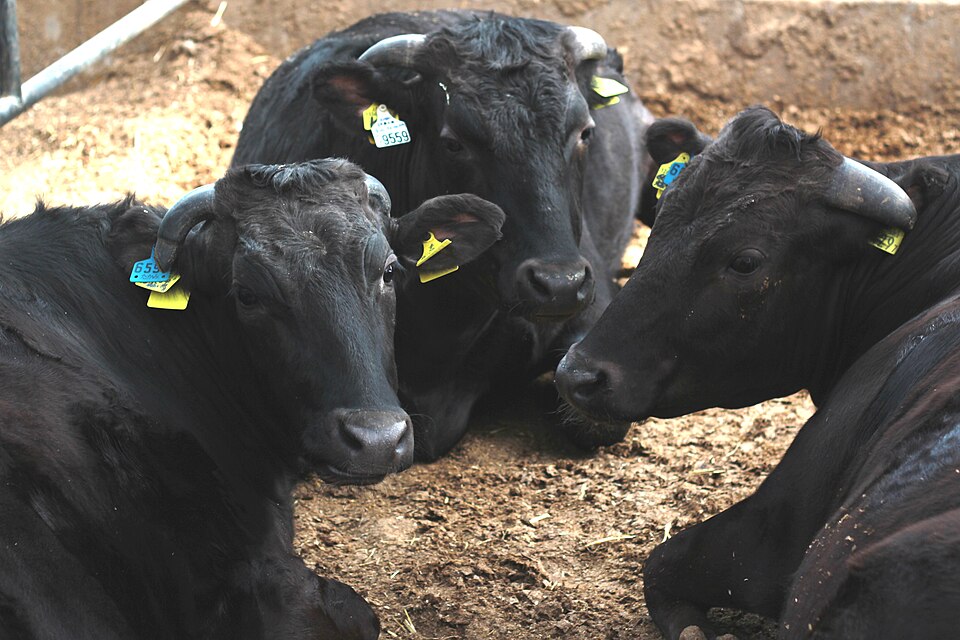
Reference photograph
Reference photograph of Wagyu. Examine this individual’s color and form alongside the identification descriptions in the text.
Source: Japanexperterna.se · Original material · CC BY-SA 3.0
1. Classification, origins and habitat
Wagyu refers to Japan’s Japanese Black, Japanese Brown, Japanese Shorthorn and Japanese Polled breeds and related crosses, rather than a single cattle population with one fixed coat color. Each population has a history involving regional native cattle and improvement. Overseas descriptions also include crosses using Wagyu ancestry, so distinguish Japanese origin as a production location from pedigree information.
Distinguishing Japan’s four breeds reveals differences in origins and traits within the Wagyu grouping. Food-label meanings vary by country, so separate biological descriptions from product names.
2. Appearance and identification
The Japanese Black’s black coat is widely recognized, but brown or reddish populations also occur. Do not therefore describe all Wagyu as black cattle. Consider horn presence, coat color and build alongside the particular registered breed. A photograph cannot appropriately determine intramuscular fat distribution or meat grade.
If the representative photograph shows a black animal, read it as an example of Japanese Black, rather than representing the appearance of Japanese Brown or Japanese Shorthorn as well. Checking for actual breed information accompanying the photograph is the first step.
3. Behavior and way of life
These cattle have been selected for beef traits and are known for improvement emphasizing intramuscular fat. However, characteristics differ by breed and line, and actual outcomes depend on growth, feed and husbandry history. Do not describe a particular husbandry anecdote as a tradition applying to every farm or claim that every animal achieves the highest grade.
Selection for well-distributed fat in meat and how the animal eats and rests in daily life require separate explanations. Tender meat should not be linked to a docile personality in the living animal.
4. Observation, conservation and care
First establish breed and purebred or crossbred status, then examine individual health and growth records. Even with meat-production goals, free access to water and comfortable rest are basic requirements. Grades and brands do not replace measures of animal behavior and health. Descriptions of live-animal photographs are most accurate when limited to visible features such as coat and horns.
When comparing records, distinguish production location, registered pedigree and crossbreeding proportions. Actual feed intake, movement and rest of the present animal matter more to management than the fame of a brand.
Evidence and references
- JETRO — Wagyu
Species-specific information on origins, appearance, uses or ecology
- Defra — Cattle welfare guidance on behavior, feeding and environment
General principles of feed, water, rest and handling. A United Kingdom source, not guidance on Korean legislation.