
Mammals (Cattle)
Black Angus
Black Angus
Classification and scientific name: Bos taurus
Sources checked:
A black coat, a naturally hornless head and a relatively well-filled body are typical
Black Angus are polled beef cattle lines developed in the Aberdeen and Angus regions of Scotland. A black coat, a naturally hornless head and a relatively well-filled body are typical.
Origins and distribution
Northeastern Scotland
- Aberdeen Angus
- Northeastern Scotland
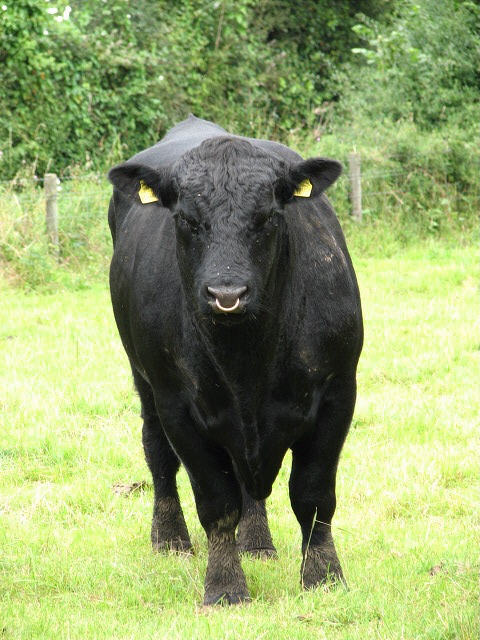
Reference photograph
Reference photograph of Black Angus. Examine this individual’s color and form alongside the identification descriptions in the text.
Source: Evelyn Simak · Original material · CC BY-SA 2.0
1. Classification, origins and habitat
Black Angus are polled beef cattle lines developed in the Aberdeen and Angus regions of Scotland. Black populations and Red Angus share origins, but countries and registries use different registration standards. Breed names, product certification names and the appearance description black cattle should not be treated as the same information.
The polled trait and beef improvement are two important strands in breed history. Even when black color attracts attention, explaining Angus history through coat color alone misses the significance of pedigree selection and registration.
2. Appearance and identification
A black coat, a naturally hornless head and a relatively well-filled body are typical. Hornlessness does not make every dehorned animal an Angus, and black crossbred cattle can look similar. Considering the balance of head, shoulders and body in photographs explains features better than looking at color alone.
Observe the hornless outline above the head together with the substance of shoulders and loin. Lighting affects how black a coat looks, so body color alone cannot establish groups such as Angus or Brangus.
3. Behavior and way of life
The cattle have been selected for beef and are also widely used in crossing with other breeds. Production traits such as fat distribution and growth are influenced by both bloodlines and husbandry. A well-known breed name cannot guarantee an individual’s meat quality or breeding outcome. Descriptions of docility should not be read as always making a person’s approach safe.
Using Angus in crossbreeding programs does not mean purebred and crossbred cattle are called the same breed. Compare production outcomes alongside parental lines and actual husbandry conditions.
4. Observation, conservation and care
Simplify movement routes and reduce abrupt separation from the herd to avoid agitation. Even polled cattle have considerable strength when pushing or running suddenly, requiring secure routes and handling facilities. Compare improvement records between animals of the same sex and age, and consider hooves, gait and reproductive condition alongside weight and meat production.
A black coat also relates to sunlight exposure conditions, so do not compare breeds without considering shade and water. Hornlessness does not justify oversimplified handling facilities or omission of separate routes for people and animals.
Evidence and references
- Oklahoma State University — Aberdeen Angus
Species-specific information on origins, appearance, uses or ecology
- Defra — Cattle welfare guidance on behavior, feeding and environment
General principles of feed, water, rest and handling. A United Kingdom source, not guidance on Korean legislation.