
Mammals (Cattle)
Belgian Blue
Belgian Blue
Classification and scientific name: Bos taurus
Sources checked:
White, blue-gray mottling or black markings occur, and muscles of the hindquarters and shoulders are prominent
The Belgian Blue is a beef cattle breed developed in Belgium. Genetic traits related to myostatin influence muscle development. White, blue-gray mottling or black markings occur, and muscles of the hindquarters and shoulders are prominent.
Origins and distribution
Belgium
- Belgian Blue
- Belgium
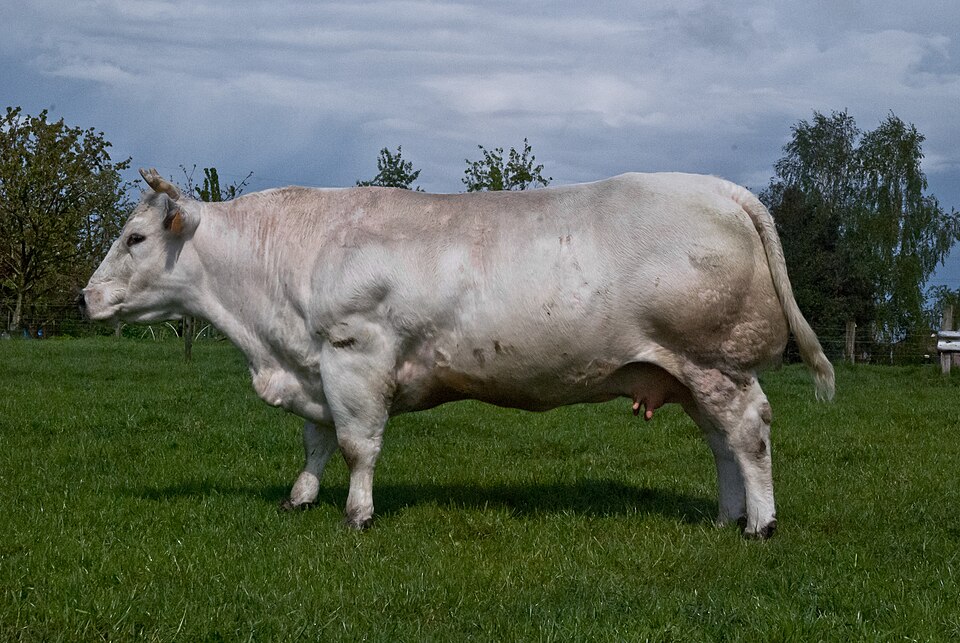
Reference photograph
Reference photograph of Belgian Blue. Examine this individual’s color and form alongside the identification descriptions in the text.
Source: Stoolhog · Original material · CC BY-SA 3.0
1. Classification, origins and habitat
The Belgian Blue is a beef cattle breed developed in Belgium. Genetic traits related to myostatin influence muscle development.
Its improvement history shows cattle used for work, milk and meat changing toward a beef focus. Selection for muscle development is distinct from simply increasing bulk; breed introductions need reproductive and welfare perspectives alongside productivity.
2. Appearance and identification
White, blue-gray mottling or black markings occur, and muscles of the hindquarters and shoulders are prominent.
Blue in the name refers to the shade created by a mixture of white and dark hairs, not blue skin. White and black markings also occur, so the name alone does not fix color. Outlines of shoulders, loin and hindquarters reveal prominent musculature.
Blue-gray created by mixed white and dark hairs can appear different with photographic light and distance. Blue in the name describes a natural hair-color combination, not a painted-blue animal. Colors and patches vary independently of the muscular outline.
3. Behavior and way of life
The breed illustrates improvement emphasizing meat yield. Large muscles must not be equated with health or ease of reproduction.
Genetic traits related to muscle development provide information about meat production and body form. Large muscles in a photograph do not prove an intense temperament or special strength. Breed-wide characteristics and an individual’s health and movement need separate observation.
4. Observation, conservation and care
Reproduction and calving require professional management accounting for breed body form and individual condition. Explanations of breeding should consider production traits together with animal health and welfare.
In livestock selected for large muscles, growth and reproduction records should be considered together. Do not reduce calving or health management to simple household tips. Visitors should not provoke an unusually built animal or make it run; observe normal gait from a distance.
Evidence and references
- Oklahoma State University — Belgian Blue
Classification, origins, appearance, ecology or uses of the breed
- Defra — Cattle welfare guidance on behavior, feeding and environment
General principles of feed, water, rest and handling. A United Kingdom source, not guidance on Korean legislation.