
Mammals (Cattle)
Hereford
Hereford
Classification and scientific name: Bos taurus
Sources checked:
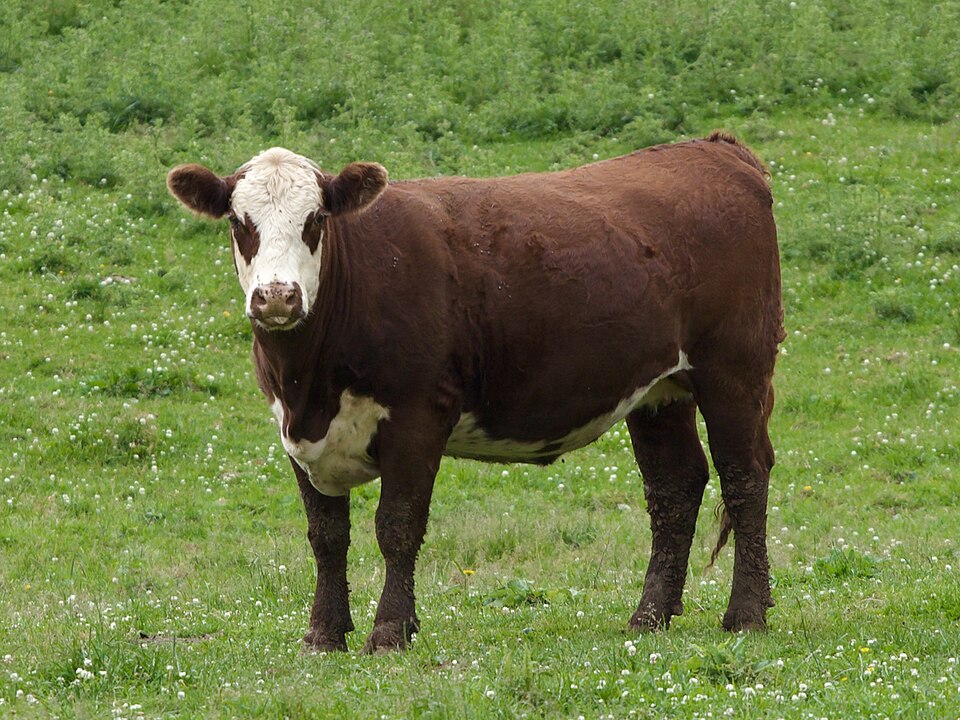
A red body and white face are typical distinguishing features, with white also on the belly and legs
The Hereford is a cattle breed improved for beef in the United Kingdom. Horned and polled lines are sometimes registered separately. A red body and white face are typical distinguishing features, with white also on the belly and legs.
Origins and distribution
Herefordshire, United Kingdom
- Hereford
- Herefordshire, United Kingdom
Reference photograph
Reference photograph of Hereford. Examine this individual’s color and form alongside the identification descriptions in the text.
Source: Hayden Soloviev · Original material · CC BY 4.0
1. Classification, origins and habitat
The Hereford is a cattle breed improved for beef in the United Kingdom. Horned and polled lines are sometimes registered separately.
Its recognizable white face made it widely known, but its history as beef cattle is tied to pedigree and production records. Checking how horned and polled Herefords are registered helps explain differences within the shared name.
2. Appearance and identification
A red body and white face are typical distinguishing features, with white also on the belly and legs.
White extends from forehead to muzzle, contrasting with the red body. Pigmentation around the eyes and white areas on legs and belly can differ individually. Pedigree of crossbred cattle with similar facial colors cannot be determined from photographs alone.
Side-by-side comparisons with other white-faced beef or crossbred cattle demonstrate that facial pattern is an appearance clue rather than proof of ancestry. Some individuals are hornless, so do not describe them as a separate breed based only on horns above the head. Names and registration records complement photographic observation.
3. Behavior and way of life
The breed is used for grazing and beef production. Identifying a similarly marked crossbred animal as purebred requires pedigree records as well as appearance.
Dams and calves together on pasture show one aspect of beef production. Do not combine the size or behavior of one large bull and a growing calf into a single average breed trait. Compare production records under matching age and sex conditions as well.
4. Observation, conservation and care
Manage pasture and feed according to individual build and production stage. A white face or a description of docility does not remove the effects of sunlight and handling conditions.
When observing pale-faced cattle outdoors, consider the condition around the eyes and use of shade. On a ranch, check whether weaker individuals are displaced from food and water, and provide safe facilities for separation and movement regardless of horn presence.
Evidence and references
- Oklahoma State University — Hereford
Classification, origins, appearance, ecology or uses of the breed
- Defra — Cattle welfare guidance on behavior, feeding and environment
General principles of feed, water, rest and handling. A United Kingdom source, not guidance on Korean legislation.