
Mammals (Cattle)
Brahman
Brahman
Classification and scientific name: Bos indicus
Sources checked:
A shoulder hump, large drooping ears and loose skin beneath the neck are characteristic
The Brahman was improved in the United States from South Asian zebu-derived cattle. It is also widely used in crossing with European-derived beef cattle. A shoulder hump, large drooping ears and loose skin beneath the neck are characteristic.
Origins and distribution
Zebu-derived cattle improved in the United States
- Brahman
- Zebu-derived cattle improved in the United States
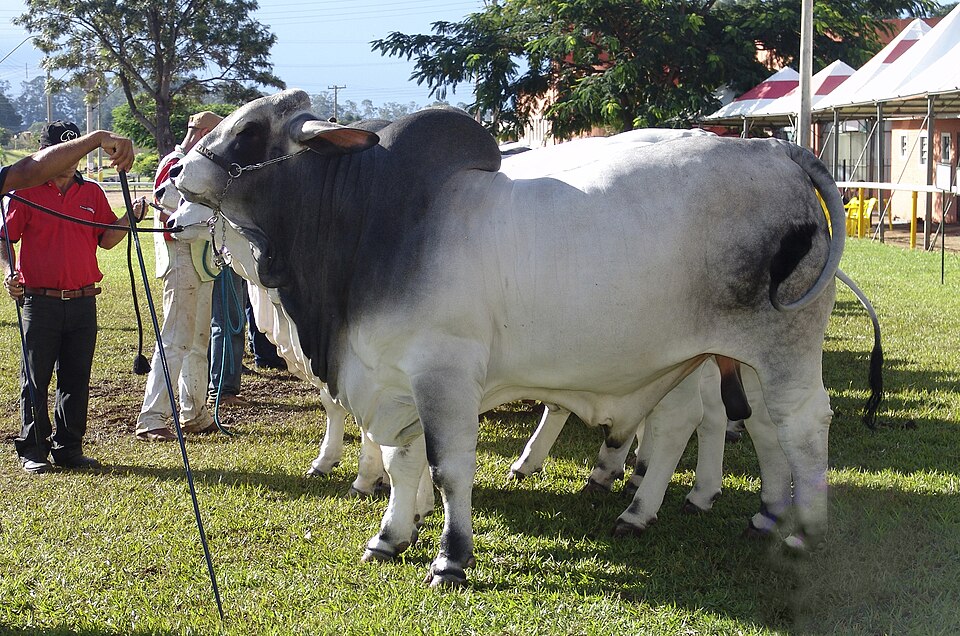
Reference photograph
Reference photograph of Brahman. Examine this individual’s color and form alongside the identification descriptions in the text.
Source: José Reynaldo da Fonseca · Original material · CC BY 2.5
1. Classification, origins and habitat
The Brahman was improved in the United States from South Asian zebu-derived cattle. It is also widely used in crossing with European-derived beef cattle.
Brahman is a registered breed developed in the United States using Indian-derived zebu bloodlines. Distinguish the broad zebu lineage from the specific Brahman breed. Other humped cattle populations, such as Nelore, have separate improvement histories.
2. Appearance and identification
A shoulder hump, large drooping ears and loose skin beneath the neck are characteristic.
Observing the hump at the front of the back, hanging skin below the neck and long drooping ears together helps comparison with European-derived cattle. Coats range from gray to red. Hump size varies with sex and growth stage, so one photographed bull does not represent the whole breed.
Consider a side view showing large drooping ears together with a whole-body view displaying the shoulder hump. Comparison with zebu-derived breeds with relatively shorter ears, such as Nelore, reveals varied appearances within the broad zebu lineage.
3. Behavior and way of life
Adaptations to hot environments make the breed useful in tropical and subtropical livestock farming. Heat tolerance does not mean shade or water is unnecessary.
Its use in hot-region beef production and crossing illustrates the relationship between environment and breeding. Heat adaptation is a matter of degree, not limitless heat resistance. When describing crossbred results, record parental lines together with local feeding and climate conditions.
4. Observation, conservation and care
When observing, compare the hump and skin shape with European-derived cattle. In husbandry, provide plentiful water, shade and safe handling facilities.
Guide herd movement without rushing while observing reactions to people’s movements. Observing appearance from outside a fence is more appropriate than activities involving touching the hump or large ears. Water, shade and airflow remain necessary at high temperatures.
Evidence and references
- Oklahoma State University — Brahman
Classification, origins, appearance, ecology or uses of the breed
- Defra — Cattle welfare guidance on behavior, feeding and environment
General principles of feed, water, rest and handling. A United Kingdom source, not guidance on Korean legislation.