
Mammals (Cattle)
Chianina
Chianina
Classification and scientific name: Bos taurus
Sources checked:
Adults generally have white hair and dark skin, with long legs and a large build
The Chianina is a large cattle breed associated with Italy’s Chiana Valley. Its use shifted from working livestock toward beef. Adults generally have white hair and dark skin, with long legs and a large build. Young calves can differ in color from adults.
Origins and distribution
Italy
- Chianina
- Italy
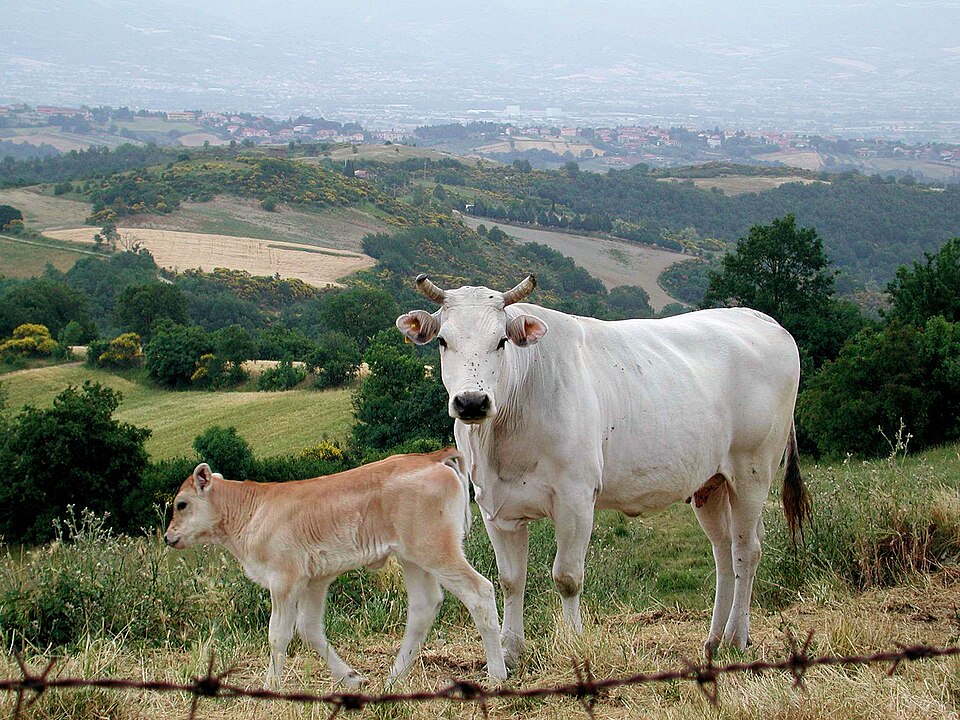
Reference photograph
Reference photograph of Chianina. Examine this individual’s color and form alongside the identification descriptions in the text.
Source: Monica from Anghiari (AR), Italy · Original material · CC BY 2.0
1. Classification, origins and habitat
The Chianina is a large cattle breed associated with Italy’s Chiana Valley. Its use shifted from working livestock toward beef.
This Italian breed illustrates large white working cattle transitioning into modern beef cattle. The regional background of the Chiana Valley and overseas use in beef crossing can be read as separate stages. Record-sized bulls are especially famous but are not the average.
2. Appearance and identification
Adults generally have white hair and dark skin, with long legs and a large build. Young calves can differ in color from adults.
Dark skin may show beneath short white hair, and head and legs appear long. Side-by-side photographs of fawn calves and grayish-white adults show changes with growth. Do not establish weight from the apparent size of people or other animals in a photograph.
Light adults and fawn calves can be understood as growth-related changes within one breed. Long legs and dark muzzle and skin are features missed by looking only at white hair. A pale coat does not imply albinism with white skin as well.
3. Behavior and way of life
The breed is used as large beef cattle and in crossing. Records of large adult bulls should not be presented as average weights of all cows or young animals.
Working-cattle history concerns pulling strength and human use; modern beef sources focus on growth and meat production. A change in use does not create a different species. Describing a large individual as a gentle giant still requires separate assessment of handling safety.
4. Observation, conservation and care
Provide passageways and handling facilities suited to a large body. Size comparisons should specify sex, age and purebred or crossbred status.
A tall, broad build requires suitable routes, transport space and non-slip flooring. Check that spaces designed around young animals remain sufficient for adults. Compare growth and body condition through records distinguishing sex and age.
Evidence and references
- Oklahoma State University — Chianina
Classification, origins, appearance, ecology or uses of the breed
- Defra — Cattle welfare guidance on behavior, feeding and environment
General principles of feed, water, rest and handling. A United Kingdom source, not guidance on Korean legislation.