
Mammals (Cattle)
Gelbvieh
Gelbvieh
Classification and scientific name: Bos taurus
Sources checked:
The name means yellow cattle, with yellow-brown shades being traditional
Gelbvieh developed from German cattle used for meat, milk and work. It was later widely used in beef breeding. The name means yellow cattle, with yellow-brown shades being traditional. Modern registered populations also include black-coated and polled animals.
Origins and distribution
Germany
- Gelbvieh
- Germany
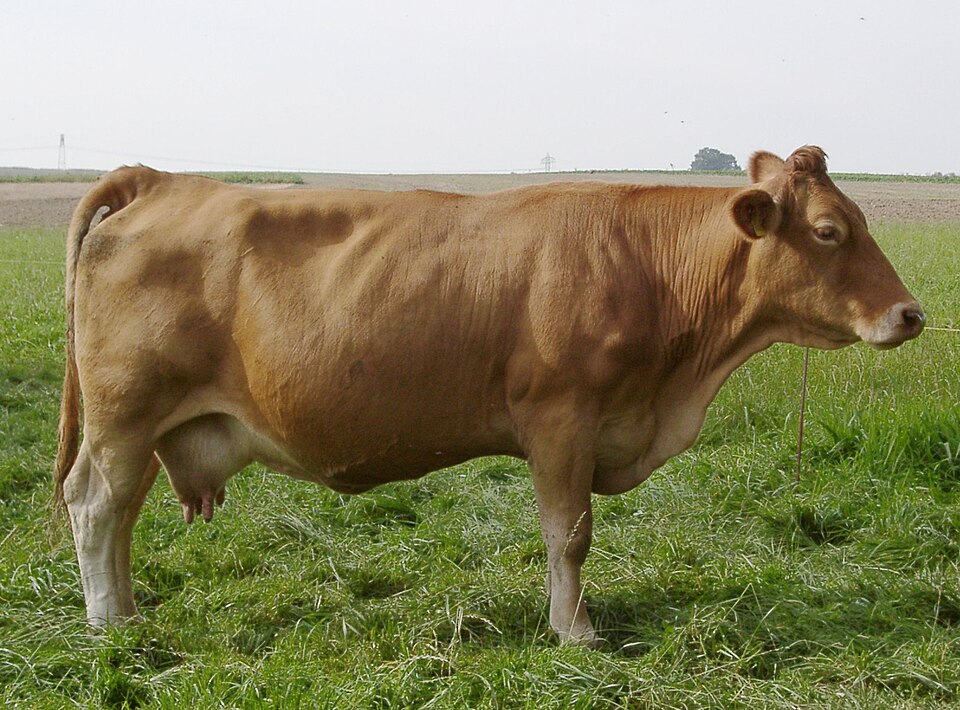
Reference photograph
Reference photograph of Gelbvieh cattle. Examine this individual's color and form alongside the identification descriptions in the text.
Source: Michael w at German Wikipedia · Original material · CC BY-SA 3.0
1. Classification, origins and habitat
Gelbvieh developed from German cattle used for meat, milk and work. It was later widely used in beef breeding.
The German name relates to yellow cattle, but does not mean that every registered animal today has the same color. The shift from cattle used for work, milk and meat to selection focused on beef connects the history with modern use.
2. Appearance and identification
The name means yellow cattle, with yellow-brown shades being traditional. Modern registered populations also include black-coated and polled animals.
Knowing both the traditional yellow-brown and modern black animals reduces misunderstandings based on the name. Horn status also varies between populations. Body and leg balance can be observed in photographs, but purebred status or production ability requires registration and record checks.
Even when yellow-brown and black photographs appear together, do not use the name's meaning alone to judge one incorrect. Consider the diversity of modern registered populations and the actual individual's color together. Polled lines also exist, so do not fix one appearance based on color or horns alone.
3. Behavior and way of life
It helps to distinguish the history of multipurpose cattle from present-day beef production. Do not infer origin or crossbreeding proportions from coat color alone.
Material describes various production traits, including mothering and growth. Do not interpret a single photograph of a mother and calf as evidence of high fertility or excellent milk production. Even within one breed, actual records differ greatly with sex, age and feeding conditions.
4. Observation, conservation and care
Consider the breed's production purpose alongside local registration standards. Comparing growth or mothering ability requires actual records and identical management conditions.
First check the registered population and local use to establish whether it is a beef or dual-purpose line. Look at the actual individual's body condition instead of assigning diverse ancestry and appearance one fixed weight. It is important to consider modern breeding goals together with livestock's everyday welfare.
Evidence and references
- Oklahoma State University — Gelbvieh
Classification, origin, appearance, ecology or breed uses
- Defra — Cattle behavior, feeding and environmental welfare guidance
General principles of feed, water, rest and handling. This is British material, not guidance on Korean law.